And with voice activated devices like Alexa and Siri, we’re pretty close to being able to just talk to our computers, like in TNG.
A search tells me The Jetsons hasn’t been mentioned in this tread yet. Even though we never got the ubiquitous flying cars, we did get flat screened TVs, smart watches, dog treadmills, and capsule endoscopy (the Peekaboo Prober).
Most of the science fiction examples are kinds of products, not specific products. I think that’s an important distinction for this thread. Like, lots of media had flatscreens, so you can’t point to a flatscreen and say that it came from The Jetsons specifically.
“” Computer, comput-ER! How quaint." (tap, tap, tapping on keyboard)
~Eng. Scott..Star Trek
I strongly suspect that the infamous Heil Honey I’m Home was an attempt. I guess they thought it would get the same response as Springtime. Boy were they wrong.
What about Golden Tickets? I’ve seen many promotions where a snack food just might have a prize winning ticket inside. Did Roald Dahl invent the concept? Did any such thing run before Charlie?
It was used in a few instances before the 1964 book but all modern usage springs from Dahl.
https://www.merriam-webster.com/wordplay/golden-ticket-wonka-charlie-chocolate-factory-phrase
But there were other instances of food packaged with random prizes, though, right? Just not called “Golden Ticket”.
Cracker Jacks started putting prizes in their boxes in 1912. Cereal box prizes started with trading cards in 1931, and lots of plastic toys in the 1950s. I think every package had a prize, though, which is somewhat different than just a few hidden prizes.
Not exactly what I’m asking about. I’ve talking about promotions where one lucky winner will get a quarter million pounds. Second prize a hundred thousand pounds. A lot of minor prizes of a few pounds. But most packets just contain the snack, and no prize at all.
The gift shops in the Simpsons-themed “Springfield” section of Universal Studios Florida sell “BORT” license plates.
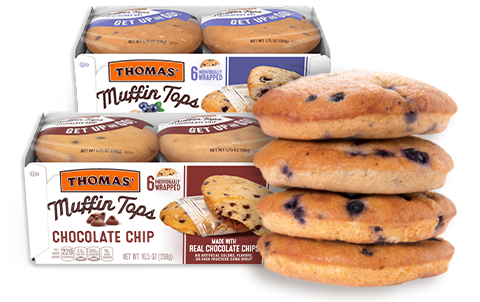
Thomas’ sell two varieties – chocolate chip and blueberry oat.
There was Soapy Smith, but he was a con artist: Soapy Smith - Wikipedia
Some annoying opportunist wrote a children’s book called “Hamster Huey and the Gooey Kablooie”, Calvin’s favourite bedtime story. Or maybe it’s fake.
There’s also Venus on a Half Shell by Kilgore Trout, a fictional novel in Kurt Vonnegut’s God Bless You Mr. Rosewater. Phillip Jose Farmer knocked out a real novel with that title as Kilgore Trout.
Hank’s homebrew Schraderbräu Beer from Breaking Bad was sold at some Costcos a few years ago.
It really exists in the sense that if you send pay Amazon, they’ll send you an actual set of pieces of paper bound together with text and pictures on them. But it’s completely unauthorized by Watterson, and from all the reviews, the author (whoever it was) put in the absolute bare minimum possible amount of effort to produce something that could be called a “book”.
Bill Watterson famously decided to never license his comic, and that’s the reason it was never sullied by something like an animated cartoon. All of those pictures of Calvin peeing are bootleg.
I respect his choice.
But I was always disappointed that he didn’t authorize a Hobbes tiger, if only to allow lots of kids to get their hands on the same imaginary best friend as he depicted.
(I imagine you could get an off brand Hobbes, of course. He’s clearly shown in the comic as a stuffed toy, so it wouldn’t be hard to reproduce)
If I remember correctly there was a temporary pop-up Los Pollos Hermanos restaurant for a while, too.
This is about 3 kms from my house, and according to Google Maps is far from the only one.

On thinking it over, there are a few different categories in this thread. There are some things where the product didn’t exist at all, and a product was created to mimic the fictional product. Harry Potter’s butterbeer would be an example of this. There are things where the product didn’t exist at all, and a product was eventually developed that was similar, but not in direct imitation of the fictional one. Flatscreen TVs would be an example. There are things where products of that sort already existed, but not the specific brand. These are usually just rebrandings of other products, by companies that already made whatever it is. Duff beer is an example of this. And there are products that are combinations of those: For instance, nobody made Everyflavor Beans before Harry Potter (Jelly Bellies, the company that they were obviously based on and which picked up the line, came close, but they didn’t have the gross flavors like dirt and earwax before that).