You all know the trope: A character is dreaming, and a phone starts ringing. But it’s not really a phone, it’s his alarm clock, and he’s shocked out of the dream into reality. Or perhaps he’s in the middle of a hot makeout session, but we then find out it’s his dog licking him awake.
TVTropes calls this “Crashing Dreams”.
After seeing it recently in a movie, I started to wonder where it was first depicted. Since it’s documenting something that actually happens (sensory details can intrude into a dream), it might be quite early, but I have no idea where to start looking.
What’s the first film that showed this? Does it show up in old plays? Paintings?
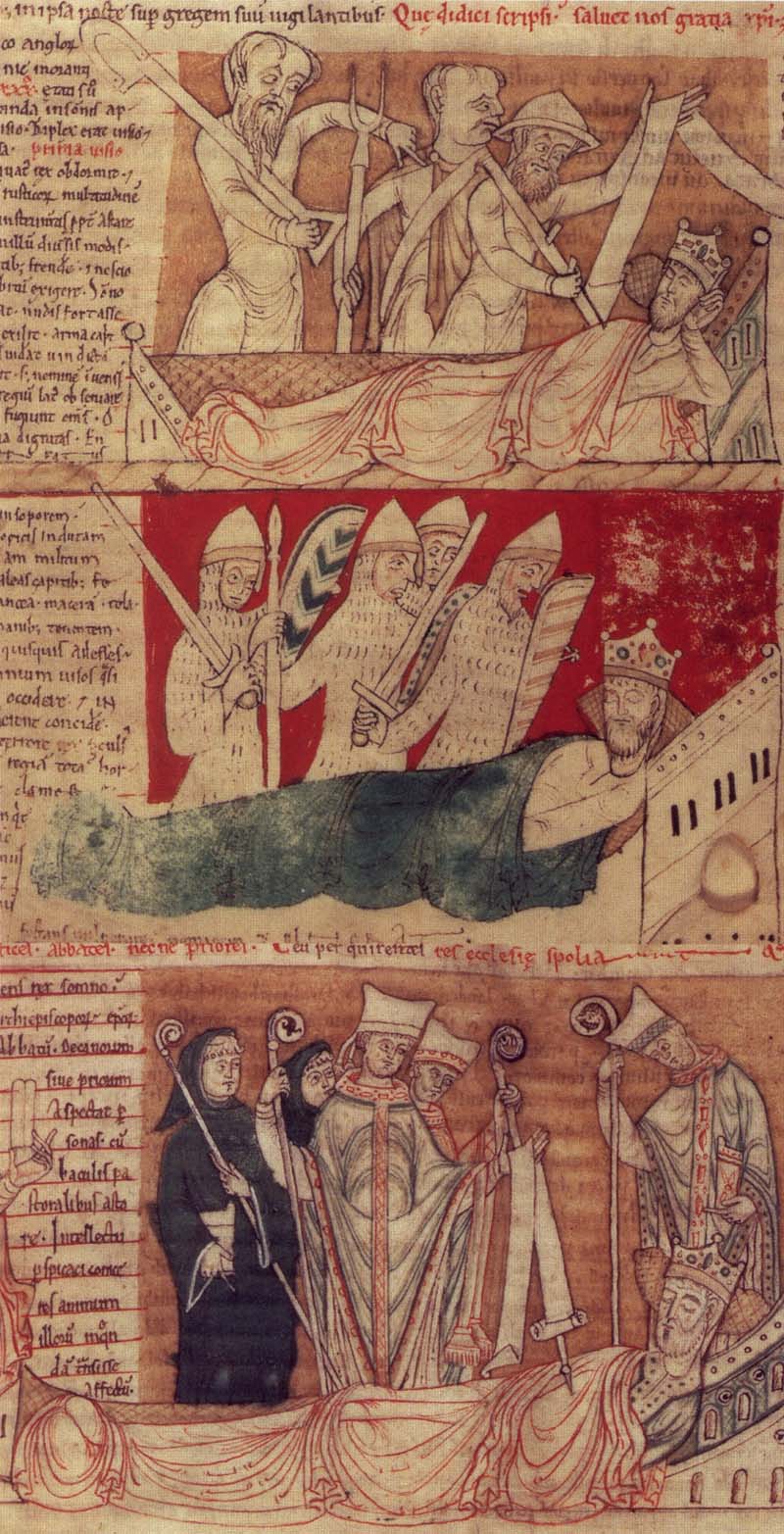
Since you ask ‘art’ rather than ‘cinema’, there are all sorts of conventions for dream/ vision insets in medieval and Renaissance art (sometimes a cloud-like division, or switch to grey-scale, etc), or sometimes just juxtaposing the dream with the sleeping figure (Worchester Chronicle, eg)
The “it was all a dream” ending was ubiquitous in 19th century proto-science fiction. If something fantastic happened during a story, you could be certain that it would be revealed as a dream. It was so common that Edward Bellamy could parody this in Looking Backward: 2000-1887. At the end he returns to 1887 and then wakes up. The return had a been a dream and he was still in his utopia! Even before the 19th century, writers of utopia used the dream ending to signify that they needed to dream of this utopia because their here and now was so deficient in those qualities.
And now that I read the OP again, I see that he’s asking for something much more specific. I’m not going to plow through all those stories again to look for it, but the reality intruding signal that it was a dream goes back to the 19th century for sure.
Right - not just Nemo, but even early Gasoline Alleys - there would be elements in some frames that were both dream and reality (like a striped shape that was bed cover on one end and tiger on the other).
Maybe I wasn’t clear enough in my OP. I’m not just looking for cases where dreams are portrayed in art. I’m looking for a case where a dream is portrayed and a specific sensory stimulus that is happening in reality intrudes into the dream just before the dreamer awakes.
That’s a dream fading away into reality. But reality doesn’t intrude into the dream. Yes, the people in her dream look just like the people in real life, but that’s her subconscious constructing a fantastic world, not her eyes observering them and inserting them into her dream as she’s dreaming.
Can you be more specific?
That sounds closer to what I want. Although I’m not sure how you could sense the stripedness of a bedspread while dreaming. Your eyes are closed, right?
Ah. I see. To stick with Little Nemo, at the end of every strip he wakes up bed. In some cases he’s been dreaming that he’s falling, or has crashed something, while IRL he’s fallen out of bed; or he’s been freezing cold in the land of Jack Frost and IRL he’s kicked the covers off his bed, or he’s in the ocean/ his mom’s tossing water at him to wake him up; loud noises, fireworks, etc. Closer to what you’re thinking of? In Dream of the Rarebit Fiend it’s similar but usually involves indigestion.
Oh, also in his dreams Nemo sometimes gets harassed by lions, and when he wakes up the housecat is yowling at him.
“You may be an undigested bit of beef, a blot of mustard, a crumb of cheese, a fragment of underdone potato. There’s more of gravy than of grave about you…”
I don’t if this applies, or what any of the details are, but supposedly Alexander the Great woke from a dream realizing his defeat of some army was in the bag because of something he dreamed.
To elucidate - at the end of each of the books, there’s a massively chaotic confusing scene that resolves into something in the waking world that resembles that scene; I believe Alice ends with Alice picking up the Red Queen ooh spoilers no really don’t read on or the entire story will be spoiled oh who are we kidding and telling her “I’m going to shake you into a cat!”
This she then does.
Then she wakes up and it turns out that she’s been woken by her pet cat who is sitting on her chest. Or something very much like that; it’s been years since I read the book.
Also, going to the OP, I would be very surprised if there weren’t a dream sequence ending like that somewhere in the Thousand and One Nights, though I’m not familiar enough with them to pull up an example.