Guitar amp effects loop with only one jack: How does this work?

Since I started playing electric guitar again during the Covid lockdowns, I’ve just been using a Line6 interface into my computer + modeling software, listening with headphones. This has been mostly great, but the downside is that having both my guitar and the song I’m playing along with in the same speakers/headphones, there’s no separation. That’s fine for jamming along with a song I already know well. But if I’m trying to work something out by ear, the sound of my guitar tends to bury the recorded track as soon as I try to play along.

I came to the conclusion that I needed to get an amp, so that the recording can be over here, and my guitar sound can be over there, and I can keep them separate. Then I remembered I had a cheap practice amp, purchased more than 20 years ago, buried in a closet.

It’s this one here:
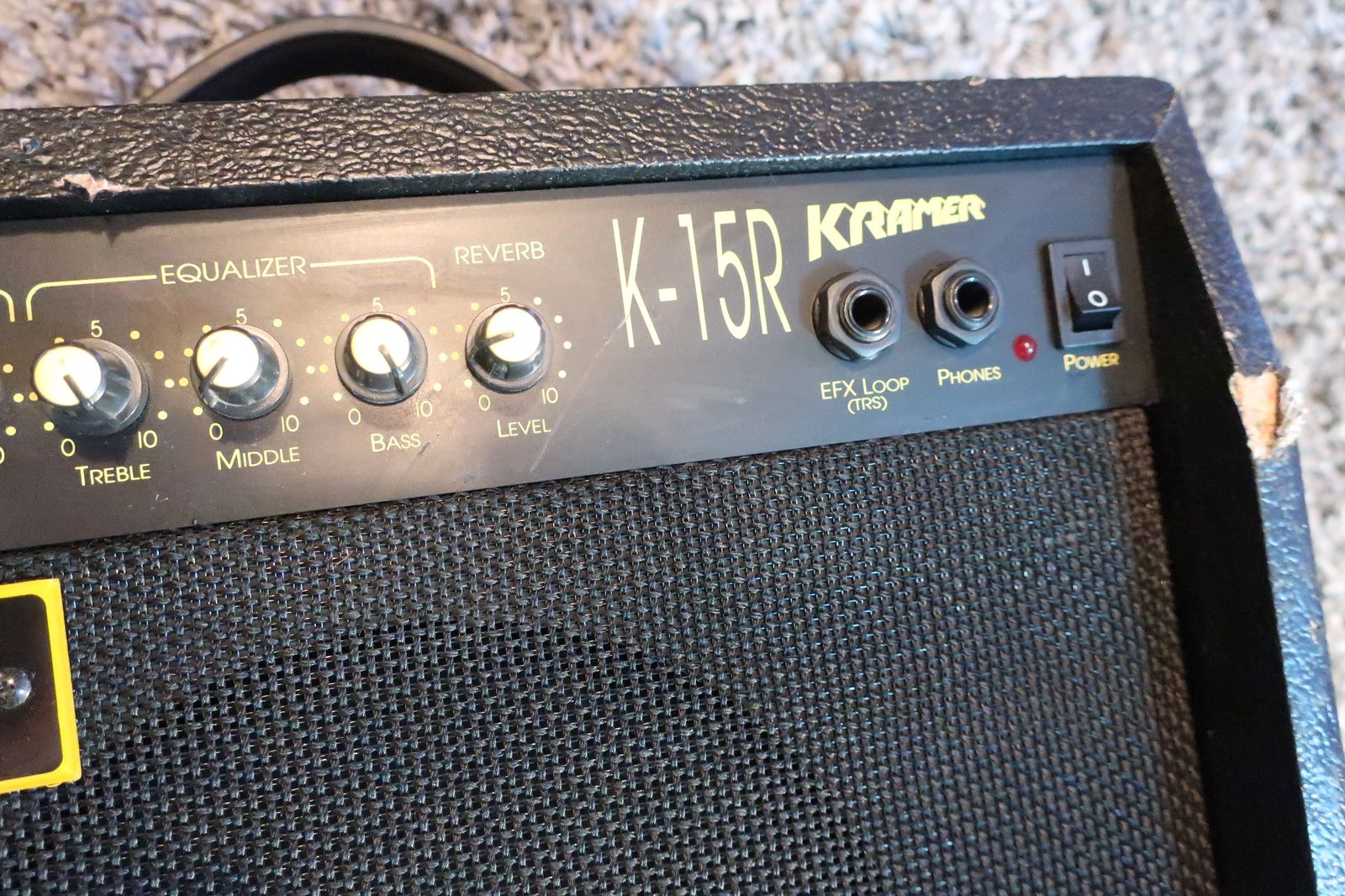
My question is about the EFX loop. I’ve seen effects loops on better amps, and those tended to have two jacks: “Send” and “Return”. I’m rather perplexed as to how it is supposed to work with only one jack. Obviously, I can’t plug my guitar into a pedal and then run that pedal into the “EFX Loop” jack and expect to get any sound out of it when there’s no cable running to the actual input jack. (Tried it anyway, got the expected result.)

Not having any actual previous experience using an FX loop, the only “obvious” solution to me is to use a Y-splitter to send my guitar’s signal to the pedal and to the amp’s input jack simultaneously. But I don’t know if that would be correct.

Alas, if this amp even came with an instruction manual, it’s long gone.

The pedal in question is a BOSS Metal Zone distortion. I’ve watched a number of videos about this pedal, addressing some of the complaints about it, and several of these videos reached the conclusion that the pedal is intended to be used in the FX loop. Indeed, they all seemed to get better results that way, as opposed to running it into the input jack.

In any case, using this pedal with the amp isn’t vital. I’m currently running a line from my Line6 interface to the amp, and that allows my modeled sounds to come through the amp. I’m mostly just curious how a one-jack loop is supposed to work.

If I’m reading things correctly, and I may not be, I’m not a guitar player, it’s an input that bypasses the preamp and goes directly to the power amp side. Something about some pedals not playing nicely with the preamp side of things and causing issues/distortion.
ISTM, calling it a ‘loop’ has more to do with the internal circuitry than it being an external loop for you to add your own effects.
This thread on reddit seemed to have the best explanations that I, again a non-guitar player, found.

1: You can probably get the manual online by contacting Kramer directly;

2: That jack is a “Tip, Ring, Sleeve.” Basically, it’s its own effects loop jack — an output and input in one. Using a stereo cable, wired correctly, will allow you to use pedals into the amp. It’s been decades since I’ve messed with amps, so there are things I can’t explain further, but that’s a start.

I would be so tempted to try putting a pedal between the phone out and the EFX in.

IMPEDANCE MISMATCH!! DANGER! DANGER!

That does not compute.

This might make it clearer: https://www.henriksenamplifiers.com/product/trs-sendreturn-y-cable/

The same cable has different channels, and they can send or receive. In that example, the tip sends and the ring receives. A single jack becomes Y, and the two jacks it splits into doesn’t have the rings.

In other TRRS cables (like a stereo headphones + mic cable), there might be two channels send (left/right to headphones) and one receive (mic).

This has a better diagram: https://www.tc2290.com/docs/cables_insertysplit.pdf

(It doesn’t necessarily need a Y though… it could be a TRS jack on both ends… but it looks like the MT-2 does have separate inputs/outputs, so a splitter there probably makes sense)

Here are some example cables: trs insert cable - Sweetwater (you can call them on the phone too, they’re usually pretty knowledgeable)

Thanks, that clears things up nicely!

Yikes! That cable costs more than I think I paid for the amp! I’ll assume there are less pricey options out there. But it’s good to know what I’m looking for.

The main reason I’d like to use the distortion pedal with the amp is simply to be able to switch between clean/dirty sounds on the fly on songs that use both–something I can’t do at all with my computer-based modeling software. The amp itself has separate overdrive & clean channels, but there’s a push button on the amp itself to switch between them which is, again, not really doable on the fly while still playing.

Yes, sorry, see the other link (trs insert cable - Sweetwater) for cheaper cables. That one was just the first one that came up, but you have a lot of options.

Though please double-check this with someone who’s done this setup before, or ask their salespeople. (I’m also not a musician, just someone with an interest in cables)

FWIW, I believe the output from that jack is “post-pre-amp,” and the return is “pre-power amp,” so if you have a properly-wired (read: non-stereo) cable, you could run the guitar into the pedal(s) then directly into the power amp. I’m sure there are reasons for doing so but I’m not sure why you’d rig it that way; pretty sure someone will have a slam-bang explanation, though, so I’m anxious to hear it, too.

@burpo_the_wonder_mutt , where have you been? We were worried.

Glad you’re here.

(Sorry for the hijack)