The troops didn’t drag them; horses did. There was horse artillery and field artillery, both moved by teams of horses hitched to them.
Thank you. I think my confusion came from seeing them just sitting in the field with no horses around, but I guess it would make sense that the horses wouldn’t stick around.
[quote=“Al128, post:39, topic:998163, full:true”]
I think you might be referencing my quote that office buildings are “mostly windows”. Not a big deal. Only unlike LSLGuy, technically I do have a degree in civil engineering. 
Not like I crunched the numbers to figure out how many cannonballs it will take to bring down an office building.
But yes, modern buildings are designed for redundancy with large factors of safety. And I would suspect for a large building, the forces on the load-bearing members are orders of magnitude larger than what a 5" cannonball might do to it.
stick horses would, I guess …
yes, I sometimes mentally cluster convergent posts of different posters together and then respond to only one …
chalk it of to me being lazy efficient … 
But in a completely different direction. Even if the beams are extremely strong in compression, it might not take much for them to start buckling.
It’s one of my favorites. “Dry clean up on aisle one, aisle two, asile three, aisle four… Umm…”
I don’t think anyone was injurged. At least not badly.
No, they’d be used to get the heavy artillery into position, then unhitched and moved back from the firing line. I don’t know whether the light artillery (horse artillery) would stay hitched to the limber while the gun was loaded and fired, then the unit would rapidly deploy elsewhere.
For that scenario I like to start a plain reply to the thread overall, then quote a key sentence or two from each the several convergent posters one after the other then write my responding commentary below that collective intro.
Much easier on a PC than a phone though.
I’m thinking steel I-beams are strong in compression but their cross section also prevents them from buckling easily. It also depends on the size of the building and how big the columns are. In my mind I’m thinking like a ten story building with 18" columns.
ISTM that I’ve seen old cannonballs considerably larger than 5". Is there a reason you selected that size?
Also, the OP specifies an unlimited number of cannonballs. would repeated impacts have a cumulative effect?
Slightly off topic (sorry) but how would one demolish a building made of big steel beams? Will explosives wrapped around a vertical I-beam actually sever it, or is the process relying on buckling, like our hypothetical cannon-ball or a wrecking ball scenarios?
I’m not @msmith537, but there are issues with bringing in the larger cannons.
The 10" 300lb Parrott gun that @Dissonance referred to weighted 26,780 lbs.
Larger guns were prone to bursting so even with unlimited numbers of cannonballs, you may not be able to shoot them forever.
Larger still were the Rodman guns, including a 15" version
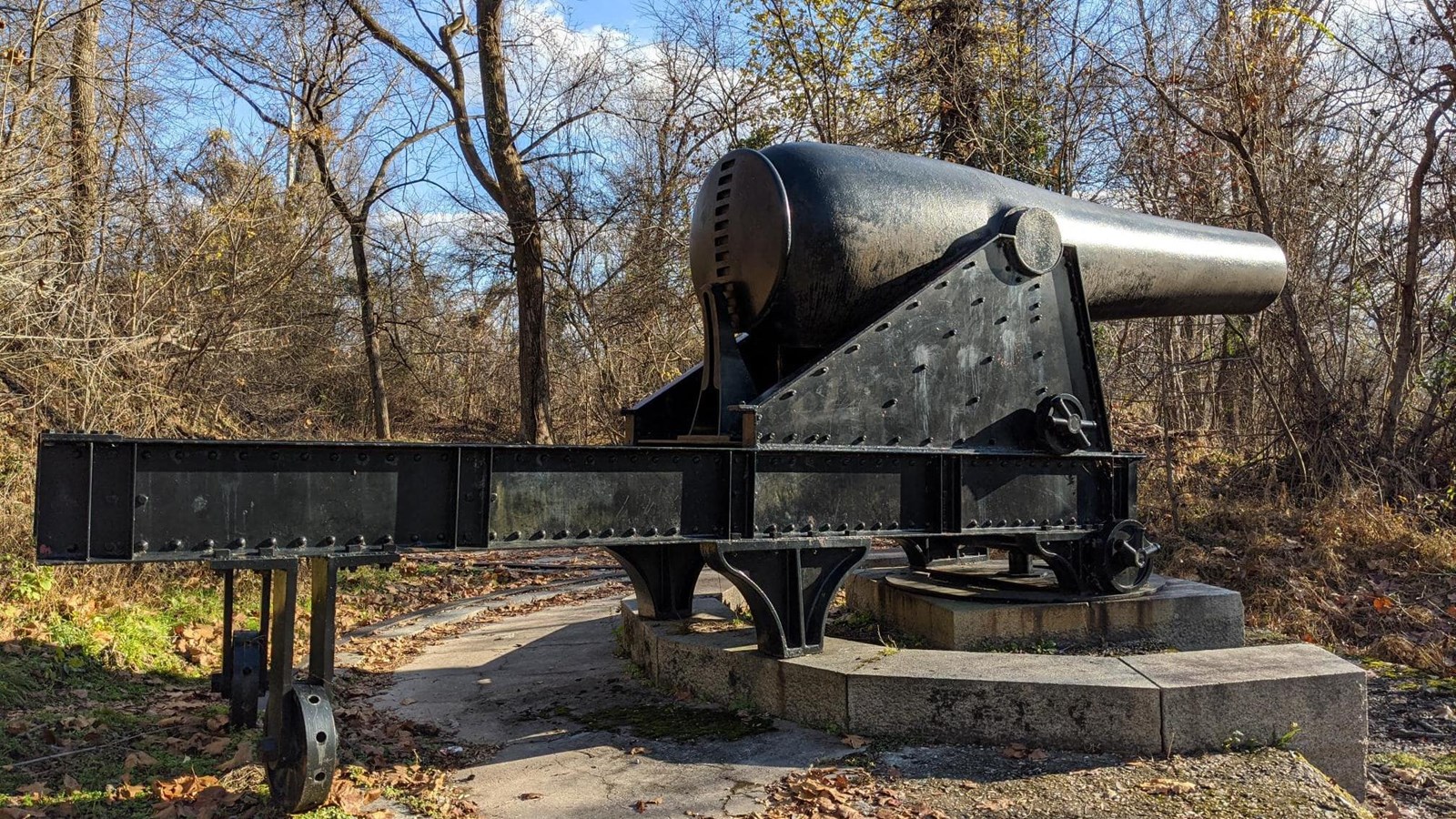
Note that the 15" Rodmons were never fired during a battle.
For the second question, I presume I-beams would be difficult to get a cumulative effect from Civil War era artillery. They just didn’t have the accuracy to repeatedly hit a small target, except at ridiculously close ranges, as noted by @LSLGuy and others.
I suspect similar armor was found with musket ball holes in them. It doesn’t appear to be much thicker than the steel used to clad a modern car. No comparison to the steel supports in modern buildings.
The site I linked previously stated the number and size of guns used in that specific siege. To the extent they ranged up to 13", I would suspect the shot for such guns would exceed 5" in diameter. At one point, the article describes a rate of 10 rounds of percussive shot per hour.
It also acknowledged the difficulty of emplacing such artillery:
A 13-inch seacoast mortar (its tube weighing 17,000 pounds) took 250 men to move it using a sling cart. Creating 11 batteries to house 36 siege guns took more than a month.
I’m often amazed at the length of time and amount of effort involved in past sieges. ISTR reading about some that even involved redirecting rivers! 
Final point, people seem to suggest cannons/mortars might not be effective against a skyscraper because they would not cause it to tumble down. I’m not sure that is the appropriate standard. ISTM that in historic times, the goal was not to reduce a fortification to rubble, but instead, to breach it and make the continued holding of it untenable. Or, at least, to reduce/eliminate the fortification’s military utility to the opponent. ISTM several hundred/thousand roundshot crashing through the windows/walls/floors of a skyscraper might well accomplish those goals.
I have one! 8 inches in diameter and 75.5 pounds. My hand and foot for scale:

Well, If that’s the standard, I could single-handedly breach almost any building (with a ground floor plate glass window) with just a sledgehammer.
Well, probably not if it was being defended by anything more than a single defender who also has a sledgehammer. And I’m not sure breaking a couple of windows - or punching a single hole through a masonry wall - would be considered a successful breach. But I am far from an expert.
For steel-column buildings, the common method is to use linear shaped charges to cut through steel columns:
These use a relatively small amount of explosive to shape a strip of metal into a hypersonic knife that cuts through thick steel quite nicely. So you tie an LSC to a steel beam, and slope it so that one end of the LSC is higher than the other end; when it cuts the column, the cut is at an angle so that the upper part of the column tends to slide off of the bottom part instead of just coming down to rest on it. Cut enough columns and beams, and carefully manage the timing of all the cuts (and which way the slope of the cuts go), and maybe even string some cables so that when one part of the building collapses it pulls other parts of the building in a desirable direction, and you can tightly control where the building falls. A large part of the skill, I think, involves cutting enough of the columns and beams in enough places so that the building collapses completely; it’s an expensive and scary-hazardous problem if your work only results in a partial collapse.
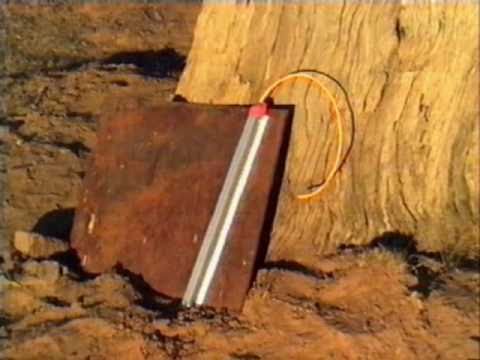
Here’s a short demonstration of an LSC cutting through a 1/4-inch thick steel plate:
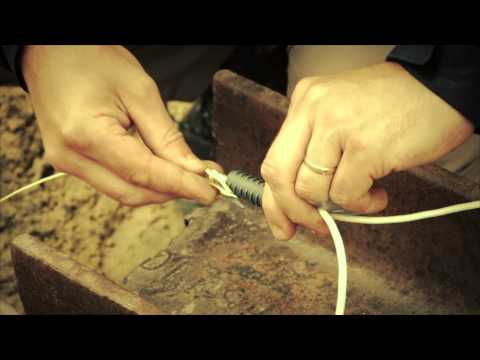
Here’s a video from a LSC manufacturer showing one of their LSCs cutting through a steel I-beam that looks like it’s made of 1-inch-thick steel:
You’d be correct; the cuirass on Napoleonic era cuirassiers wasn’t expected or able to stop musket fire, it was there to provide a degree of protection from swords and bayonets.
Though the armour could not protect against contemporary flintlock musket fire, it could deflect shots fired from long range, stop ricochets, and offer protection from all but very close-range pistol fire. More importantly, in an age which saw cavalry used in large numbers, the breastplates (along with the helmets) provided excellent protection against the swords and lances of opposing cavalry and infantry equipped with bayonets, and, on a much smaller scale, polearms (including sergeants equipped with spontoons and halberds).[16] It also had some psychological effect for the wearer (effectively making the cuirassier more willing to plunge into the thick of fighting) and the enemy (adding intimidation), while it also added weight to a charge, especially in cavalry versus cavalry actions.
Napoleonic French cuirasses were originally intended to be proof against three musket shots at close range; however, this was never achieved in practice. The regulations eventually recognised this, and cuirasses were subsequently only expected to be proof against one shot at long range.
As I understand, the classic medieval suit of armour" became obsolete with the advent of high-powered crossbows. A crossbow bolt with enough weight behind it could pierce any armour thin enough for a human to wear. (Joan of Arc IIRC was captured after being hit by a crossbow).
I assume as Dissonance say, those shiny breastplates the cavalry wore were just protection against lightweight swords and bayonets. They might chop your arms and legs off, but at least you’d survive to fight another day.
Not if it were built so the guy on the third floor could pour boiling oil on you while you approached the window. This is why you brought down the wall above the breach first.