This is incorrect. Peak full plate armour could stop any arrow or crossbow bolt with relative ease (aside from lucky hits in the sights or other gaps). For a time they even made plate armour where the breastplates were proof against musketballs, and there are surviving examples with dents from a test shot that was there as proof of that. But as firearms became more powerful, the weight of full plate harness designed to protect against it became prohibitive, and so heavy armour began to vanish from the late medieval battlefield.
I’ve seen videos like that before, and I suspect that the builders didn’t follow the recommended standards for racking. I’ve spent the past 30 years working in a retailer full of similar racking, and have seen a few instances of forklifts hitting racking; bent shelf supports is the worst damage I can recall. Racking has tipped in some stores, but as a result of natural disaster - an earthquake or a tornado.
The question posed in the OP was the amount of destruction in a modern city, rather than the effectiveness of Civil War era cannons in combant set in a modern city.
To answer that, much more information would be required, such as what weapons the defenders have.
I-beams do have some buckle resistance, but they’re engineered to have as much buckle resistance as they’re expected to need, plus some safety factor. If they do actually have enough buckle resistance to withstand a cannonball, that probably means that they’re overengineered, and heavier and hence more expensive than they need to be, because withstanding military assault is not part of their design goals. Structural members at ground level probably are engineered to withstand impact from a high-speed truck, since that’s something that might much more plausibly happen, and that might also be enough to resist the cannonball, but there’s no reason to engineer in truck resistance on the higher floors.
Redundancy is a feature, not a bug, when putting squishy human beings a hundred or more feet above the ground.
Yeah, that’s that safety factor I mentioned. But there’s still such a thing as overengineering, and I have to imagine that a cannonball goes well beyond any reasonable safety factor.
and let me add ;-), adding a 10% extra amount of steel into I-beams - when constructing a skyscraper, might not even show up in the first two or 3 positions behind the comma …
Cheap insurance, and probably a good part of the secret-sauce of a good civil-engineering company that works in this field.
After all, that is something the client would pay for (the extra steel) … and not you … and its good advertising when other structures fail, but yours did not. So overengineering it a bit might be peace-of-mind and make business sense …
but of course your point stands and is well understood, its just not a digital thing, but rather a continuum.
on related matter:
I pre-designed our home, which is a passive-solar-house - whose complete northern fachade is 16m width all windows. I gave my “plan” to a structural engineer - he ran it through his software and applied his secret sauce … and made me put in a horizontal I-beam, as the far corner of the house was not up to his static-standards.
I grumbled a bit (more for aestethic reasons than cost) - but we did put it in …
FF 10 months: he house is finished, we moved in and 6 weeks later the fifth strongest earthquake ever registered on earth hit us … long story short: a few postage-stamp sized bits of plaster fell off (where the inside-roof meets the walls - due to swaying) and that was all of the damage of an 8.8 (?) quake…
needless to say, I had (renewed) faith in reports that an engineer hands me back and tells me what to do and what not.
(Bolding mine)
It not simply the direction but collapsing the structure relies on the weight of a portion of it to pull the rest of it apart so the intact portions don’t collapse straight down or fall to the side. That can result on the remaining structure staying intact as a shorter structure or one lying on it’s side and still requiring further demolition.
Fair enough - tho it did specify unlimited cannonballs. I thought the discussion had morphed somewhat, after it was observed that the ball would go right through a car or cinderblock wall. No one ever explained why someone would be shooting cannons around in the middle of a city, so I thought some assumptions were appropriate.
Just about all I know of cannon fire I learned from various movies. You often see a shell land, and people/objects go flying. Did that happen? If so, was it the result of the impact of solid shot, or would that only happen with incendiary rounds?
Civil War cannons, like any muzzle-loader, will fire pretty much anything that fits down the barrel. They had a wide variety of rounds available. A solid cannonball isn’t going to explode and send things flying. If it his a human body it’s going to obliterate the part of the body it goes through, but it won’t send nearby people flying.
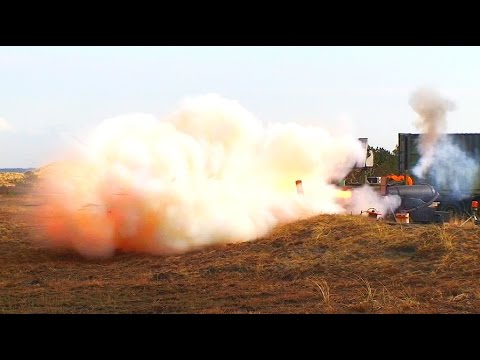
An explosive shell definitely will though. Here is a video of a Civil War cannon firing live explosive rounds at a modern Armored Personnel Carrier. That should give you an idea of the destructive power of a Civil War cannon. It should also give you an idea of its accuracy, or rather the lack thereof.

They also had mortars, which were short stubby cannons aimed up at roughly a 45 degree angle.

Mortars do this:

I think the idea with a solid ball is that it can make other things go flying. The balls shot into the side of a wooden ship were unlikely to pierce the hull, but the splintered wood created horrific casualties. I seem to recall that in land battle, artillery was less effective on a muddy target than a rocky one because of the nature of the shrapnel created.
Of course. The phrasing of the question in the OP isn’t particularly helpful because while it does ask about the physical amount of damage possible from unlimited numbers of cannonballs, it doesn’t specify the circumstances where these would be used.
Artillery by itself was vulnerable to counter attacks, either by infantry or cavalry, although frontal assalts in a valley “on a fully dug-in and alerted artillery, much less one with an excellent line of sight over a mile in length and supported on two sides by artillery batteries providing enfilading fire from elevated ground” were not necessary good ideas.
However, in the scenario posed in this OP, a single Civil War cannon is plopped in the middle of a city, with no mention of an accompanying army. The number of troops as well as the defenders becomes the more important story in any hypothetical.
Depending on the situation, it’s possible that even a few people with guns could kill those manning the artillery. The guard against that, the OP would need a group of people with guns to defend their position.
Consequently, a larger group of people with guns could defeat the OP’s group, so the OP would need an even larger group. The defenders of the city would then need a larger group, and eventually would need more firepower, such as RPGs or their own cannons.
The logical conclusion to this in WWII was Stalingrad where the Soviets counter attacked with
-
1,143,000 men
-
13,451 artillery pieces
-
894 tanks
-
1,115 aircraft
and the Germans defenders (at the time of the counterattack) had
-
600,000 men
-
400,000 Germans
-
200,000 Romanians
-
640+ tanks
-
732 (402 operational) aircraft
Anyway, back to your question. Yes, a single Civil War era cannon could provide suppression fire against defenders in one particular skyscraper with very specific, limited situations, but any other sort of battle would depend on other factors.
Of course, we all know that flying objects look impressive in movies (and are relatively easy to create and film), and it’s less gory than showing the impact of a 5" shot going through a person.
“Shots” (solid balls) tend to smash things or punch holes into them rather than make them fly. In contrast, “shell” were the type of ammunition which had a strong casing around an explosive charge. These are the type which could send things flying, including body parts.
(Incendiary rounds contains a chemical that ignites upon contact with a hard object, and weren’t used in war until 1916; where they were particularly effective at stopping attacks by hydrogen gas-filled German Zeppelins.)
Shot (solid balls) was also deadly against columns of infantry or cavalry as they could go through a large number of the targets. It also was effective against morale and maintaining formations.
Shots allowed ricochet firing, where low angles would allow the shots to bounce against the ground or water and continue to the target (such as a ship) or through the targets (such as a column of infantry). (This technique was reinvented in WWII for attacking unarmored ships, as dropping bombs from high altitudes was ineffective.)
(In WWII, during the attack on Singapore, the British tried to defend against the Japanese invaders with their massive coastal batteries, including 15" guns. Unfortunately, the coastal batteries had Armor-Piercing (AP) ammunition for use against warships, and this ammunition would bury itself into the mud. They needed general purpose explosive shells. )
ISTR that shots could penetrate ships of the era, but I’ll defer to those who are more familiar with that era.
With a little research:
Plenty of videos of shots penetrating wooden hulls.
Here is an example of a modern study of 17th century artillery against oak ships.
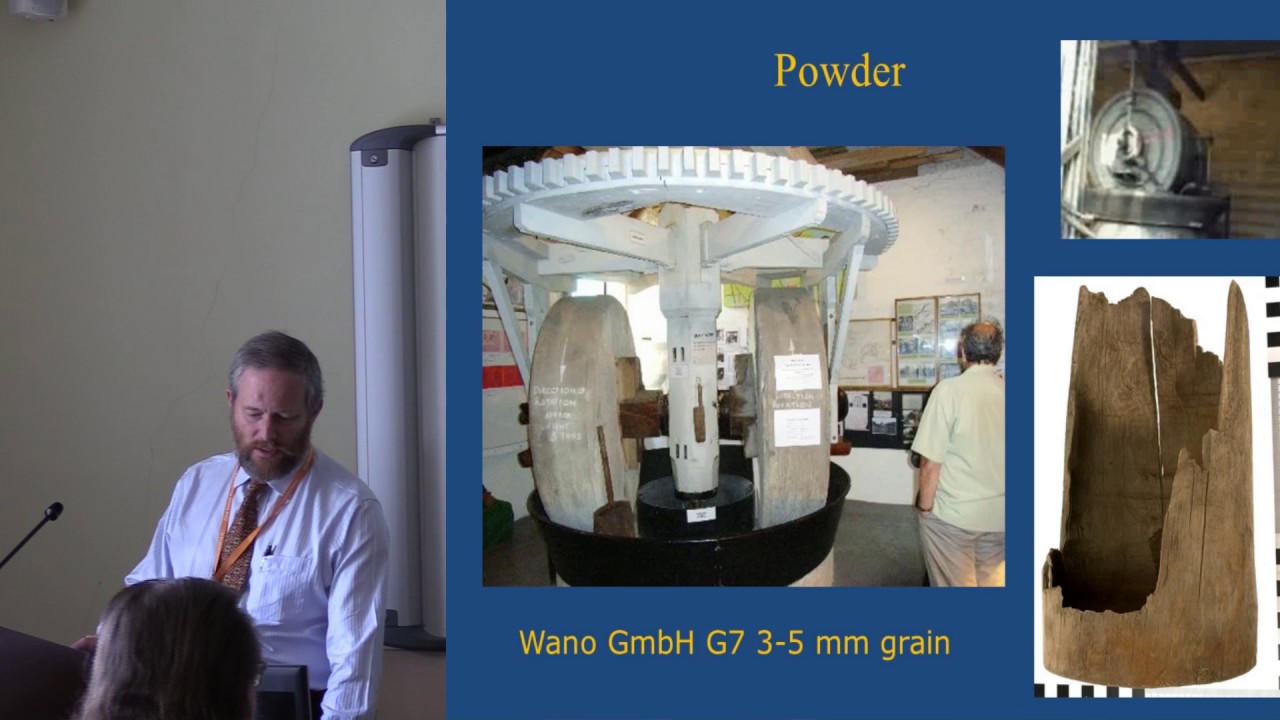
The video itself is 17 minutes, but the key point is that not only shots are able to penetrate the sides of the ship, they go clean through the other side of the ship as well. Even so, they create large splinters if they hit the right place in the wall.
The presenter notes that the goal of naval combat was to capture the other ship rather than sink it as it increased the number of your ships while reducing the number of the enemy.
He also points out the high subsonic speeds were better as he reports, balls are absolutely the worst shape for transonic speeds.
All interesting stuff. As I read the OP, I didn’t see it asking about a battle situation. Instead, just what damage would cannonballs do to modern materials/construction.
Taken literally, to the extent he doesn’t even specify anyone helping him, fatigue would reduce the damage/effectiveness of his single cannon, albeit with unlimited ammo! 
Not criticizing you or anyone. Just sorta musing how most of the responses (including mine) have required SOME assumptions extrapolating on the somewhat spare OP.
To explain my OP-I had a fragment of a story idea about a person attacking buildings with a flying pirate ship, and wondered what kind of damage they could do with the onboard cannons. I’m not sure why I chose Civil War cannons as opposed to pirate ones.
This clarifies some questions, although raises some others.
What is your objective with the attack? Do you want to try to get structural damage? Kill people? Force them to retreat from the building? What kind of buildings do you want to attack?
For skyscrapers, as they are steel and glass, you don’t need solid shot as they would just go through the building and only cause limited amount of damage, unless you get really lucky.
Rather, cannister shot could be used, which would blow out the windows and take out anyone in the area. Cannister shot are like giant shotgun shells with larger balls.
Explosive shells would also be effective against the occupants. Civil war era cannons had fuses (cords which had gunpowder infused into them) and not fuzes (a device to set off the main charge). They would easily penetrate the windows and would cause considerable destruction to the office and anyone unfortunate enough to be close by.
Admittedly, it was indeed inspired by this. Robbing high-rises as a sky-pirate!
Sounds like a good idea for a steampunk-themed world.
I’d suggest maybe including something like this in your story. It will do a lot more damage than a single-shot cannon.
Are you sailing on the Wide Accountant Sea?
“Yarr, I be Cap’n Redtapebeard!”