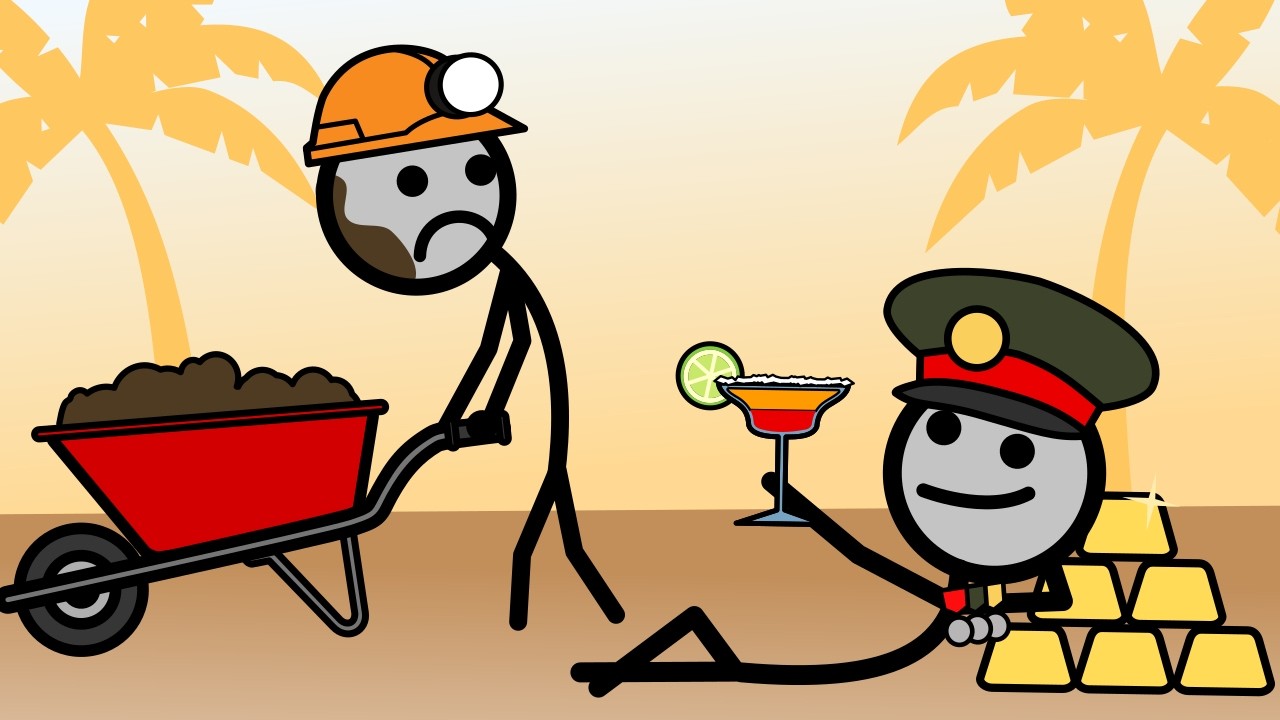
What are the most effective methods dictatorships (past and present) have used to stay in power and handle rebellion/crime?
What dictatorships had the most effective balance of carrot and stick in their governance?
I know making sure the people in certain key positions of power (military, police, etc.) happy through promotion and bribery is one of the most cited methods. Making people complicit in the regime’s crimes also means they have a practical interest in protecting it so they can stay in their position and not end up in prison or being beaten to death by an angry mob. The Nazis called it blood cement.
The successful dictatorships know to keep the populace in that sweet spot zone where they are unhappy but not unhappy enough to take decisive action against the regime. They also rely on bystander effect, where collectively the populace would benefit from overthrowing the regime, but individually each person doesn’t want to risk their neck by being the first to stand up.
Franco and Stroessner. Actually popular. Altho they used secret police and some brutal tactics, by and large it was for actual dangerous dissidents. In both cases they werent replaced by yet another dictator.
Dont get me wrong- plenty of human rights violations committed by people under both of those dictators. Both Stroessner and Franco lasted for like 3 decades and the nation seemed to prosper- in some areas at least. Things were- at least mostly stable, and people like that.
Neither were heroes by any means, but in both cases, things could have been worse.
And by keeping things fairly stable- in areas tired of constant civil wars and coups, this can be a relief.
Essentially the dictator has to figure out who is important and needs to be kept happy, and who is irrelevant and can be kept in control through terror. The vast majority of people are irrelevant in a dictatorship and can be controlled with terror, surveillance and propaganda to keep them atomized, helpless, complacent and terrified.
When the inner circle of truly important people start rebelling, you can have a problem on your hands.
The levers of power need to be divided and constantly competing with each other (secret police, military branches, intelligence agencies, etc). All other potential sources of power need to be neutered or co-opted (congress, judiciary, labor unions, religion, student organizations, activist groups, media, universities, etc).
As far as blood cement, that is one thing holding North Korea together. The political elite know they’ll all be tortured and killed if the regime changes, so they have no incentive to change, or even to loosen society for fears that loosening society will lead to the fall of the regime, the same way Gorbachev’s reforms helped lead to the downfall of the USSR.
Also, generally a public protest only works when the military refuses to support the regime. As long as the military still supports the regime, 90% of the public can oppose the government and public protest won’t do much of anything. That’s my understanding. In that situation, you need a civil war or international pressure.
My understanding is the secret police are generally the real power brokers in a dictatorship. As long as everyone (except the dictator) is at risk of being disappeared, tortured and killed, it tends to keep people too afraid to fight back. Various dictators who came to power came to power by taking over the secret police first. Once you control the secret police, everyone else tends to fall in line. I think Saddam Hussein (who came to power by taking over the secret police in the 70s) called his torturers the ‘sharpest arrow in the quiver’.
A big reason dictatorships fall is economic problems. The economy fails so the leader can’t pay off the people that truly matter, the public protest, and the military refuse to put down the protests.
The tone of the series is necessarily brief and breezy, given that it’s a tongue-in-cheek “how-to,” and it’s not really in-depth serious history. But if you’re someone who knows nothing about the subject and wants a bullet-point overview, you can do a lot worse.
Franco’s brutality wasn’t by and large on dangerous dissidents as you say, but was on the duly elected and all their supporters and innocent citizens after he invaded Spain. His murderous dictatorial ways tore a nation apart and he took great joy at killing and torturing his perceived enemies.
By convincing people that there is no alternative.
Once people lose faith in democracy - or never had faith in it in the first place - they’ll believe that the only two alternatives are dictatorship, or chaos, and they have to be really angry at the dictatorship to choose chaos. Most dictators thrive when the population doesn’t really like them, but still considers them best option.
Indeed, during the Spanish Civil war there were several mass burial sites- some of which were caused by the Republican side, and some by the Nationalists. That war was brutal and dirty.
Dont get me wrong, I am not saying Franco was a hero or a good guy. But he was a successful dictator, which is what the OP asked for.
If you think about it, the OP is basically two questions:
How do dictators avoid popular uprisings?
How do dictators avoid being replaced by other members of the ruling class?
Most people here are answering no. 1, even though popular uprisings are historically fairly rare. The answer to question 2, how to avoid being killed or deposed, is more relevant, but also well known: making alliances, ensuring the loyalty of a small but effective group of killers and spies, sniffing out and neutralizing enemies, and a healthy dose of paranoia. The same skills any decent crime boss has.