Thanks, that was probably the study. I read a popularization, that mostly tracked with that.
I wonder what ultra-processed breakfast foods are, and how they identified which contained whole grains, which were treated separately.
But for my diet, I’m generally thinking “breakfast cereal okay, ice cream bad”. (The only ready-to-eat meat product i eat often is canned sardines, which probably don’t count as ultra processed, as they are mostly whole fish. And i rarely drink sweet drinks.)
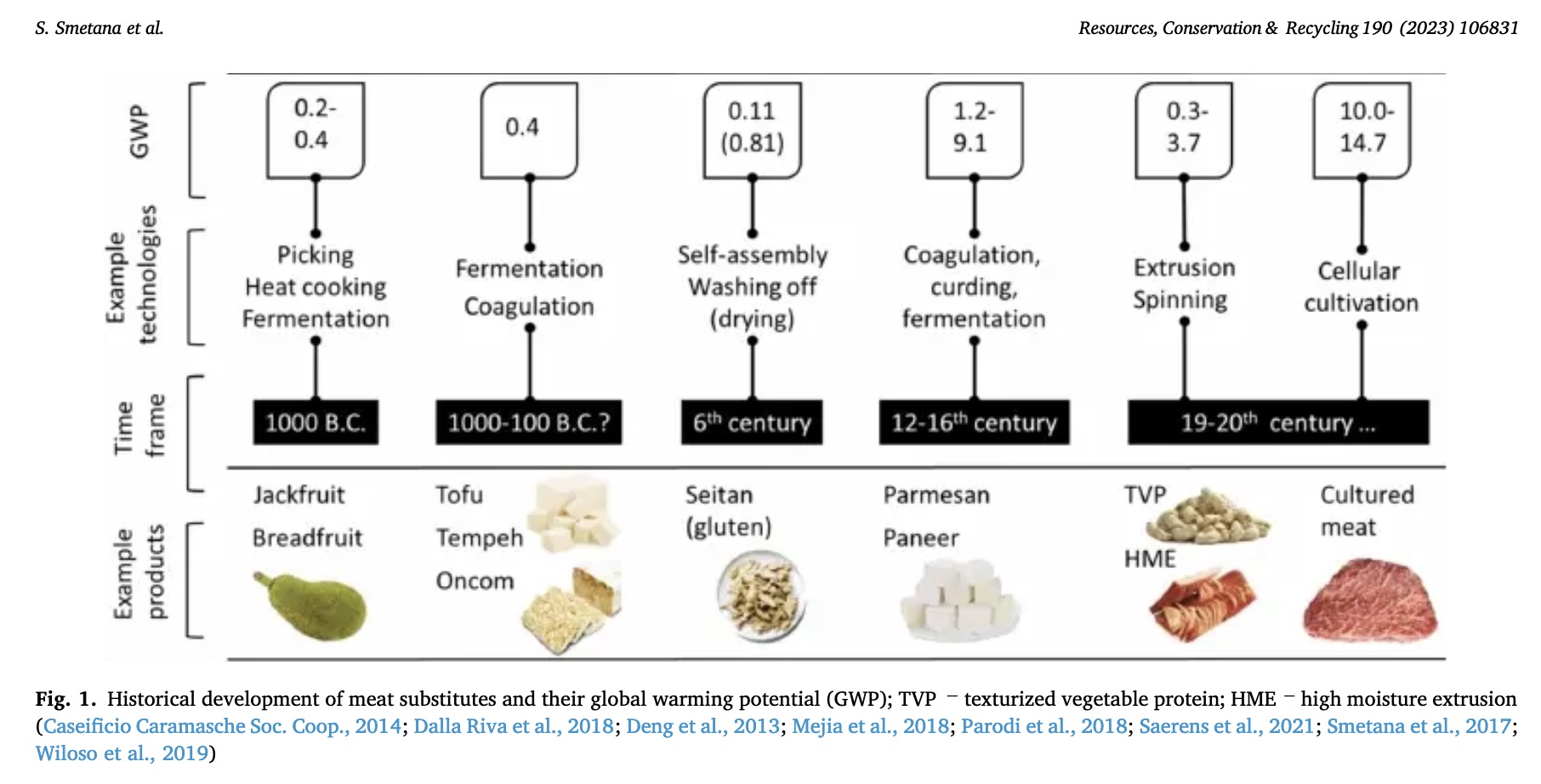
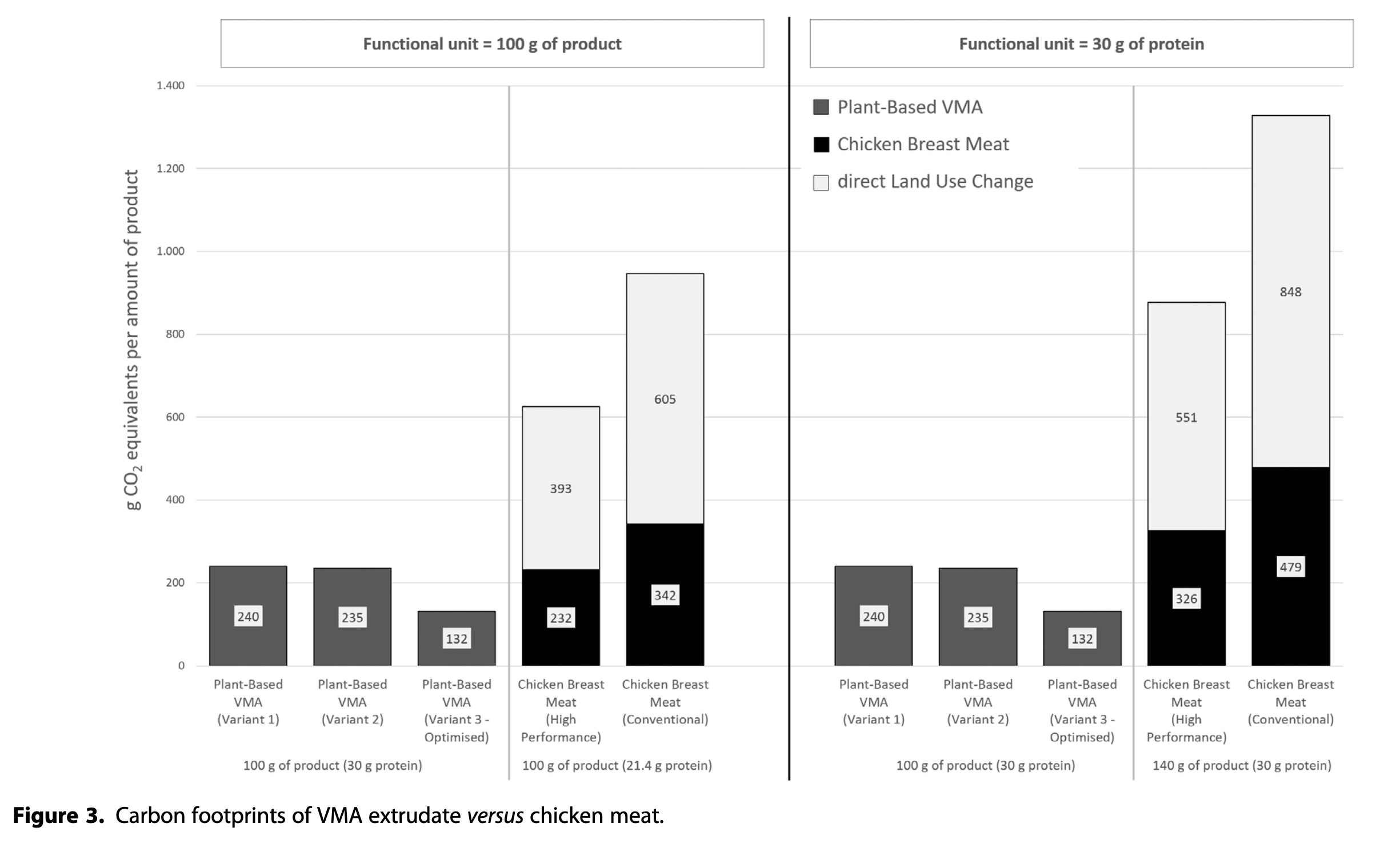
The burgers would be something like “HME” (high moisture extrusion). It’s still quite a bit less.
The text explains a bit more (emphasis added):
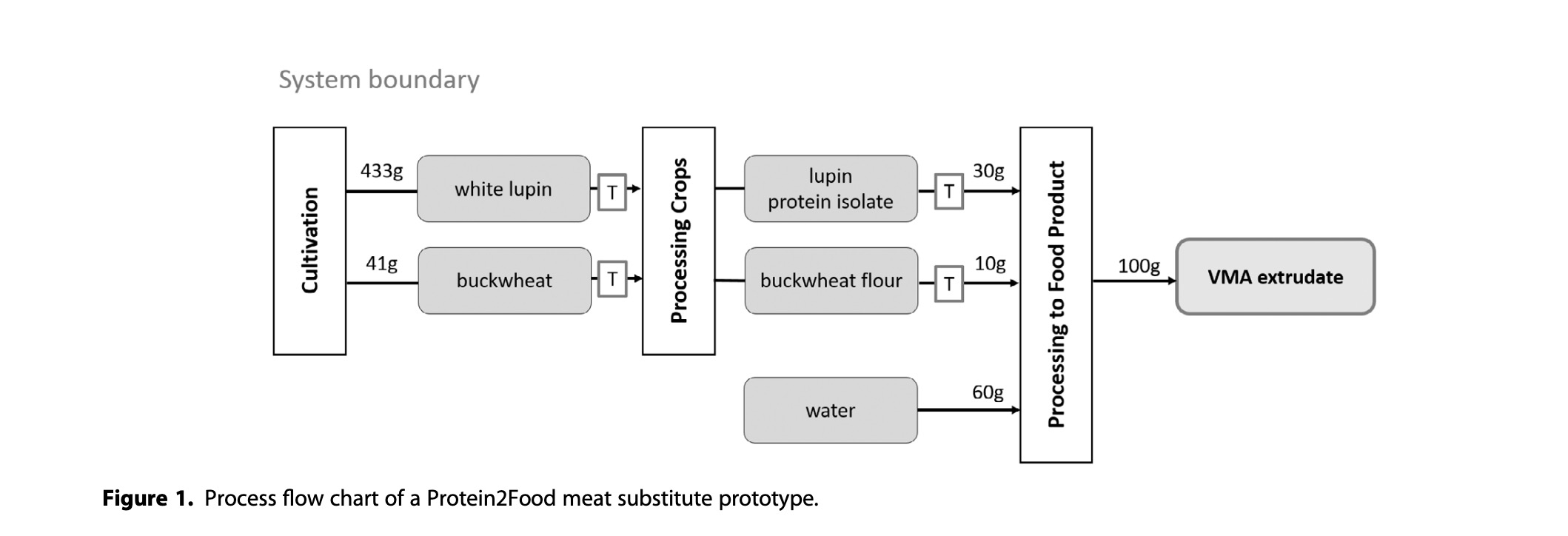
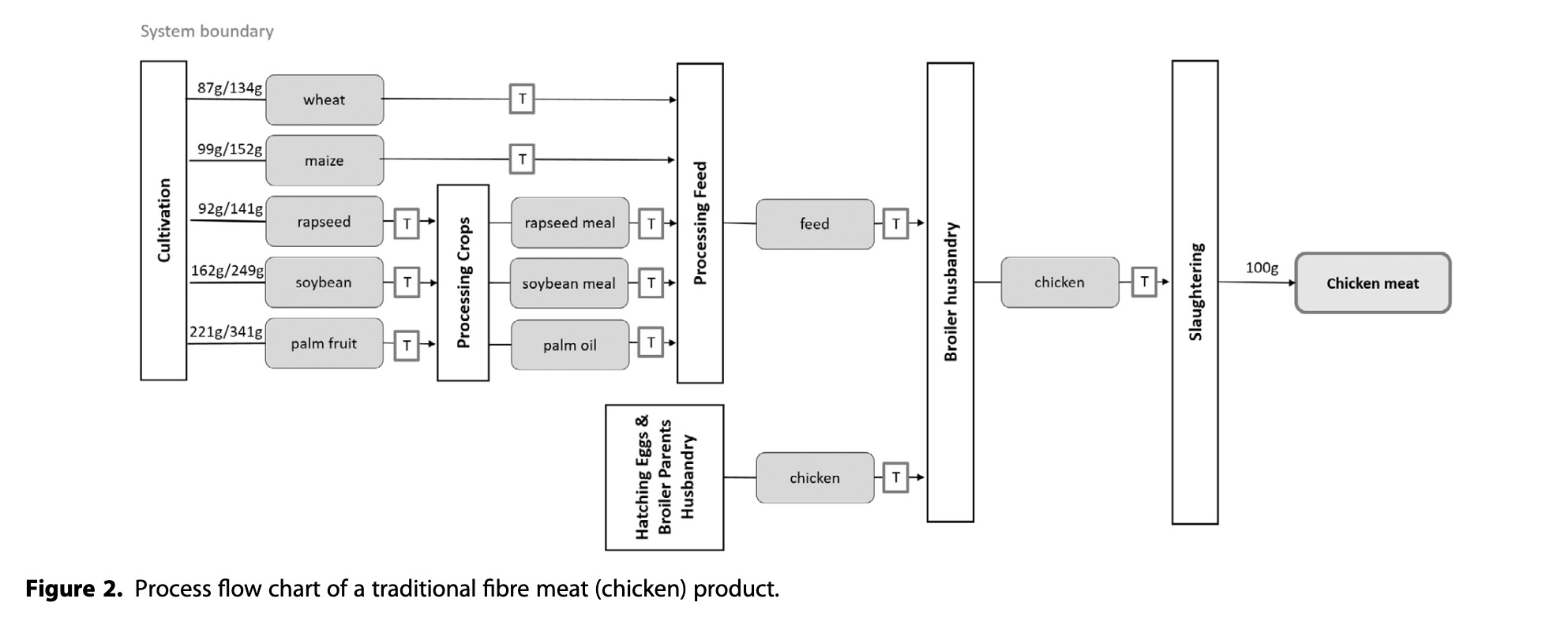
Plant-based foods in the human diet have twice as low GHGE (4,963 TgCO2eq.) as animal-based foods (9,923 TgCO2eq.) (Xu et al., 2021). Furthermore, literature analysis reveals that on a protein basis, animal-based proteins have a considerably higher GHGE than proteins incorporated in plant-based meat substitutes: farmed fish (34%); poultry meat (43%), pig meat (63%), farmed crustaceans (72%), beef from dairy herds (87%), and beef from beef herds (93%). Therefore, it can be tempting to conclude that all plant-based proteins always lower the environmental impact of the meat substitutes as compared to different types of meat. However, processed plant-based meat substitutes have 1.6-7 times higher environmental impact than less processed plant protein sources (e.g., tofu, pulses, and peas) (Santo et al., 2020). Detzel et al. in their research conducted in the scope of the Protein2Food project, identified that extruded plant-based meat substitutes in certain conditions could have a carbon footprint very similar to that of chicken meat, and in terms of resource demand (land, energy, and water), it could be even higher (Detzel et al., 2021).
(PBMA is a plant-based meat analog, i.e. a highly processed fake meat)
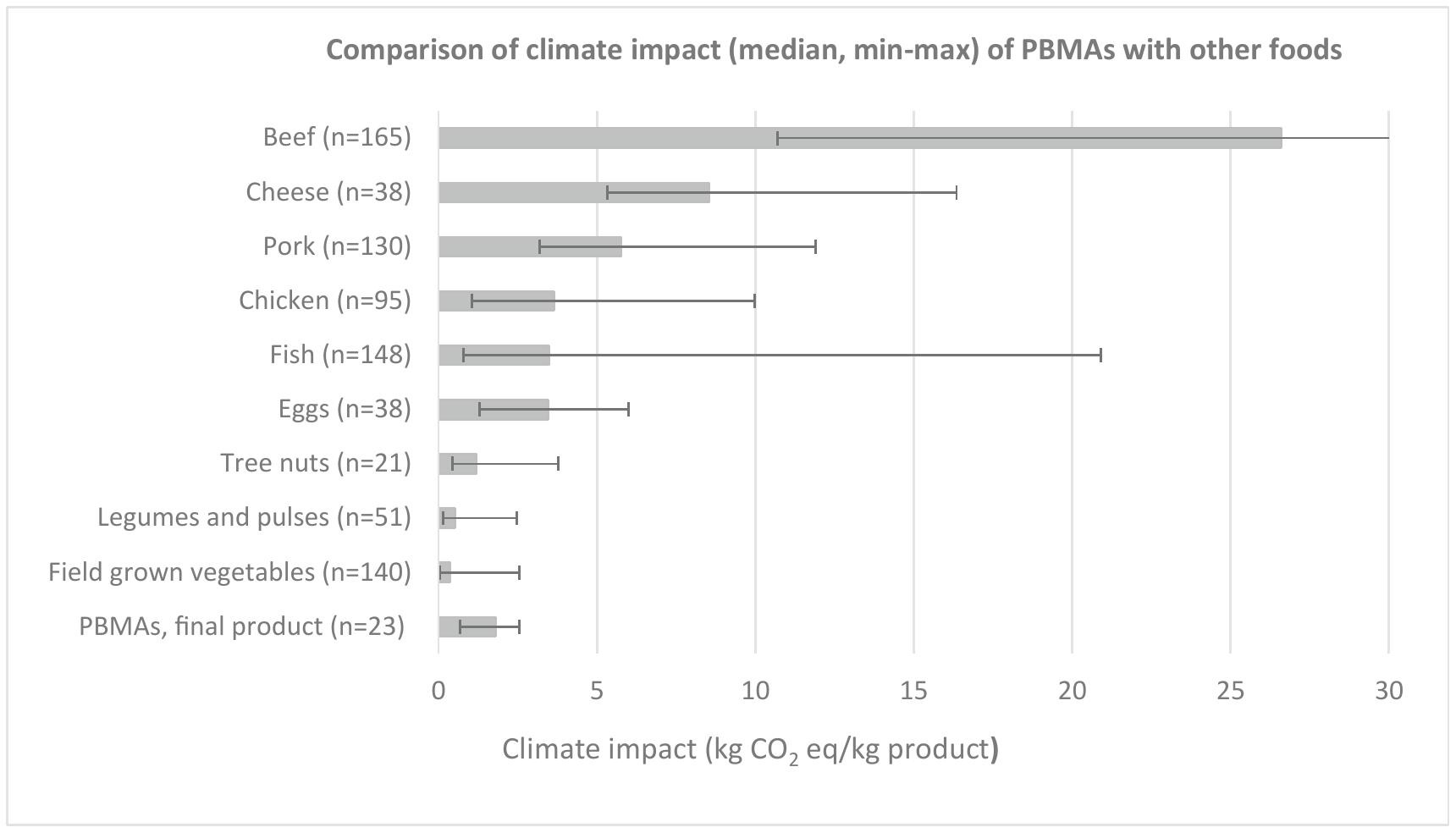
My takeaway is that in terms of CO2e, the plant stuff is much much better than animal meat even in the worst case, especially compared to ruminant meat. In other categories (land and water use) they’re still better than ruminants but maybe approach chicken in the worst cases, as you surmised.
What is GWP in that first diagram? I’m pretty sure it’s not “gross written premium”. (Hey, i have been an actuary for many years.) If it’s a ratio to “meat” it suggests some of those can be more costly than meat. I wish they had put the comparable numbers on those charts for beef and poultry.
Also, i guess the reason we don’t eat more insects is that they aren’t a ton more efficient than meat. Because some insects are very palatable, once you get past “they are bugs!”. I’ve had roasted grasshoppers and raw ants, and both were tasty. (Other insects are disgusting. Everyone i know who has tried beetles, on purpose or accidentally, has spat them out.)
It really is a very interesting study. Glad you mentioned it.
Some specifics to share.
Yes the biggest increased risks were
meat/poultry/seafood based ready-to-eat products and sugar sweetened and artificially sweetened beverages
Yeah artificial sweeteners not just sugar.
Also that nearly half of UPFs in this US population were “sauces, spreads, and condiments” and “sweet snacks and desserts” with the small impact of the snacks possibly partly due to nuts and chocolate being in that group:
compelling evidence shows that nuts and (dark) chocolate, common constituents of “sweet snacks and desserts,” are inversely associated with cardiovascular diseases.3536 We observed that dark chocolate in the subgroup “packaged sweet snacks and desserts” was associated with decreased mortality
And of note the confirmation of what sort of mortality leads the increase:
We found that ultra-processed food intake was associated with higher neurodegenerative mortality. Increasing evidence suggests that ultra-processed food is linked to higher risk of central nervous system demyelination (a precursor of multiple sclerosis),40lower cognitive function,41 and dementia.42 Studies have shown that a diet rich in ultra-processed foods may drive neuroinflammation and impairment of the blood-brain barrier, leading to neurodegeneration.4344 Of note, among ultra-processed food subgroups, diary based desserts showed the strongest association with neurodegenerative mortality.
And
a positive association between ultra-processed food intake measured by percentage of energy and respiratory mortality
Just as in the Seventh Day Adventist study. Two conditions I specifically don’t want to die from; I want to drop dead with little to no period of disability, no dementia and please keep me from struggling to breathe doing basic tasks on my way off this mortal coil!
Definitely more efficient than animal sources from GHG and water use perspectives. Cost might come down if production was scaled up.
Replacing half of the meat eaten worldwide with mealworms and crickets could reduce farmland use by a third, freeing up 1,680 million hectares, equivalent to around 70 times the area of the UK, and reducing global emissions, according to a study by Alexander and other researchers at the University of Edinburgh.
Insects also have a high food conversion rate – for instance crickets need six times less feed than cattle, four times less than sheep and two times less than pigs and chickens to produce the same amount of protein.
Cultivating insects **produce**s significantly fewer greenhouse gases than livestock production – especially when you consider the transport of livestock and feeds which accounts for 18% of these emissions.
Only the milk-based ones. That particular study wasn’t just comparing plants to animals, but also alternative proteins like milks, insect parts, algae, other animals (deer, kangaroos, etc.).
The second study focuses on fake meats more.
I haven’t read both of them in their entirety, just skimmed them, but I think the general takeaway is that even highly processed plant-based foods are better from a climatic standpoint, but not necessarily for land use and water depending on what you measure and against what. Like you said, chicken is way less impactful than beef.
If you’re really curious about this stuff, the book “Diet for a Dead Planet” was at once one of the most informative texts I’ve ever read and also one of the driest, most difficult to read. I read it while stuck in the woods for several weeks with nothing else to do, and even then it was painful. But it’s also 20 years old by now and probably the situation, statistics, and science have all changed somewhat. These days you can probably get good enough summaries with AI research mode and especially NotebookLM…
That wasn’t what i thought it said, but it was very tough to plow through, and i might have missed something. I actually thought it said the most realistic fake meats might be worse. I’m sure it says that we won’t know the impact of vat grown meat until industrial processes are developed. I was surprised that it considered Parmesan cheese to be a meat substitute.
I should probably try reading it again, less late at night.
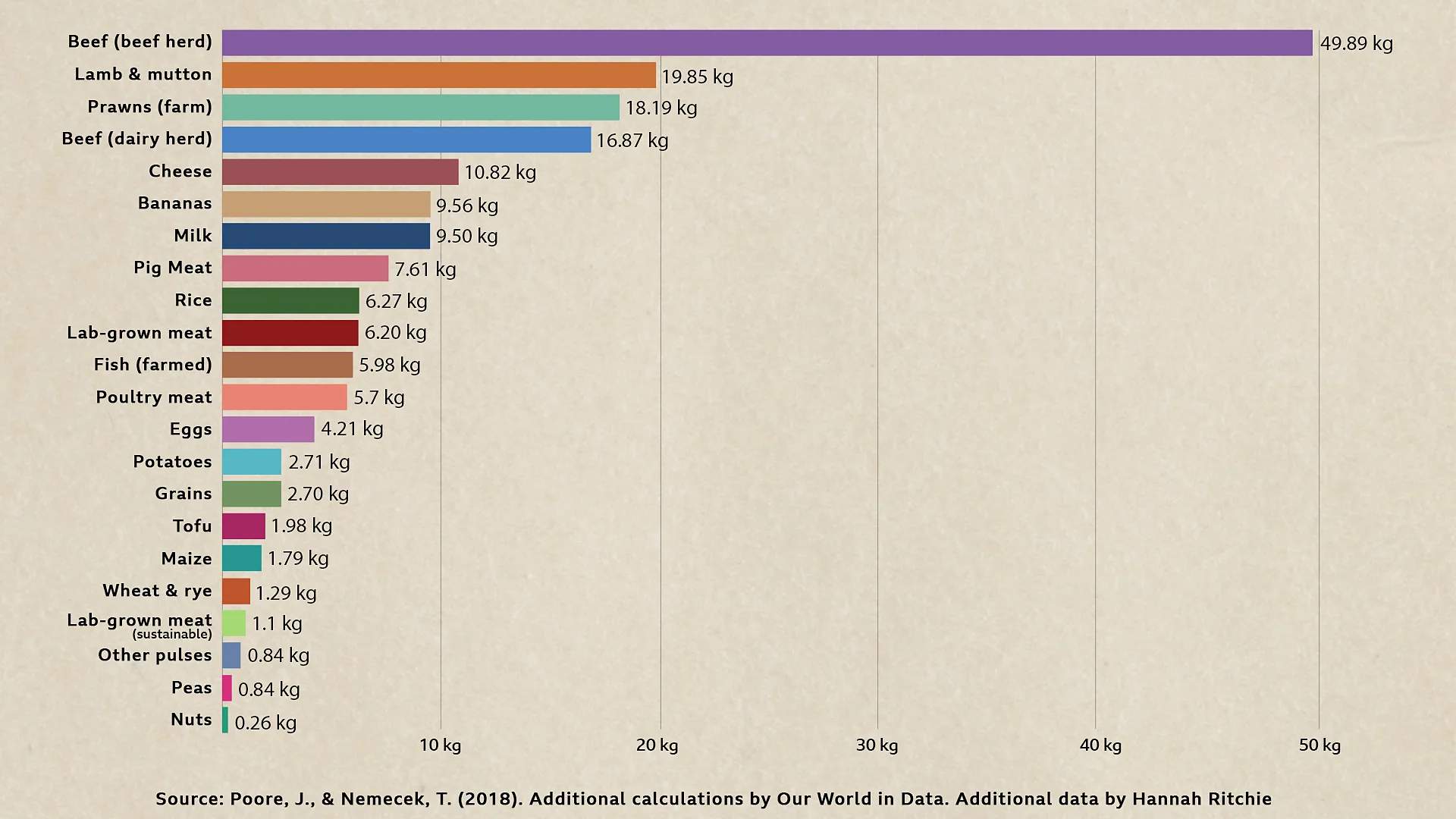
I’m not sure how to compare “tofu production” to “carbon dioxide”. Do you know how chicken and beef rate on that scale?
I’ve been vegetarian for about 20 years now. I think the market for the fake meat options purely comes people’s desire for something similar to the comfort foods they grew up with. This included me for many years. It wasn’t until recently when I started trying to eat as little ultra-processed “food” that i stopped craving/consuming it.
A line in “Ultra Processed People” by Chris van Tulleken really hit home with me: Paraphrasing: “its not ultra-processed food, it’s ultra-processed edible substance”. The book in general (and that line in particular) really put me off the fake meats and and other ultra processed foods.
Just some random beetle, probably. Any given randomly-selected insect is probably going to taste yucky. But there probably are some specific varieties that are tasty, too. Remember, God is inordinately fond of beetles, and made an astounding variety of them.
That’s true. My father accidentally found a random beetle in his salad one day, and that was horrible. The others i know were attempting to turn a Japanese beetle infestation into food. They failed.
But i think a lot of immature beetles (“grubs”) are palatable. Certainly, there are lots of birds and mammals who happily eat the grubs of Japanese beetles but don’t prey on the adults.
I’ve always believed that, if you’re going to eat vegetarian/vegan food, then eat vegetarian/vegan food. Why waste your time and effort on vegan sausage or whatever when you can just have a vegan dish that’s a thing in its own right?
Of course, being neither vegetarian nor vegan I have no iron in the fire. But conceptually anyway, it bugs me.
Academics and climate scientists spend a lot of time trying to analyze this stuff. I’m not an expert in it, but from what I remember from college, it basically boils down to running lifecycle analyses on them, or comparing several preexisting LCAs to estimate a range and margin of error.
An image from Wikipedia:
They basically try to measure a product (or service, or process, or whatever)'s entire lifespan, from its initial production through its usage to its eventual end-of-life. At each step they try to estimate the amount of various gases: carbon dioxide, but also sulfur, methane, etc., each with a different effect on the atmosphere, but generally normalized to a “CO2e” (carbon dioxide equivalent) to simplify global warming potential comparisons across different gases.
As you can imagine, LCAs can be quite complex for even something as simple as a soybean. The more exhaustive and well-funded ones might try to do individual analysis of each part of the production chain, while others might compose a more complex LCA out of previous ones for intermediary ingredients (like a burger patty might include data from preexisting LCAs on soybeans and wheat).
The stuff is actually a ISO standard now (ISO 14040), but I don’t know the details there.
How interested are you in the methodology? The two papers should already reference a lot of other papers that discuss their methodology in depth, but a lot of the primary lit will be behind paywalls that you have to use an institutional login for (or, ahem, otherwise bypass). I can try to find a documentary or something on the topic if you’re really curious… but in general it’s a lot of best-effort measurements mixed with some amount of guesswork and uncertainty. Nobody thinks the data is perfect, but it’s a lot better than not having any at all.
(That’s kg of CO2-equivalent emissions per 100g of protein — keep in mind that different studies might measure it per serving, or per 100g of product including carbs, fats, and proteins, etc.. This one just measures per unit of protein, which makes things like rice look worse than they would if it were measured per total nutrition.)
Not hugely. But i felt like I was looking at a chart with lots of non-meats on it and no meats, and didn’t know how to use it to compare the efficiency of those foods to meat.
Is more what what i had been hoping to see. Thanks.
Sorry, that was probably my bad! I skimmed a dozen or so papers and grabbed that one for its illustrative nature, not realizing it only included “cultured meats” and not regular meats Oversight on my part.
Apologies for bumping a thread that both moved on to a more scientific nature and also kinda died, but I just want to say that I appreciate this position as its one I used to have, and also encourage people to think beyond it. I used to give vegans a hard time, in what I thought was a good-natured way. And then I became a vegetarian and got so tired of the same jokes I used to make coming up again and again. My wife and I also eased gradually into vegetarianism (we’re still not 100% strict, especially on vacations), as for us it’s more about the environmental impact than animal welfare or health.
At first, we just stopped buying meat for home meals, but we’d still get all of our favorites eating out. This stage was actually fairly easy, all things considered. But when we decided to eliminate the restaurant loophole, things got a lot harder. Our eating habits are powerful, culturally significant, and hard to escape. My best example is road trips. Want to pull over and grab a sack lunch at any highway exit? We used to just stop at McD’s and get whatever. Until the impossible whopper came out, that option went away. What do you get, a Subway sandwich? Messy Taco Bell bean burritos (that aren’t particularly good)? And even with the Impossible Whopper, it’s sometimes hard to find a Burger King. It seems like a little thing, but at the time I was spending several days a month on the road, and trying to break my habits was hard.
It’s the same problem for all your favorite restaurants. I think people underestimate the joy that your weekly orange chicken brings, or your nice night out at the steak house once a month. Meat is indeed incredibly delicious, and while there are lots of delicious vegetarian/vegan foods as well, cutting out your favorite 4 or 5 meals per month has a big psychological impact. EVEN if you replace them meals you also like. It’s just not the same, and it wears on you.
As I said upthread, I used to feel the same as the OP – why should we spend all this effort on highly processed and inferior meat substitutes when Indian food exists and is delicious? It’s a solid stance, and delightful contrarian, but take it from the personal experiences in this thread: breaking lifelong habits is hard, and these meat substitutes help, as unnerving and not-quite-the-same-thing as they may be. Stopping to grab a Whopper on a road trip restored a lot of normalcy to my routines, and I’m glad it’s an option.
And I definitely encourage everyone to try a plant-based diet for a few months. It’ll build a lot of empathy, and maybe make all the tired vegan jokes finally die.
I can completely get that. I can see understand wanting to mix it up. The joy of the variety is part of why I’m an omnivore after all! But at a vegan restaurant virtually no choices that aren’t plant based foods trying to pass?
I sticking with my rant about that.
(OTOH had a wonderful vegetarian farro risotto with a beet salad starter at a local full fare restaurant last night.)
Well, let’s say barbeque is your jam, and you have to give it up. Do we expect 1) barbeque restaurants to offer up vegan alternatives? Or 2) vegan barbeque restaurants to fill the gap?
FWIW, my favorite vegan restaurant is 100% meat substitutes. They do gyros, roast beef sandwiches, turkey clubs, etc. All of them are amazing, because it’s what they specialize in. We don’t go there when we’re craving a nice vegan meal, we go there when we’re craving a gyro. I wouldn’t expect a greek restaurant to make a bangin’ plant based gyro, it’s not what they do.
eta: It would be NICE if they did, but I understand that they’d be including a menu item that’s probably a money loser for them, and it probably wouldn’t be as good as the gyros I get at the vegan place.

 Oversight on my part.