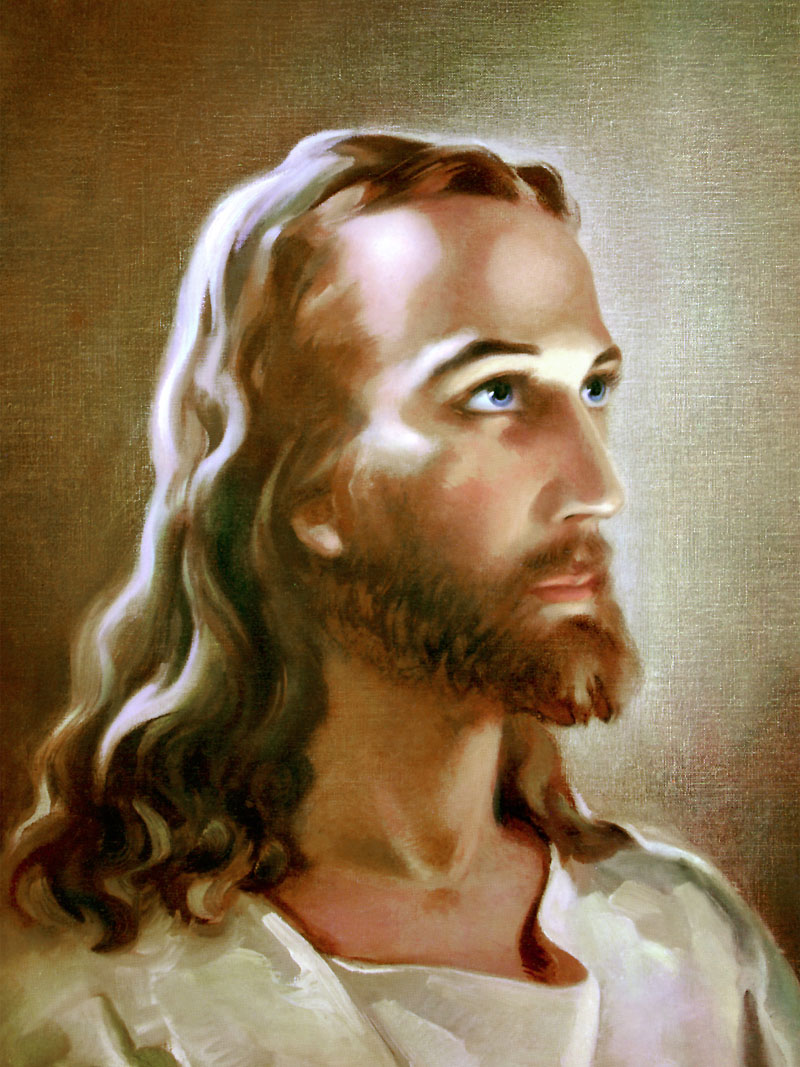
Given the bible assures us that god made man in his own image, I think we can assume Jesus had two eyes, a nose and a mouth, 2 arms, legs, etc, just like his mum - he was not some hideous giant caterpillar with tentacles, for example.
But given she was basically a surrogate parent, actual likeness would not occur.
It’s possible there was some real itinerant preacher that Paul was writing about. But Jesus as a character is entirely fictional, since pretty much everything said about him is obviously false. Abraham Lincoln was real. But the Lincoln in Abraham Lincoln: Vampire Hunter is fictional.
It’s not likely that everything written about Jesus is false, either. It would be more that tons of legends got added to him.
But, more importantly, false does not mean fictional. If the story was written by people who believe it to be true, the it would go in the mythology and religion section of the library, which is part of non-fiction. Fiction involves stories knowm to be false by both writer and audience.
Abraham Lincoln Vampire Hunter is indeed fiction. It was never presented as fact. George Washington and the cherry tree? False, but not fictional.
I need to think about this. I think that fictional could stretch to include deliberate invented fictions even when inserted in a purported nonfiction biography.
We call religion mythology mostly because it’s old. The structure of purpose of inventing stories about an actual person - assuming that the original of Jesus was one - and calling them feats of Jesus is completely analogous to what Weems did. Being done at different times in history shouldn’t make a difference.
Minus the magic, the basic story told in the gospels and Acts is that a guy is born to a single mom in a shanty town of day laborers, gets run out of town for various improprieties, disappears for a while, one day considers suicide but instead turns to mysticism, copies John the Baptist’s message and style, siphons off a few (but not most) of his followers after his death, goes to the temple and starts destroying stuff and cussing up a storm, gets arrested, no one shows up to defend him, and he meets the same fate as the guy whose style he’d been copying.
The Crtierion of Embarassment isn’t definitive but it’s a pretty random and unappealing story to make up.
It could all be made up but none of the above immediately jumps out as particularly unbelievable.
I don’t think you can really apply that selectively, though. Born in a manger: embarrassing, I guess. Born in a manger by a virgin after an unlikely trip for a census, various people magically show up, etc.: not so embarrassing.
The whole thrust of the story changes if you leave out the magical parts. Maybe it is not so unbelievable, but it’s a completely different character.
Getting past the criterion of embarrassment, you have things like that. The little details align.
The story is almost purely told as the activities of the guy over a space of a few weeks. And in that story, we’re given to believe that he came from a group of people who couldn’t read or write. In Jerusalem a few weeks or so before his death, he gained some followers who could read and write.
From what the story tells us, we should expect an account with higher detail and more fidelity from the time when he was hanging out with people who could write and some vague, less-plausible stuff from his time before being in their presence. That’s exactly what we see.
Minus the magic, we’re left with a person who seems to be lacking much to recommend him. And that would set the ground for needing to spice it up and to make him seem more amazing than he was. Intermixing those two should create a story that is gives you whiplash between the story of an itinerant hobo and an all-powerful, divine entity. Again, that would fit what we actually see.
Santa Claus is completely different from Saint Nicholas. You learn effectively nothing about the real man from studying Rudolph the Red Nosed Reindeer. That doesn’t mean that you should ignore the other stories that plausibly give some information that merits some amount of scrutiny.
Saint Nicholas was, almost certainly, nothing like Santa Claus. That doesn’t mean that he’s fiction.
That’s why I said the character of Jesus–the one that appears in the Bible, and is talked about by modern Christianity–is fictional. There was, quite possibly, some guy that was a partial basis for the later work. Or maybe multiple people.
The Jesus in the Bible is the Santa Claus in your analogy. Even if there were some true things taken from a real person, it does not make that person Jesus, nor does it mean that people today are actually referring to that person when they talk about Jesus.
Fair enough. I’d suggest making it more clear that there’s (plausibly) a not-fictional version. It sounded like you were calling the entity a character from start to finish.
It’s just the kind of story I’d want to base a cult on, not unappealing. Actually rather common stuff too, not random, which is why the magic was added. He was John the Baptist 2.0.