How much of a mechanic do you need to be to own a motorcycle?

– specifically one built in the last ten years, and likely a Harley Davidson or Honda. I don’t have a lot of mechanical knowledge, and while I’m ready to learn, I don’t want to be endlessly tinkering every weekend for the life of the bike.

What’s a reasonable expectation here? Also, if I were to have a breakdown beyond my capabilities, is a pretty much a requirement when owning a motorcycle to also own a trailer to be able to get it to a mechanic?

Any decent bike shop should have a truck or trailer to get your bike to their shop. My insurance will reimburse me for the cost of this. You might inquire to your agent about this.

Modern bikes are very reliable, although some styles are easier to work on due to bodywork and such.

Changing spark plugs and oil, and lubing the chain are really all you’re likely to do, and they’re easy for anyone reasonably handy.

AAA will tow a bike if necessary, and your dealer can give you similar roadside assistance options, but I doubt you’ll ever need it.

You should ask your prospective dealer what the maintenance schedule is like on different bikes; my Ducatis need valve adjustments every 6k miles, where a Honda Goldwing first valve check is at 32k!
You get a bike like mine, get a trailer.

You should also be able to change your brake pads, it’s an easy enough job, and very important, you need to be able to adjust your chain tension correctly.

You should be able to change blown bulbs, and replace blown fuses.

You need to know how to set your tyre pressures correctly, its also extremely useful to know exactly how to pick up a dropped bike without breaking your back.

Most folk are also able to adjust the reach of theior brake levers and also the cable adjustment.

I think you also need to know how to change your coolant.

You do not need to be an oily mechanic, but various bits of a bike need adjustment, lubication and inspection from time to time - and its much more readily accessible than a car so you should be fine.

I’ve owned a BMW bike for the past 11 years. It needed routine maintenance every 6K miles, including:

-valve clearance check/adjust
-throttle body synch (each of the two cylinders had its own throttle body)
-engine oil change
-gearbox and final drive oil change (every 12K)
-check various things for wear/trouble (brake lines, pads, etc.)

This service typically cost about $300 at the dealership. If you bought the bike from the dealer who is servicing it, they may give you a loaner bike to ride home while they service it; if not, you’ll need to arrange your own transportation home (and back to the dealership to pick up the bike).

If you get a bike with overhead cams and shim-under-bucket clearance adjustment (most sportbikes), the adjustment is more tedious/expensive, but the inspect/adjust interval is a lot longer, like 18K miles.

I use sport-touring tires, which generally last about 6K miles. If you buy them over the internet and change them yourself, you can get away for about $300 per set; if you pay a dealer to change your tires, the grand total (parts+labor) will be closer to $500. Harder tires are available that will last more like 15K miles; the compromise is a slight reduction in available traction, but I know people who have no complaint about this. Sport tires go the other direction: lots of traction, but you’ll be lucky to get 4000 miles out of them.

My bike was shaft drive, which is just about maintenance-free; as noted in the maintenance schedule above, I only needed to change the lube in the final drive every 12K miles. If you get a chain-drive bike, the chain needs to be squirted with lube every now and then (~500 miles?), not a big deal. If you get a Harley it’ll be a belt drive, which is paradise: truly zero maintenance.

Apart from that routine maintenance, I didn’t have much trouble with the bike, i.e. I wasn’t farting around with unscheduled maintenance/repairs all the time. In 135K miles it only needed to ride in the back of a pickup truck once, and that was my own fault (fuel line popped off inside the tank because I hadn’t tighted the clamp enough when replacing the fuel filter).

If your bike does end up disabled somewhere, you don’t need your own trailer. There are plenty of towing services out there who are able to carry a bike to the dealer of your choice; indeed, as Alpha Twit notes, motorcycle dealers often have that capability themselves.

Thanks for the helpful replies.

Harleys built in the last twenty-five years or so are pretty low-maintenance bikes (as opposed to previous generations of Harleys, which were nightmares).

I’m not particularly familiar with the latest generation of HD engines, but the Evolution engine was definitely easy to take care of. It had hydraulic lifters, which means no valve adjustments (I’m assuming the current engine has them also). There are three oil supplies to change regularly (transmission, primary drive and engine). The Sportster engine shares its tranny oil with the primary oil, as I remember, so that’s one less. There’s a very easy to access oil filter to change. Otherwise, brake pads and fluid have to be changed every once in a while. Also spark plugs. Not a tough task. You can do it with a socket wrench set and a torque wrench. Belt tension should be checked now and then, but in my experience it hardly ever goes out of spec. Same with ignition timing.

I don’t know what model Honda you’re thinking about. They make a very wide range of bikes. Some (most, probably) will require valve adjustments. Shim-under-bucket valve adjustment can be a handful. Camshaft removal may be required. But, as JFF pointed out above, valves stay in adjustment much longer than the screw-and-locknut valves in his (and my) BMW.

Harleys have only one carb (do the fuel-injected Harleys have only one throttle body? I don’t know), so there’s no synchronization to worry about.

One thing nobody has mentioned – wheel type. Cast wheels (and BMW spoked wheels) permit the use of tubeless tires. Conventional spoked wheels, like those found on many cruiser-style bikes, do not. If you get a flat on a tubeless tire, you can generally plug it with something like the Stop-N-Go plug kit. It’s pretty easy. No wheel removal required. You won’t need a trailer or a pickup to get you home. If you get a flat with a tube tire, you’ve got to patch or replace the tube, just like you would with a bicycle. Which means the wheel has to come off. And I can’t imagine doing that by the side of the road with an 800-pound bike with no centerstand, like, say, a Road King (as an aside, a centerstand makes life, or at least maintenance, so much easier with any bike that it’s practically mandatory).

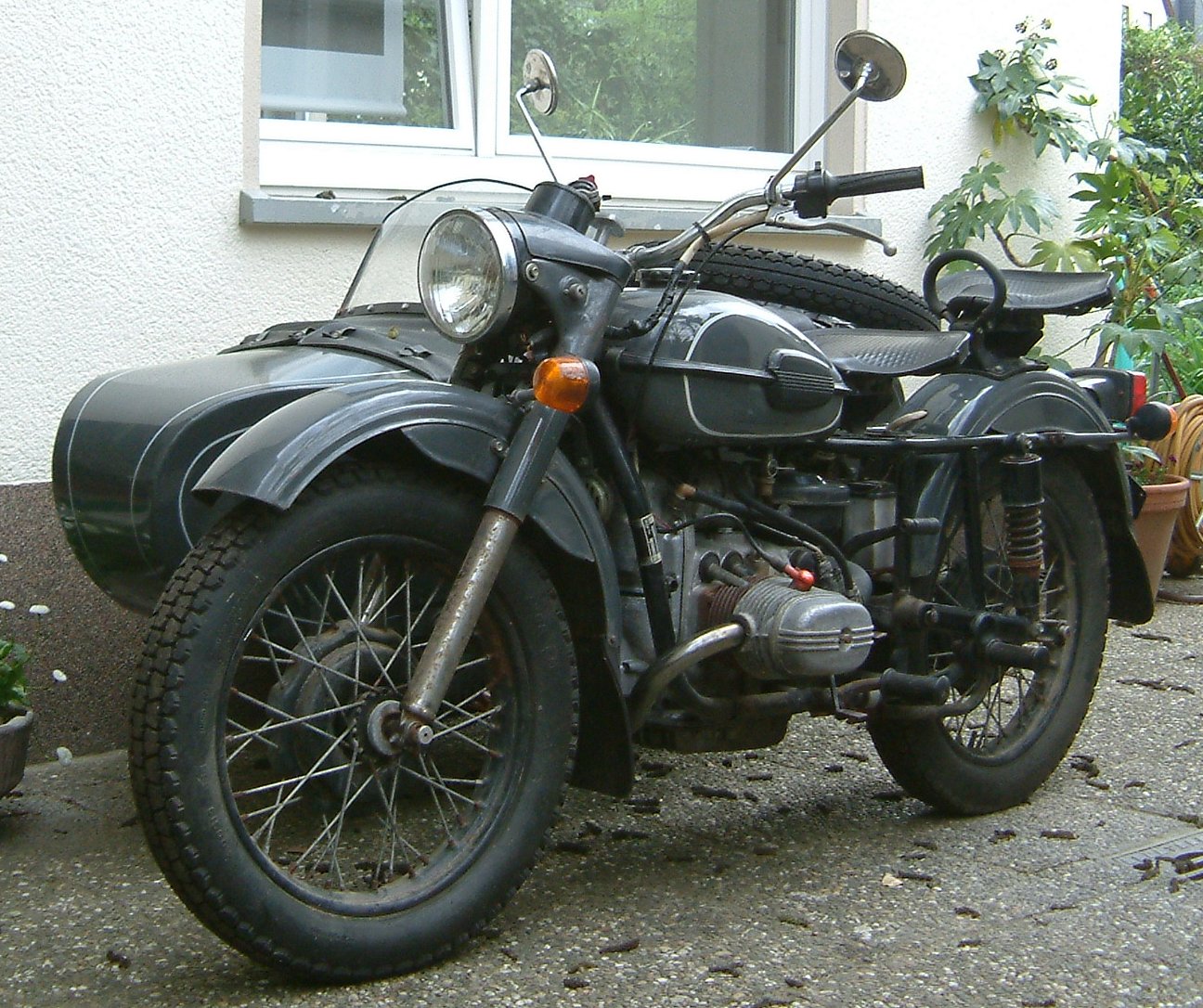
OK what year is that bike? Nice.

It’s a Ural, made in Russia, WWII
They still make them!

Ducati-making mechanics out of riders since 1946”

:slight_smile: Sorry - couldn’t resist that one.

I’m down to two bikes now. A Suzuki C50 for the Mrs. and a C90 for myself. Some of the factors that led me to choose those bikes are maintenance-related. Both are shaft drive, so no chain or belt maintenance. Both are fuel-injected, so no carb adjustment or maintenance. Both have hydraulic valve lifters, so no valve adjustment.

Both bikes are new enough that I haven’t had to worry about tires, yet. I plan to replace the originals with Dunlop D404s. I was able to get over 10K miles on those on the old bike.

I will suggest that the best maintenance for a bike is to ride it often. The people I know that have nagging problems are the ones that let them sit for months at a time. Tires leak, batteries drain, and fuel systems gum up.