I’ll disregard the melodramatic phrasing here, and instead relate my wife’s perspective as an Iranian.
First, the guy is a Pahlavi. He grew up coddled and privileged and has stayed that way his whole life. He’s been happy to spend the money his father stole from Iran and moved into foreign accounts, living lavishly while returning next to nothing to social causes or pro-democratic political activism. He has spoken extensively on such matters, but if he actually contributes monetarily to any cause, nobody’s aware of it. He’s claimed financial hardship a couple of times, in response to lawsuits against him, but he still travels frequently and lives quite well despite not holding down a job that anyone can identify.
Second, he’s regarded as a Western puppet. His grandfather and father were both installed and supported by American authorities, and he’s been living in exile in the United States. There are also persistent rumors that Pahlavi has gotten indirect financial support from Israel, because they think boosting the former monarchy contributes to destabilization of the Islamic regime. Pahlavi denies this, but the rumors persist. (My wife absolutely believes this to be true. Personally, I think the evidence is less than compelling, just circumstantial innuendo, but it is possible.) More broadly, skeptical Iranians like my wife look at the broader sweep of US-Iranian history, and Americans’ repeated and reliable habit of undermining Iranian self-rule in favor of boosting compliant autocrats. From this point of view, Pahlavi’s individual motivations are largely irrelevant; if he’s coming in with American backing, then the entire framework he represents cannot be trusted. Whatever he might be saying, regardless of what he might legitmately believe, his options for action will be restricted to whatever his sponsors find acceptable, or he’ll be cut loose, which is not a recipe for long-term stability.
Third, he’s never really articulated any sort of detailed plan for change and political transition. His pronouncements are consistently vague, expressions of philosophy and principle, without a roadmap for how anything will be actually achieved in practice. He has repeatedly refused to directly advocate for the restoration of the “Peacock Throne” (a synecdoche for the Iranian monarchy) — but he has also repeatedly said that if the Iranian people decide they want it back and want him in the role, he’d be happy to serve. He’s consistently offered himself as a unifying symbol without any ambitions for real power, but he also hasn’t provided a blueprint for what that might look like. Skeptics like my wife interpret this to mean that either he does have an agenda but he’s keeping it a secret, or he legitimately doesn’t have a concrete political structure in mind because he doesn’t know what he’s doing and he’ll just get pushed around by people who do have real plans. Either way, from this perspective, he’s basically offering himself as a leader without demonstrating any capability to actually, y’know, lead.
The one political principle he has specifically articulated with consistency is that any future Iranian political system — whether a republic, a constitutional monarchy, or something else — must be largely or entirely secular. He calls himself a religious man, personally, but he’s gone out of his way to not adhere too closely to any one tradition (he says he himself is a Shi’a Muslim, but he’s also attended Zoroastrian ceremonies). He regards the insertion of religious authority into public governance as poisonous, and that Iran’s recovery requires the clergy’s political teeth to be pulled. This is obviously true, and would be a good thing. But, again, he doesn’t provide a specific vision for what function religious belief should serve in his hypothetical future Iran, or how the transition would work. And moreover, skeptics say that of course a secret monarchist would want to eliminate a competing power base.
Essentially, he’s consciously presenting himself as an empty suit, a purely superficial symbol of unification and national identity. What that actually means, though, comes down to interpretation. According to Pahlavi’s supporters, he’s saying, “Yes, I know I’m an empty suit, but an empty suit might be useful, and that’s what matters.” But people like my wife respond, “Why would we want an empty suit, when we could have an actual leader?” The dilemma, which my wife acknowledges, is that no actual leaders seem to be available, so Pahlavi might rise to the top simply by default, a bad choice weighed against worse options.
Setting that aside, and returning to events on the ground: My wife and I watched some Farsi-language media last night, and she translated what was happening and provided some commentary of her own. She pointed out something that isn’t being remarked on much in the Western coverage — the protests are widespread throughout Iran. During past periods of unrest, the marchers would primarily fill the streets of Tehran, while the rest of the country remained relatively quiet, with only brief disruptions. In 1999, for example, students in Tehran responded to a dormitory raid with many days of marching, followed by a brutal crackdown. If you were in Tabriz, though, you would have seen only one day of protest before the marchers were removed, and then the status quo was restored. And if you were out in the hinterlands, none of this would have been on your radar.
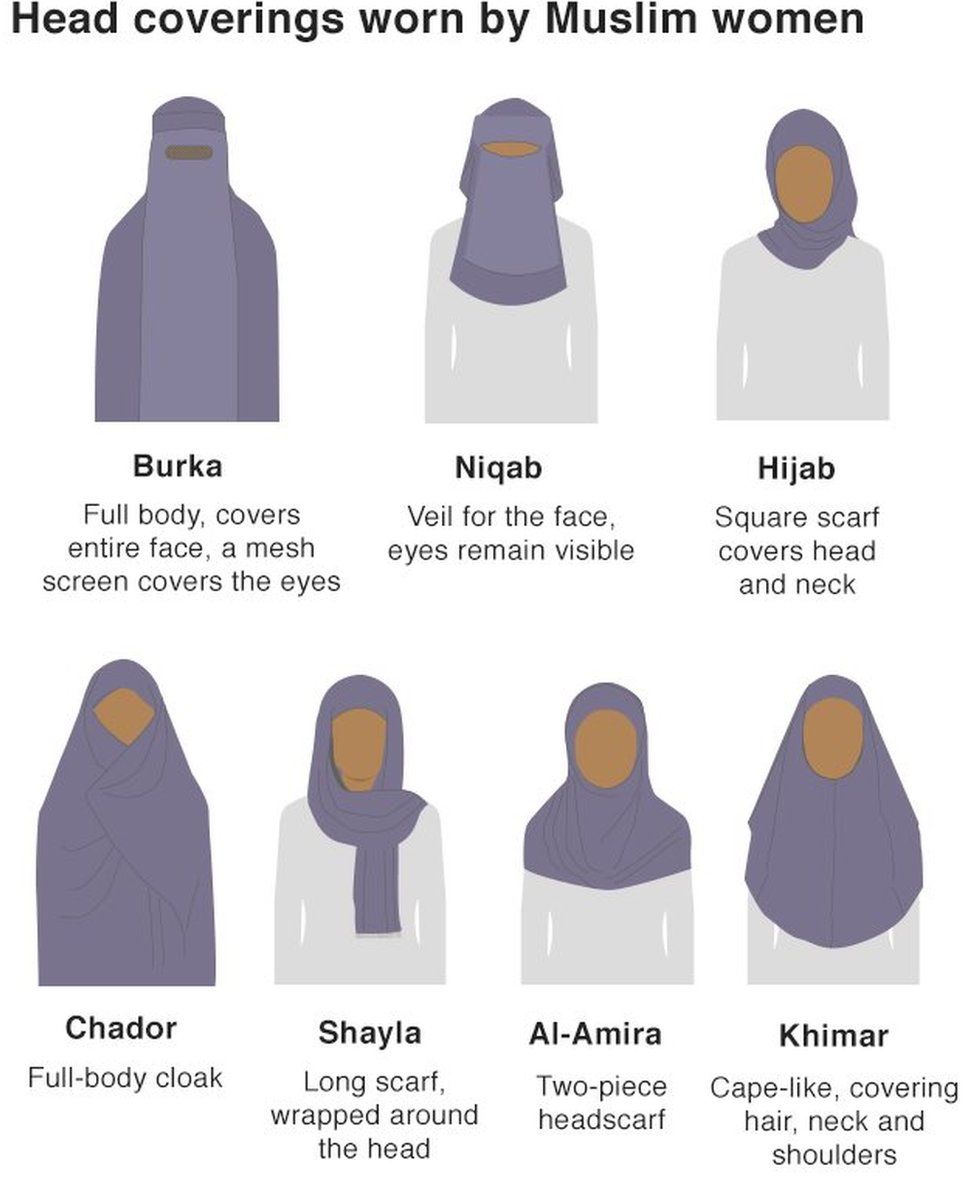
This time, though, the protests are happening everywhere, with more or less equal fervor. We were watching a Farsi news broadcast which was featuring cell-phone video clips recorded by protesters in the streets. One clip popped up, and my wife recognized it immediately. Holy shit, she said, that’s Qom. She explained to me why this is important — Qom is one of the most religious, most conservative cities in the country. Its people reliably support the Islamic regime, and protests that roil the rest of Iran rarely trigger any activity there. But in the clip, there was a huge crowd of marching women, dressed very conservatively — not just in hijab, but in chador and khimar (more info) — chanting “death to the dictator.”
This, my wife said, is very unusual, and helps illuminate why the regime is freaking out so much and cracking down so hard. The way she explained it is, the Islamic clergy has a privileged place in Iranian society, but not all of them are directly involved in governance. She guessed that no more than a quarter of Iran’s clerical population is employed by the government or is financially supported by the state; the rest are just everyday clergy, performing everyday religious roles. The fact that protests have spread to Qom potentially exposes a serious rift — the clerics who are directly involved with the state are somewhat insulated from Iran’s economic struggles, while the independent clerics are out swinging in the wind with everybody else. The motivation here is selfish but understandable; as long as life was reasonably tolerable, the wider clergy was willing to support the regime on cultural grounds, but now that they themselves are suffering, they may be peeling away.
We stopped watching after that. My wife is pretty cynical about her former country, and its chances for toppling the regime; and even if that does happen, she sees bloodshed and hardship as being likely. So because she was getting angry and sad, we switched over to something else.
But if she shares any other insights as events continue to unfold, I’ll come back and summarize again.
Edit to add: I did a little googling, and found an excellent article about why the protests in Qom are so significant, including some historical background (e.g. the original Islamic revolution in 1979 started there, and Khomeini initiated his takeover using the city as his base). Highly recommended reading if you’re interested in the subject.
 .
.