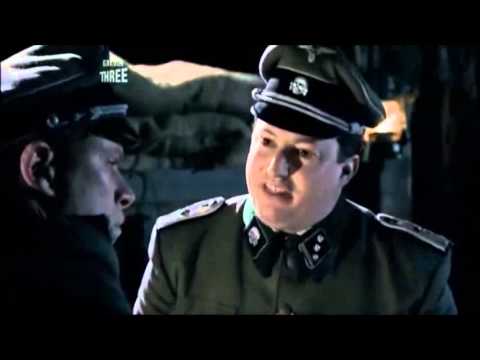
This is literally all they have as a tactic. They’re not an army - they’re simply terrorists in uniform.
Over the past couple of decades, the Ukrainian military has been trained by Western militaries, the US chief among them.
And not just in the nitty-gritty “here’s how you hold a rifle” type stuff, but higher level stuff like doctrine development, the setup and development of training centers, and professional development type stuff for Ukrainian personnel.
Joint Multinational Training Group - Ukraine is the umbrella unit that handles all that. Nations participating include Canada, Lithuania, Denmark, Poland, Sweden, and the United Kingdom.
I’m not surprised that they’re fighting well; I’m surprised the Russians are fighting so poorly.
“Chief among these erroneous assumptions are that the Ukrainians would roll over, that the war would be over in a matter of a couple of weeks, and that the West wouldn’t do anything at all.”
I saw a YouTube video about WWII that quoted a strategist “A battle plan that assumes a passive enemy is not a plan. It’s a pipe dream.” Great advice, ignored at peril. As we’ve seen.
Sometimes it does apply, though. The pre-war assumption in early 2003 was that the conventional Iraqi military wouldn’t put up much fight against the invading American forces, and indeed they didn’t do particularly much - the U.S. got to Baghdad within weeks.
Yes, but from my civilian POV it looked like the US and coalition forces were prepared for every contingency. I remember hearing that the march to Baghdad was done in full chemical warfare gear, since it was assumed the Iraqis had chemical weapons and would use them. The problem for the US wasn’t the war, it was the peace. Wherein we assumed a passive enemy would roll over.
It’s striking that both Putin and Cheney thought their troops would be welcomed as liberators.
My wife was in charge of the NBC gear for her squadron. When a Scud was spotted, the squadron went nuts, broke into her lockers, and stole all of the gear. If I understood her correctly, the batteries for the chemical sensors didn’t last very long, and they didn’t have spares. There was no chemical attack, and the squadron lost the ability to detect one.
Between flying and other duties, it took the rest of the war for her to get signatures on appropriate forms officially ‘signing out’ the equipment to those who took them, so that she would not be held responsible for their loss.
Slight side track but I’d argue it’s still quite surprising. The record of US-trained troops in the last half century or so of wars (going back to Vietnam) is worse than the record of Russian tank campaigns in the same period.
And in Georgia and in the 2014 Ukraine incursion there was no attempt to totally overtake the opponent. It was secure Abkhazia/South Ossetia and take Crimea/the Donbas, but Georgia and Ukraine still were there. Which may be a matter of not having been ready to go all the way back then, and feeling it could wait for later if needed.
ISTM Ukraine’s planners had an advantage on that front – from Day One there has been only one contingency their military really needs to prepare for: Russian agression either direct or very transparently proxied.
The apparent notion that Ukraine would be in a position of military unreadiness and social defeatism is a failure of intelligence on the part of the Russians. Either they failed to gather the right information and read it correctly, or they did but said “still, we’re powerful enough we should easily prevail over that” … and either were honestly wrong about the latter, or just rejected reality and substituted their own.
Know yourself AND know your enemy…
I’d be willing to bet that the US 2003 battle plan was based on extensively gathered and sound intelligence. It doesn’t appear the Russians actually did a lot of that, or they’d have known more about how the Ukrainians were likely to respond, how they were trained, etc…
I think the difference is that Ukraine already had a military and something of a military tradition, even if it was one that dated back to the USSR and before that, Imperial Russia. Most of the other militaries we’ve tried to train are ones that we also in effect created as part of the training. Iraq, Afghanistan, ARVN, were all basically ginned up from whole cloth at the same time they were trained.
That’s what I think makes the difference- in Ukraine’s case, we’re teaching them better ways to do specific things, while in the other cases, we were basically trying them to merely be an army, never mind fight effectively. And there are other issues of corruption, nepotism, favoritism, etc… that seem to have been much less applicable in Ukraine than the other countries.
I’m still betting that the main problem was a colossal intelligence failure, and that it led to the Russians being overconfident and underprepared.
The Russians have always been bad at war. Their strategy, time and again, throw men at the enemy, or retreat, burn your own stuff, and wait for winter.
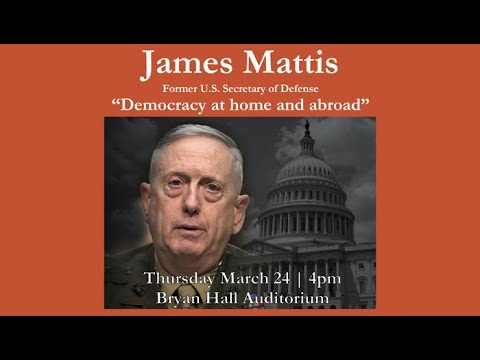
I was able to attend a recent talk by James Mattis and he discussed this topic a couple times. Here is the most relevant part of that discussion (the entire thing is worthy of your time) where he discusses the abilities of the Russian army vs Ukraine:
That made me laugh, but damn, ain’t it the truth?
Yea, but sometimes they win.
In the 1939/40 Winter War with Finland, at least five times more Russians than Finns died. But the Finns still had to accept losing 10 percent of their territory to get the Russians to stop.
Their tactics also destroyed Napoleon’s Grande Armée and defeated the German Army.

and the Sweden army in the XVIIIe.
If you define victory in war as your country/regime survives and the other guy’s doesn’t, the Russians have been good at war. The exceptions were 1905 and 1917, and both of those failures were related to internal regime rot.
The IDF https://www.idf.il/en/ would disagree there. But here are the issues- Poor morale. The average Russian dude has no hate for Ukrainians. Corruption- supplies and gear that should be there have been stolen or so poorly maintained as to be nigh useless.
Yep.
Yep.
In the Tom Clancy novel Red Storm Rising the Russians (Soviets at the time) execute the corrupt commanders first, before kicking off the war.
The book also has the war grinding to a halt when the US goes after the Soviet logistical tail, specifically fuel. Based on that helicopter strike recently I have a feeling there are some in the Ukrainian military who have read the book (although I am sure Tom Clancy didn’t invent the idea of chopping an army’s tail off).
The book also includes a coup in Moscow which deposes the aggressive leaders and allows cooler heads to prevail.
Which was the deux ex machina usually invoked to explain away why the war didn’t go nuclear in World War III fiction -or at least not too nuclear. Sir John Hackett ‘only’ had Birmingham and Minsk disappear in mushroom clouds before invoking this trope.
And plenty of other campaigns as well. The Russians aren’t bad at war generally. They’re bad at this war. So far. Hopefully they will continue to be.