They should be. The battery, charger, connector, and battery management system are all different components. They work together but they are separate.
The electricity coming from a charger is more or less “fungible”, and the car’s battery management system is the brains that manages the actual charging process, asking for as much electricity as needed at a safe enough rate for any given car’s battery chemistry. The charging profile might differ from chemistry to chemistry, but that’s nothing the electronics can’t handle (and they already do, between different cars and states of charge and such).
Newer EVs might need an adapter to charge with older chargers, but that’s due to changing connector standards (chademo to CCS1 to NACS now), not battery chemistries.
Actually, caveat: What I said applies to level 1 and level 2 chargers (the slower ones). The DC fast chargers do have more brains and sometimes require collaboration between a car’s manufacturer and a charger brand to work, but that’s more of a software and business contracting issue than an electrical one. e.g., only some non-Tesla cars can charge at Tesla Superchargers, but more and more are coming online as Tesla negotiates with the other companies. That’s also not due to battery chemistry differences but just business stuff. Rivian chargers are in a similar situation. This is becoming less and less of an issue over time, thankfully.
Finding a good enough EV charger is a pain in the ass, even today, because you have to check for 1) power output — how fast it is 2) whether it’s compatible with your car 3) whether you need an adapter 4) whether the charger is broken in some way — they very often are and 5) whether they’re available or all occupied. There are apps that help with this but it’s still always kinda a crapshoot.
Now that federal EV assistance has died, I don’t know if the charger situation will get any better. If better chemistries take off but charger networks don’t get better, then road trips will get even harder than before as more EVs come online without a corresponding increase in chargers. It’s up to the states and auto makers to deal with that, I guess.
“The VTT report addresses one claim and one claim only: fast charging. The specifications that drew the harshest industry criticism remain completely untested by any independent party:
400 Wh/kg energy density — (…)
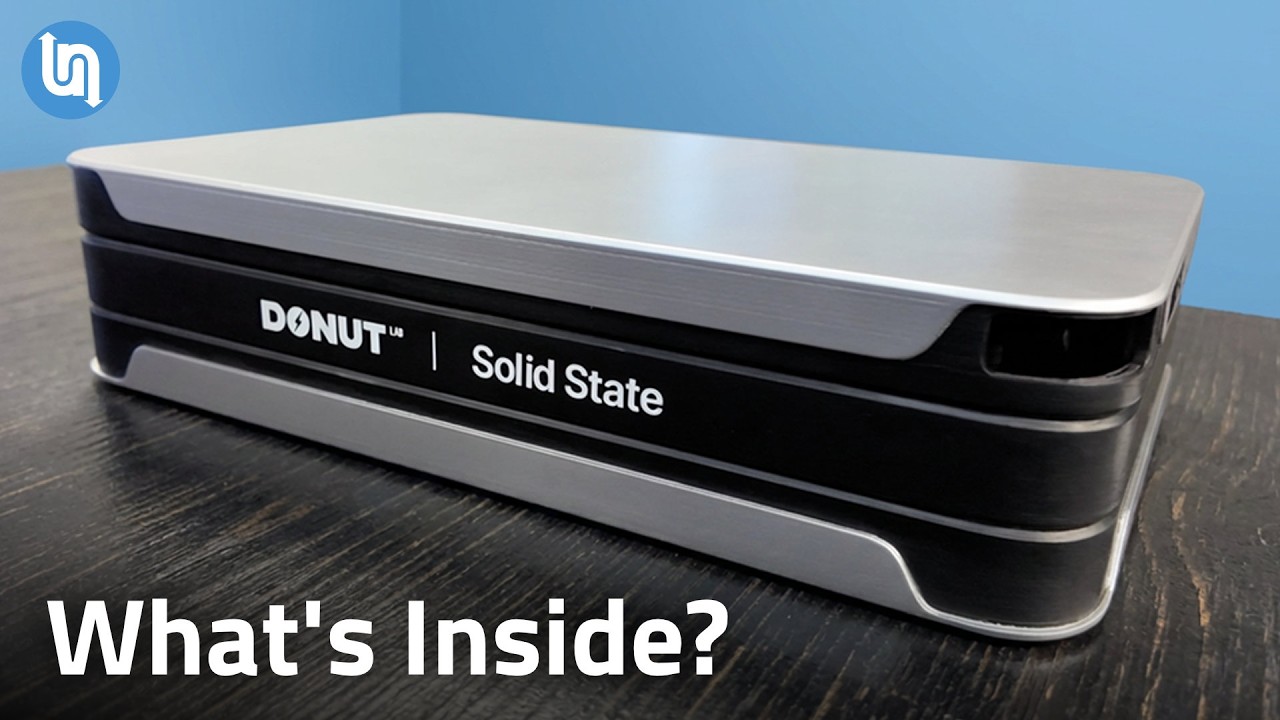
100,000 cycle life — Most solid-state developers target hundreds to low-thousands of cycles at this stage. Factorial’s validated cells showed over 600 cycles. Donut Lab’s claim of 100,000 is orders of magnitude beyond anything demonstrated in the industry. It’s arguably the biggest claim.
Extreme temperature performance — Donut Lab claimed 99% capacity retention at -30°C and stable performance above 100°C. Not tested.
Cost parity with lithium-ion — Not something a lab test can verify, but a claim that strains credibility given that no solid-state battery has reached cost competitiveness at scale.
How it compares to the competition (…) —
None of these established players claim to have a production-ready cell today with all of Donut Lab’s specifications simultaneously. That’s either because the Finnish startup has genuinely leapfrogged the entire industry, or because its full set of claims won’t hold up under comprehensive testing. This first VTT report doesn’t resolve that question.
Electrek’s Take
We’ve been tracking the Donut Lab story since Verge first announced its solid-state motorcycle at CES, and we’ve maintained that extraordinary claims require extraordinary proof. This first VTT report is a step in the right direction, but only a step with arguably the least impressive metric announced.”
And even if it can do all of those things, can it do them all at once? I would expect, for instance, that a super-fast charge that got the battery very hot would be the sort of thing that would eat badly into battery lifespan.
I’m no expert but I’m finding YouTube videos and discussion on Reddit speculating that the Donut Labs battery is actually just a lithium-ion battery pretending to be solid state.
Lost Hills CA is a typical gas village on I-5, the main highway between San Francisco and Los Angeles. It has four gas stations with about 12 pumps each. In an EV world, to charge a 100 kWh battery in six minutes would require a megawatt. that means that if Lost Hills replaced its gas pumps with fast chargers, it would need 50 megawatts of power. We have places like this every 20 miles or so along the highway. Put them together and you need most of the capacity of a nuclear power plant.
In particular, the video claims early on that there are flaws with all of the explanations. What’s the flaw in the explanation that Donut is just plain lying?
Make up your own mind - not in the synopsis supply biz …. meanwhile
Verge is showing a real product in its production motorcycle charging quickly at a standard public charging…that we don’t know the details hardly puts it in scam territory. Rather in wait and see while battery tech accelerates like crazy….
The take by the end of the video (I fast forwarded) is that allegedly they are not in a fund raising stage so there is little reason to make false claims now. I remain skeptical. When full sets of testing are available for the experts to review and back up their claims, if so, then I can get interested in seeing what the applications will actually be. Until then we have extraordinary claims and only a very limited select set of evidence.
They may have a next generation in battery chemistry. There is nothing wrong with that. We should not complain about a 50% improvement in energy density. On the other hand, it may not deserve as much hype as it seems to be getting.
The video also dismisses the question of heat. The charging times they claim will take something on the order of a megawatt. Even if that could be done with 99% efficiency, there would still be ten kilowatts to deal with. This is the territory of an electric stove at its highest setting. It seems unlikely that it would be okay for the source of that heat to be red hot. Cooling is going to be a definite concern.
At some point, it is something the electronics can’t handle.
Sodium batteries have a very large usable voltage range. The fully-discharged voltage is much lower than the fully-charged voltage. Chargers which are designed for a smaller charge-voltage range can be built using low-voltage transistors, for supply voltage only slightly above the charge voltage. There is an advantage to dong so, because high-voltage, high-power, high-current FETs are significantly expensive, and significantly more expensive than low-voltage high-power, high-current FETs. This means that many existing stationary battery systems can’t be upgraded to make full use of sodium batteries, and quite likely the same is true for car-charge systems.
“We’re about to launch our product! If you invest quickly, you’ll be able to get in on the ground floor!”
“Oops, we missed our product launch target, because of X, Y, and Z technobabble (that’s probably someone else’s fault). But hey, on the upside, it gives you another chance to make that great investment you almost missed out on!”
Continue as long as you can, until you get to “Oh, sorry, I can’t hear your calls for SEC investigations and your money returned over the sound of the ocean waves on my non-extraditing tropical island”.
With the self created deadline of March 31st coming up, five of the claims have had some degree of verification confirmed. But the two that have drawn the greatest doubts haven’t been.
CEO Marko Lehtimäki staked his personal reputation on having these batteries inside production Verge Motorcycles by the end of Q1 2026 — March 31. Verge Motorcycles CEO Tuomo Lehtimäki has said first deliveries would begin “in late March,” but EU and US safety certifications are still pending, and the company has limited 2026 production to approximately 350 motorcycles.
It is possible they are soliciting clicks and investment to get past the production hurdles, or to push on EU and US safety certs.
They could be building hype for a literal last minute verification, similar to a Hollywood courtroom drama or comedy.
And of course the five verified (with qualifiers) advancements are interesting as long as even half of the claims about storage density and repeated cycles are correct.
But this delay in verification of the most needed, and most challenging factors does increase my doubts. Not saying it’s a scam, or vaporware, but it does lead me to believe (as I just hinted above) that maybe it is a solid improvement, but the exact degree was Elon Musk-like (okay, not that bad, but same style) self promotion with confidence they would get there soon.