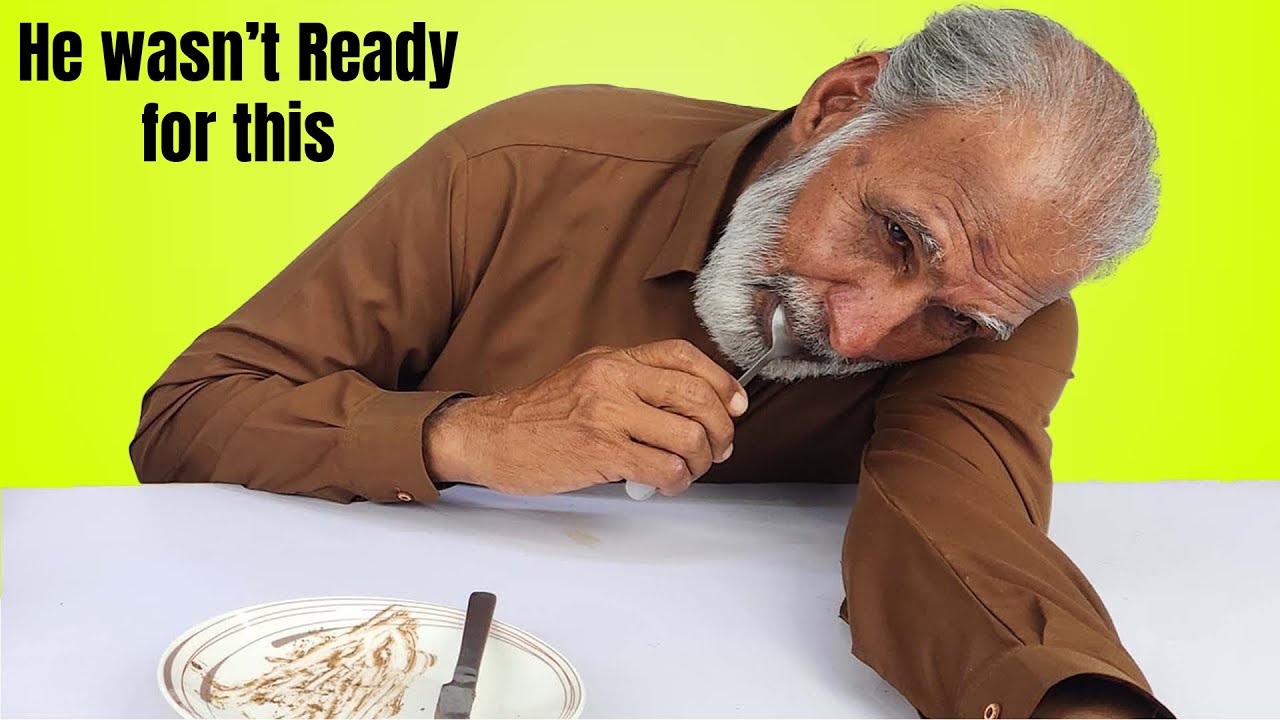
In this video, two Pakistani Muslims eat cake that is broadly at as being made with cannabis. The guys get baked and have a good time.
The comments are all over the place. Putting aside the matter that it looks as if the producers drugged two men without their consent, there’s a lot of discussion about Islam and cannabis. Some say it’s haram because it’s an intoxicant, end of story. Others say it’s halal because it’s a plant that grows in the ground, the Koran doesn’t specifically forbid it like it does with alcohol, etc.
I get that Islam doesn’t have a singular authoritative body like Catholicism has the Vatican, and that this is going to vary from sect to sect and culture to culture. Which is why I’m asking specifically about the matter in Pakistan, since these guys are Pakistani. I know we have a Pakistani Doper who can help us sort this out but I forget his name.
FWIW, an Israeli Doper mentioned in another thread that at least some Palestinian Muslims like the sticky icky, and Israeli cops look the other way because it’s part of the Palestinians’ culture.
My job buddy for the last seven years was a Pakistani Muslim, and we spoke at length about his belief. I asked him this very question about weed (along with many other topics like baco-bits and impossible sausage).
He told me that weed was definitely not to be indulged in as because it intoxicated your sacred bodily vessel. He was rather devote and acknowledged that not everyone was so devoted.
Allah has forbidden pork because it is impure and unclean.
But if it is manufactured artificially and is not made from pork, then it is at least makrooh, because it is an imitation of something that Allah has forbidden. What the believer should do is keep away from haraam things and shun them, and not enjoy them or look for foods that are similar to them.
Moreover that may be a means of getting used to the taste of pork, which would make it easier to eat it later on.
In Islamic terminology, something which is makruh or makrooh (Arabic: مكروه, transliterated: makrooh or makrūh ) is “discouraged”.[1] This is one of the five categories (al-ahkam al-khamsa ) in Islamic law – wajib/fard (obligatory), Mustahabb/mandub (recommended), mubah (neutral), makruh (disapproved), haram (forbidden).[2]
I don’t know of anyone currently living in Pakistan on this board. I only lived there as a child and young adult and that was a long time ago (in the 1960s, 70s and 80s). During my high school and college years we had a massive heroin epidemic and we had Islamization of the judicial system too. Basically remaking and recharacterization of secular law to be in compliance with Sharia.
Everyone I knew regarded heroin use (and all drugs that are widely proscribed, including marijuana and cocaine) as sinful under Islamic law. But its possession, use and trade was illegal under secular law anyway.
There are many competing sources of Islamic law even within Pakistan, but I would be surprised if any of them opined that taking mind-altering substances is halal, even at the lowest level (Makruh = discouraged).
“Assassin” probably derives from “users of hashish” from the original assassins of Alamut. They certainly don’t represent modern Muslims and weren’t Pakistani, and furthermore not only did not represent the largest group of Muslims the Sunni, but aren’t even the current majority Shia group (Twelvers) but the still extant and much chilled Nizari sect of Ismaili. So you can’t say it’s a mainstream representation, but cannabis has had a long role in Islam. And of course it’s purported role in the assassins’ lifestyles is mostly due to reports by opposing Muslim groups.
I’ve heard that there has also been debate in Muslim circles about caffeine. I think that nowadays, most consider it to be acceptable, but I wouldn’t be surprised to meet someone who still abstains for religious reasons.
Baco-bits are OK sine they are not made from pork. He tried the impossible sausage and went crazy over the flavor and actually stated no wonder people were always telling him he was missing out. When we used to go out as a group he would eat impossible burgers whenever he could get them and it allowed us more flexibility when choosing a place to go.
There is a passage in the Hadith (words of Muhammad) to the effect of “If much of a substance inebriates, then even a little is haraam” (forbidden). Hadith is generally considered binding by Muslims.
Very similar to what I heard a teetotaling evangelical preacher say: sure, the Bible forbids drunkenness but not actually drinking. But if you drink even one drink, you’re one-drink drunk.
The issue is that halal food is not served in most places and some Muslims tire of eating fish and vegetable dishes. So a place like a bar that serves only bar type food limits their choices and sets them out from the rest of the group. So being able to have a impossible burgers makes them enjoy the gathering more.
There’s also khat which is fairly popular in Yemen. It’s a plant you chew, often bunching a big wad of leaves in one of your cheeks, and it’s a stimulant that causes some mild euphoria. Some predominantly Muslim nations made it illegal, Saudi Arabia for example, but they’re openly sold in others including Yemen and Ethiopia.
Many of the more observant Muslims i know would consider going into a bar, itself, haram. There’s a hadith to the effect of Muslims shouldn’t sit at a table where alcohol is being served, and many extend this to the establishment itself.
A lot of Muslims figure stuff out for themselves from the sources without relying on religious authorities. But I have read that the Hanafi muftis of the Ottoman state ruled that hashish is halal.