The speed of an aircraft engaging a ground target could vary from zero for a helicopter hovering in place to multiple hundreds of kilometers per hour for fast attack jets doing strafing runs. So what determines the optimum speed?
I can only give a guess but I would assume that it depends on 1) the situation of the friendlies you are trying to assist, and 2) the anti-air defenses the enemy has. If you’re going up against insurgents who have little or no air defense, you’d probably like to go as slow as possible, so that you have the maximum time to aim carefully or get the best look at what’s going on on the ground, especially if there is a risk you might accidentally hit friendlies. And the closer the friendlies are to the bad guys, the slower you have to be to make sure you’re delivering ordnance precisely.
If the enemy does have robust SAMs/MANPADs/ZSU-23 stuff, then you probably need to do as fast a pass as possible, to minimize your exposure to fire.
A helo like an Apache can use its rotor-topped sensors to just barely peek over the horizon (hill) and launch missiles at the enemy. Even better if a ground troop somewhere is illuminating the target with a laser, then the helo doesn’t even need to be anywhere near the horizon in question.
I was thinking of how during Vietnam the Douglas A-1 Skyraider, a straight wing, propeller plane originally designed as a torpedo plane in the latter days of WW2, was appreciated by American troops for its robust firepower and long loiter time. Nowadays we’d use a helicopter gunship but I’d wondered if it would be worth it for something specialized for low-velocity flight like various STOL designs.
I wonder if an unmanned, heavily-armored tiltrotor drone might be the best solution. It offers high speed when you need it, low speed when you need it, and motionless hovering when you need it. Being unmanned, it would put no human lives at risk. Being armored, it would be able to survive the gunfire, RPG fire that Apaches take. It would be like a V-22 Osprey or V-280 Valor. It could even function as an ambulance/medevac helo too.
The optimal speed is the fastest possible speed that will minimize your presence over the target without compromising the accuracy of the weapon’s delivery system. This will, of course, vary depending on the aircraft and weapons in question.
Pretty well nailed it already. The slowest speed that lets you survive the defenses is what you want. That aids understanding the situation and making good decisions.
OTOH, as noted, if somebody else is deciding what to hit and gives you a laser spot or coordinates, you could be 100 miles away and going fast or slow and just lob munitions into the general target area then let the munition’s terminal guidance system put it on the exact right spot.
OTOH, dropping unguided bombs or firing unguided rockets definitely benefits from being slow(er).
Viet Nam was the worst of all worlds for airpower. The airplanes were fast, the bombs were dumb, the airplanes were dumb, and the targets were small, moving, and hiding under dense jungle. Seeing anything, recognizing it’s hostile, and dropping a dumb bomb on it from a fast dumb airplane were all very hard problems. The fast jets were always within about 10 minutes of running out of gas; no time to think.
Low-speed solutions like airborne Forward Air Controllers (FAC) and the Korean leftover A-1 mentioned above worked well. Because most of the enemy most of the time didn’t shoot back with anything big or guided. That was 50+ years ago(!) and tech marches on. All those lessons learned are pretty well inapplicable to the modern computerized battlefield.
I imagine it also depends on what weapons you’re using, and what kind of targets you’re engaging. If an attack run consists of lobbing a single big bomb, then the quicker you can get in, launch that bomb, and get out, the better. On the other hand, if you’re using a machine gun to mow down vast columns of infantry, you’re going to need to stay there for a while to get all of them.
If it’s unmanned, you couldn’t put a(n injured) person in it. Coupled with you’d want a medic to provide treatment enroute & you can’t rely on every soldier knowing how to properly lock in the gurney / strap an injured soldier to it, meaning you’d need trained & dedicated crew for it.
Medevac didn’t always have an attending medical provider en route.

Once the platoon medic stabilized the patient, getting them to the nearest field med facility was important enough that they didn’t always have niceties like onboard EMS.
didn’t is past tense, & I think part of that was helicopters back then were not what they are today, but definitely improvements in trauma care over the decades.
The rate of fire will influence how effective a machine gun is. A 30 caliber or 50 caliber Browning has a rate of fire of around 600 rounds per minutes (10 rounds per second). From the speed of the aircraft you can figure out how far apart the hits are on the ground. If you are too fast the bullets are hitting every 20 feet which would not be optimal. Of course if you can fly low enough you may hit 2 soldiers with one shot.
Hence the emphasis for aircraft on rotary guns like the M134 Minigun, which fires 35 to 100 rounds per second.
Heh, I thought of this.

An aircraft attacking a ground target with machine gun fire would usually be in a slight dive, moving directly toward the target. Assuming the pilot does things right, the shots are all concentrated in the target area.
Some recent footage of people who have too much money for shooting stuff: https://www.youtube.com/watch?v=2MW3_lcWR84
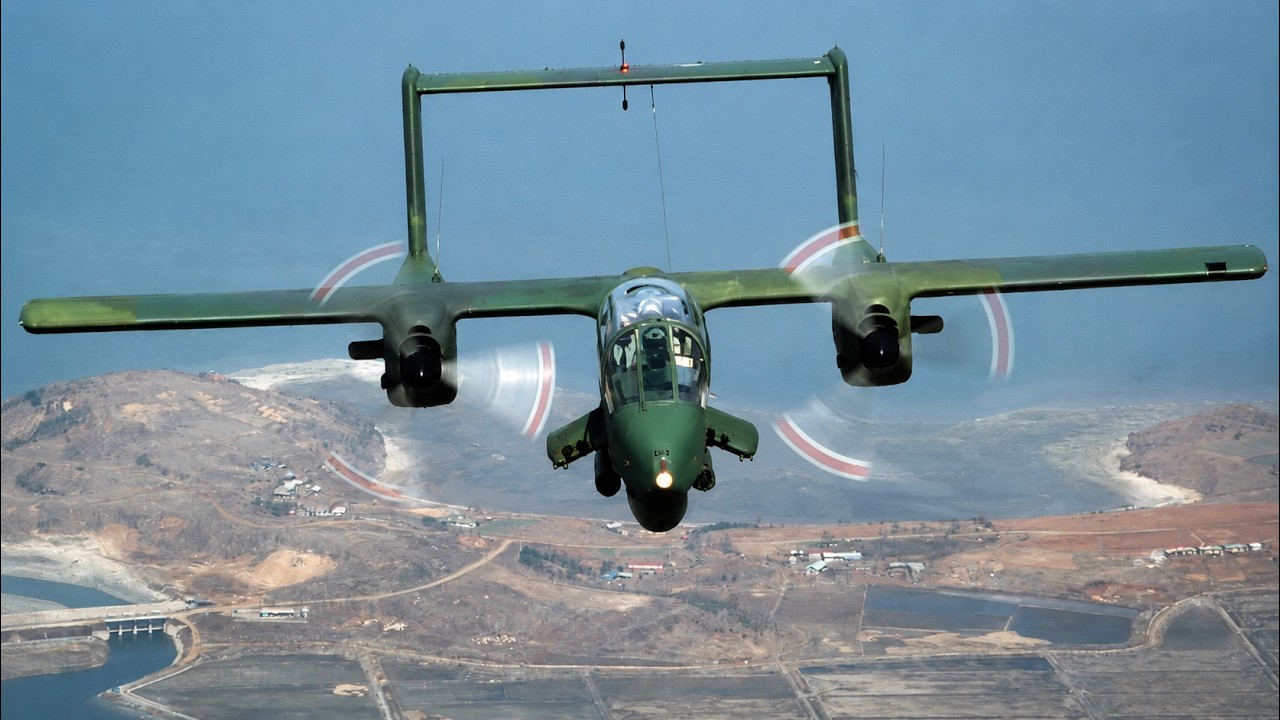
Just found out about the OV-10 Bronco that was used in Vietnam. I was clued into it by a YouTube video that said they’ve been reactivated for use in counter-insurgency operations.
Armor on flying drones typically makes little sense- the added weight means increased engine size, slower speeds, less payload, shorter range, higher cost, etc. Its typically far more effective to focus on the outer layers of the Survivability Onion, especially without squishy pilots to worry about. Sure, someone may get a lucky shot and take down your unarmored drone with a rifle, which is why you’ve sent 2 or 3 drones for the mission, for the same cost as 1 heavily armored one.

The flip side of that is the enemy can gather info from downed assets; frequencies used, any new tech you might have that they could either copy or learn how to defeat so one more expensive but survivable drone might be more desirable in that case.
How can this discussion miss the A-10 “Warthog” (i.e. the Thunderbolt II)?
Low-speed plane for close-cover support, armored cockpit and a 30mm rotary autocannon.
It’s set to be retired, but it’s successor is not online yet.
I couldn’t cite chapter and verse but I wouldn’t have thought anything turbofan propelled would be low-speed.