Pre 1950s Celebrities With College Degrees

Robert Beatty earned a BA from the University of Toronto before getting top billing as Gulliver in Another Shore. (No, not that Gulliver.)

Anyhow, he otherwise spent the '40s getting top billing in Against The Wind, with second billing going to his leading lady Simone Signoret; and getting second-billed to leading lady Mai Zetterling, in The Girl In The Painting; and getting top billing in Counterblast, as the lab assistant who may not realize in time that the guy he works for is a Nazi agent secretly developing a biological weapon; and getting top billing in It Happened One Sunday, doing the whole romantic-comedy thing; and getting top billing in Green Fingers, as the working-class man who discovers he has an incredible knack for healing; and so on, and so on.

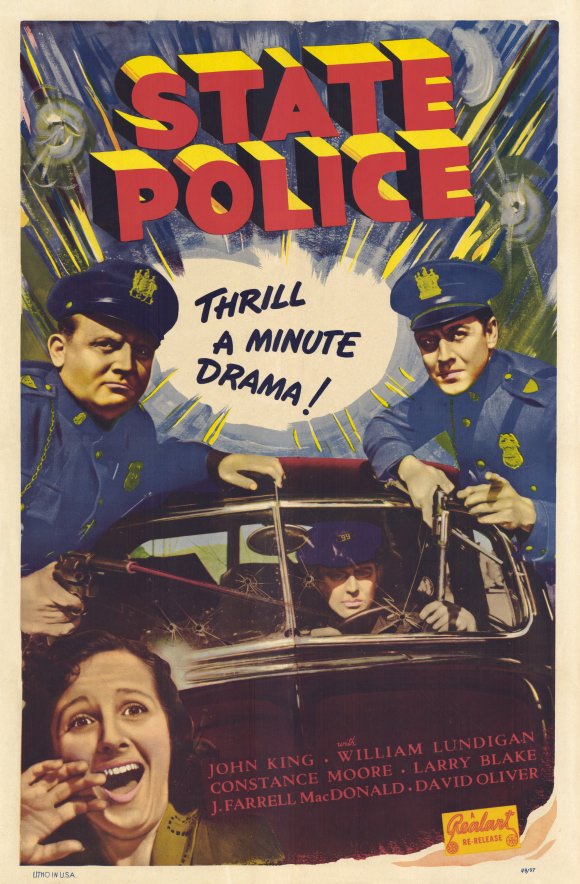
John “Dusty” King graduated from the University of Cincinnati, and after picking up minor roles in a few movies got top-billed as the title character in ACE DRUMMOND in '36; and top-billed in THE ROAD BACK, in '37; and top-billed in STATE POLICE, in '38; and after he was Aramis to Don Ameche’s D’Artagnan in THE THREE MUSKETEERS in '39, was back to top billing in MIDNIGHT LIMITED in '40; and then he was top-billed and second-billed in a whole bunch of westerns.

David Bruce graduated from Northwestern University and started getting small roles in all sorts of films – a John Wayne movie, a Gary Cooper movie, Errol Flynn movies, Edward G. Robinson movies, and so on – as well as getting second billed to leading lady Anne Gwynne in SOUTH OF DIXIE and MOON OVER LAS VEGAS, as well as getting second billed in the love-triangle comedy SHE’S FOR ME, as well as second billed in the love-triangle drama SINGAPORE WOMAN; and while he picked up third billing in ALLERGIC TO LOVE and RACING LUCK and SALOME WHERE SHE DANCED, he was top billed in SUSIE STEPS OUT and HONEYMOON LODGE and THE MAD GHOUL.

Anyhow, right after Bruce got top billing in 1949’s PREJUDICE, he was top billed as Daniel Boone in 1950; he kept getting third-billed and second-billed work in the '50s, in PYGMY ISLAND and THE ADVENTURES OF CAPTAIN KIDD, along with top-billed work in TIMBER FURY – but that’d take us beyond the scope of the thread.

Tris Coffin earned a BA from the University of Washington and got lots of work in the '30s and '40s – a Dick Tracy movie, a Charlie Chan movie, this or that film noir, the SPY SMASHER serial, and so on – and various fourth-billed parts, in westerns where the top three spots go to the hero and his sidekick and the pretty gal.

Anyhow, he fielded the third-billed role in THE CORPSE VANISHES, with Bela Lugosi; and was third-billed in DESERT VIGILANTE, with Charles Starrett; and third-billed in RANGE JUSTICE, with Johnny Mack Brown; and I figure enough of that adds up to a solid claim to “hey, it’s that guy” status. But if I’m wrong about that, if he’s going to need a top-billed role to qualify for this thread, then let me add that he finally graduated to that in 1949, as KING OF THE ROCKET MEN.

Katherine Dunham earned a bachelor’s degree from the University of Chicago in 1936 before touring America and the world with her own dance company, authoring a book along the way while performing on Broadway and in a variety of movies – CASBAH, STORMY WEATHER, STAR SPANGLED RHYTHM – all before 1949.

(She was still at it in 1950 – the year she appeared on THE ED SULLIVAN SHOW; and was back on Broadway a 7th time, with Katherine Dunham And Her Company; and was back up on the big screen, dancing in I’M IN THE REVUE; and so on – but, again, the point is how much high-profile stuff she did before that, which was plenty.)

“A Syracuse University graduate who passed the bar examinations in New York,” William Lundigan decided to try his chances in film; he made his screen debut in 1937, getting third-billed after the leading man and leading lady – and then getting second-billed, as the leading man to a leading lady – and then third-billed and second-billed again in 1938 – but then in 1939, when he wasn’t plugging away in a movie with Bette Davis or Errol Flynn, he went from second billing to top billing.

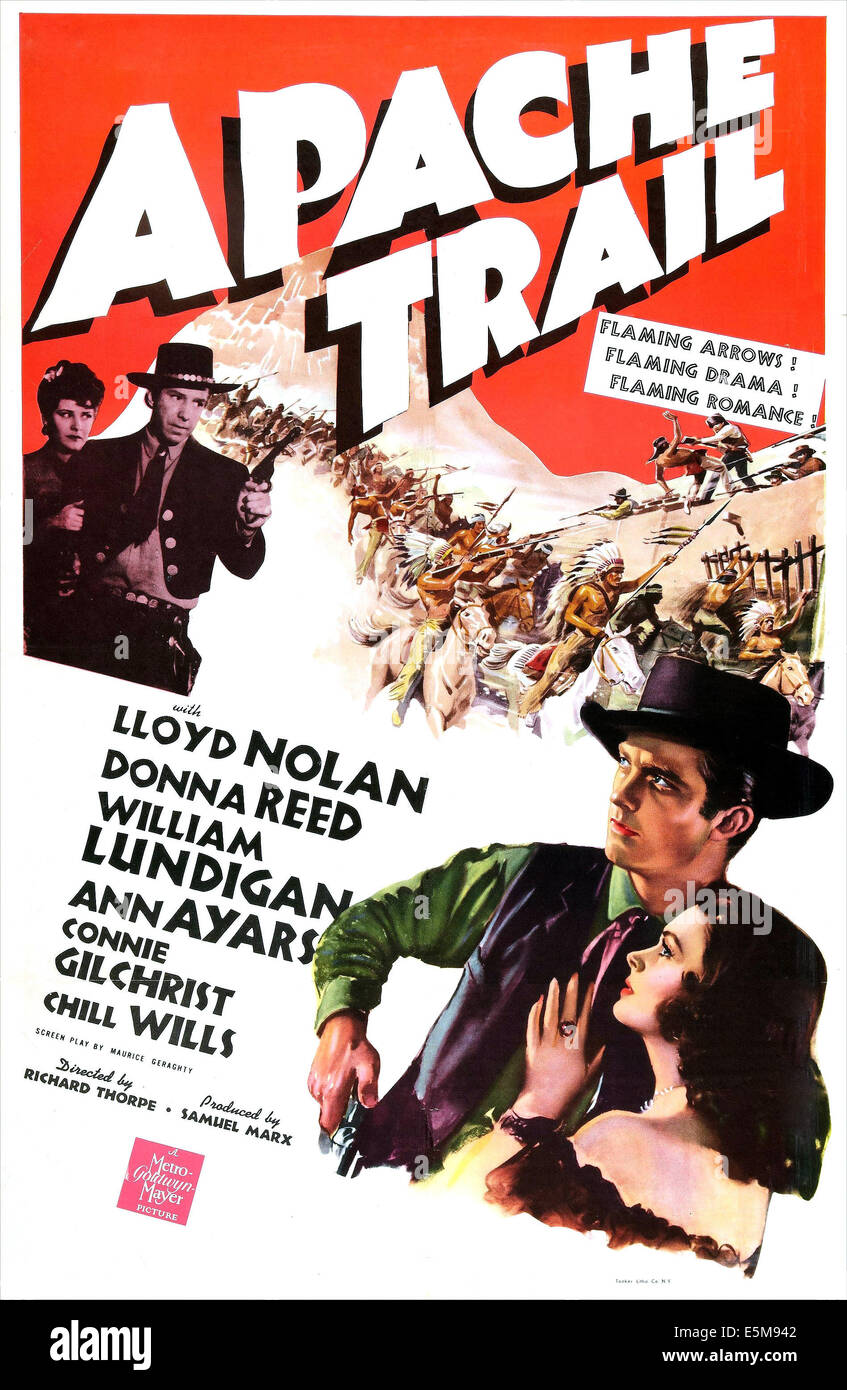
Lundigan then spent the 1940s in pretty much the same vein; he’d take a supporting role in a Ronald Reagan movie or a film with Lloyd Nolan and Donna Reed – though you can see from the posters that he got billed prominently – when he wasn’t busy in a top-billed role, in A SHOT IN THE DARK, or THE CASE OF THE BLACK PARROT, or MYSTERY IN MEXICO, or FOLLOW ME QUIETLY, or whatever. (Again, he’d still take a supporting role in a Hedy Lamar movie or a Jimmy Cagney movie; it’s just that he’d then get top-billed in SAILORS ON LEAVE or HEADIN’ FOR GOD’S COUNTRY. And, sure, he was second-billed to his leading lady in THE INSIDE STORY; but he was top-billed, over leading lady Virginia Bruce, in STATE DEPARTMENT: FILE 649. And so on.)

Edgar Buchanan earned a DDS, and actually practiced dentistry for a while, before making his way to Hollywood; he wasn’t classic leading-man material – he wasn’t the guy they’d cast as Robin Hood, but he was the guy they cast as Friar Tuck – but he didn’t need to be, to get plenty of work.

I mean, like I was just saying, they’d of course cast Richard Dix and Kent Taylor as Wyatt Earp and Doc Holliday in TOMBSTONE; but they’d put Buchanan in at third, as Curly Bill Brocious. Or third in ABILENE TOWN, after Randolph Scott and Ann Dvorak; or third in YOU BELONG TO ME, after Barbara Stanwyck and Henry Fonda; or third in ADVENTURES IN SILVERADO and THE WALLS CAME TUMBLING DOWN and so on; and fourth-billing in a Cary Grant flick like PENNY SERENADE or an Edward G. Robinson flick like DESTROYER or a Glenn Ford flick like FRAMED didn’t hurt

…but let me switch gears to add that he was second billed in CITY WITHOUT MEN and THE RICHEST MAN IN TOWN and THE WRECK OF THE HESPERUS before he eventually got top billing as the star of BEST MAN WINS in 1948.

Wiki sez that Don McNeill’s 35½-year run as the host of his variety show is the longest tenure ever for an emcee of a network entertainment program, narrowly beating out Johnny Carson and Bob Barker; his radio show got its start in the 1930s, and kept on running in the 1940s when people could also see him doing it on television thanks to a simulcast on DuMont – and the whole enterprise was still going strong in 1950, when he parlayed his fame into doing Don McNeill’s TV Club on ABC at 9pm on Wednesday nights, sure as the radio show kept going on well into the 1960s.

Wiki also sez that he was a Marquette University grad.

Rex Ingram presumably counts.

I mean, he obviously qualifies in that he was, AFAICT, the first African-American man to receive a Phi Beta Kappa key from Northwestern University; I’m just asking if the guy reached full ‘celebrity’ status with his acting career.

And I think he did – because, even leaving aside all of his credits on Broadway in the '30s and '40s, movie audiences saw Ingram do plenty of memorable work in lots of high-profile stuff. Like, that was him as the genie in Thief of Bagdad; and that was him as, uh, Jim in the Mickey Rooney version of Huckleberry Finn; and that was him getting top-billed in Green Pastures, which AFAICT remained the highest-grossing film with an all-black cast for eighteen years; and so on.

(And, at that, he took his Broadway role in Cabin In The Sky to the big screen – still playing Lucifer, but now with prominent billing on the poster that excitedly exclaims: “At Last On The Screen! The Musical Comedy Sensation!”) (Heck, his name is a good deal bigger there than Vincente Minnelli’s is for, y’know, directing the thing.)

Allen Funt got a Cornell degree before he started hosting Candid Microphone on radio, and then parlayed that into some theatrical short films in the same vein, and then of course started hosting Candid Camera on television in the late 1940s.

Phillips Lord graduated with honors from Bowdoin College, and then starred in his own national radio show with an audience of millions – which is respectable enough in its own right, but which also helps explain why he was able to parlay his signature character from it into a top-billed movie role (complete with young Bette Davis in a supporting role) easy as cranking out book after book after book – you know, when the guy wasn’t putting out plenty of records with the Phillips Lord Trio.

Speaking of books, I guess a bunch of writers would fit the OP’s terms; once you hit a certain level of name recognition, ‘celebrity status’ seems like the right phrase.

Like, take Arthur Miller: he was famous in the '50s, as the guy with Marilyn Monroe on his arm and a Tony for The Crucible – but maybe he was already famous in the '40s, as the college grad who’d won a Tony for Death Of A Salesman.

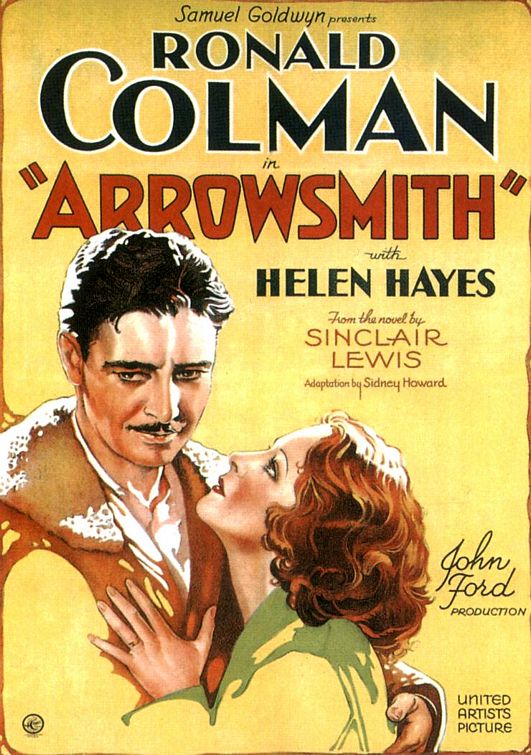
At that, by '49 Sinclair Lewis had already picked up a Yale degree and a Nobel Prize, and adapted his It Can’t Happen Here into a Broadway play, and Arrowsmith had gotten an Oscar nomination (with his name touted on the poster).

Likewise, how else were they going to shill the Oscar-nominated film of Our Town other than by putting Thornton Wilder’s name out there? So that’s another Yale grad, who also did prominent stuff on Broadway; or how about another Nobel Prize winner: prominent poet and playwright T. S. Eliot, who’d of course graduated from Harvard before heading to Oxford?

Which – you know, I’d been hesitant to mention Brits due to, uh, impenetrability; but, hey, maybe I should be hesitant to mention writers, so I’ll use Oxford as the jumping-off point to offset one another by putting an actor amidst the authors: Donald Crisp. “The first Oxford graduate to make it in Hollywood was Donald Crisp,” says Oxford itself, apparently; and who, before winning an Academy Award for his acting in How Green Was My Valley, was pretty much all over the place: playing Ulysses S Grant in Birth Of A Nation, and then getting top-billed as Leif Ericsson in The Viking, and directing a Douglas Fairbanks picture in between; and, granted, since the roles of Elizabeth and Essex were going to Bette Davis and Errol Flynn in The Private Lives of Elizabeth and Essex, he came in at fourth as Francis Bacon behind Olivia de Havilland; and fourth, after Spencer Tracy and Ingrid Bergman and Lana Turner, in Dr. Jekyll and Mr. Hyde; and fourth in a Katharine Hepburn movie, and fourth in a Jimmy Cagney movie; and so on, and so on.

Anyhow, if he for some reason doesn’t count, I’ll gladly mention more writers who earned college degrees and became household names, from Tennessee Williams to Thomas Wolfe – but if they don’t count, I figure Crisp does.
Marvin Miller – who in the '50s was the voice of Robbie The Robot on the big screen while he was handing out big checks on The Millionaire on the small screen – was a Washington University graduate who got a ton of radio work in the '40s, which along with roles in this or that movie helps explain why he was picked to be the star of the Mysteries of Chinatown TV show on ABC starting back in 1949.

Barry Nelson was the first James Bond – you know, squaring off against Peter Lorre as Le Chiffre, in the live-television version of CASINO ROYALE in the '54.

Anyway, before that he was MY FAVORITE HUSBAND on television starting in '53; and before that, he was the star of THE HUNTER on television in '52; and before that, he was in theaters as the star of THE MAN WITH MY FACE in '51; and before that, he’d picked up a dozen golden-age-of-television credits in '50; but before that, it was the '40s and Nelson was in theaters as the second-billed leading man to Ann Sothern in UNDERCOVER MAISIE; and he’d been in theaters as the second-billed leading man to Laraine Day in A YANK ON THE BURMA ROAD; and he’d also been third-billed, after William Powell and Myrna Loy, in SHADOW OF THE THIN MAN; and so on, and so on, picking up screen credits in BATAAN and A GUY NAMED JOE and everything else from Abbott and Costello to Doctor Kildare.

Anyhow, before all of that he graduated from UC Berkeley.

After graduating from the University of Arizona, Mark Roberts headed to Hollywood and started picking up roles under his “Robert Scott” stage name: that’s his name, as big as anyone else’s, on the poster for SHADOWED, where he was fourth-billed; and he was fourth-billed in THE CRIME DOCTOR’S COURAGE and THE UNKNOWN, likewise; and third-billed in TEN CENTS A DANCE, and PRAIRIE RAIDERS, and SHED NO TEARS, likewise; and second-billed to leading lady Adele Mara, in EXPOSED; and top-billed, over leading lady Adele Jergens, in BLACK ARROW.

I think Gladys Swarthout counts – IMDB says she got a Doctorate of Music before she was top-billed over Fred MacMurray in Champagne Waltz in 1937, and over John Boles in Romance in the Dark in 1938, and over Lloyd Nolan in Ambush in 1939, and so on, and so on – but that may have been an honorary degree, and so I’ll focus instead on somebody else from the Ambush cast.

No, not Harvard dropout Broderick Crawford; Richard Denning, who (a) got an MBA easy as starring in Golden Gloves in 1940, and who (b) got all sorts of work before 1950 – getting billed second to Dorothy Lamour in Beyond the Blue Horizon, and to Ellen Drew in Ice-Capades Review, and to young Mona Freeman in Black Beauty; and getting top-billed, in Seven Were Saved and Caged Fury and Lady At Midnight.

If you google the phrase “the world’s greatest living radio actress”, you’ll see that it was an accolade bestowed by Orson Welles on Mercedes McCambridge, who won a Golden Globe and an Academy Award for her role in 1949’s All The King’s Men after performing on Broadway after graduating with honors from Mundelein College.

“She was born Mabel Linton in Otttumwa, Iowa, and moved with her foster family to California in her teens. After graduating from UCLA, she gained some acting experience at the Pasadena Community Playhouse. She broke into movies in 1930, when asked to read lines to actors being tested for the Garbo movie, Inspiration. She was cast, and signed up by MGM as Karen Morley.”

And as Karen Morley, she spent the rest of the '30s – well, getting billed third after Boris Karloff and Lewis Stone in The Mask Of Fu Manchu; and getting billed third in Paul Muni’s star turn as Scarface, but getting billed second to him in Black Fury; and she was second-billed to Richard Dix in Devil’s Squadron, just like she’d get billed second to him again in The Thirteenth Hour in the '40s; and she was billed second to Lionel Barrymore, in The Washington Masquerade, sure as she was billed second to Walter Huston in Gabriel Over The White House; and she was billed second to Edmund Lowe, and second to Warren William, and you get the idea.

Anyhow, she even fielded top-billed work – in Our Daily Bread and The Unknown and The Girl From Scotland Yard – before she refused to answer various questions put to her by the House Un-American Activities Committee; after that, she was no longer getting top billing. Or second billing. Or third billing.

In April of 1950, Myron McCormick won a Tony Award for his role in South Pacific, which he’d of course been playing in 1949, and maybe that counts, but maybe it doesn’t; but that’s maybe just icing on the cake, since 1949 was also when he got prominent billing on the big screen in Jigsaw, after years and years playing other movie roles – including a top-billed one, in The Fight For Life – along with years and years playing other roles on Broadway, all after graduating from Princeton.

But that strikes me as burying the lead, because – well, look, Souh Pacific, that was a Rodgers and Hammerstein thing, wasn’t it? Just like Annie Get Your Gun before it, and Carousel before that, and Oklahoma! before that?

And didn’t the posters carefully showcase the film they got an Academy Award for as RODGERS and HAMMERSTEIN’S STATE FAIR in TECHNICOLOR, back in 1945?

Anyhow, they both went to Columbia: Rodgers left to study at what’s now Julliard, which now has a Richard Rodgers Director of the Drama Division; but Hammerstein stuck around, earning a bachelor’s degree there before heading to law school.

After graduating from USC, Betty Miles obviously wasn’t going to receive top billing in The Return of Daniel Boone – but they needed a second-billed leading lady, and she was it; and then, for strikingly similar reasons, she was the second-billed leading lady to Tom Keene in The Driftin’ Kid and then playing the second-billed leading lady to him again in Riding The Sunset Trail; and a quick look at IMDB of course shows her name plastered on the movie posters for various other westerns.