For instance, I read recently about a boat of Somalis landing in Malta, the Maltese prime minister wanting to deport them, but due to pressure from activist groups, he did not.
Malta is a small country with half a million people, and smaller than Cyprus. Should a country with such a small population and land mass be forced to take in immigrants the same way a larger country, like the US with a lot more space and resources to go around does?
I think the size of a country and population size should play a factor in whether or not they are pressured by international organizations to accept immigrants.
Malta has an exceptionally wealthy economy, low crime, and the population is 97% white. It is easy to see why anyone would want to flee persecution/war in Libya and go to Malta.
Malta, by joining the EU, agreed to humanitarian standards. Australia has been able to get away with deporting immigrants, because they’re more their own country. But even then it’s a gross practice.
I would argue that while the US has more open land, we have less resources for refugees, because our economy is so poor and at the moment our people are poor.
But really, refugees happen. Does Jordan want all these Syrians pouring over their border? Does Tunisia want the Libyans who are crossing by land?
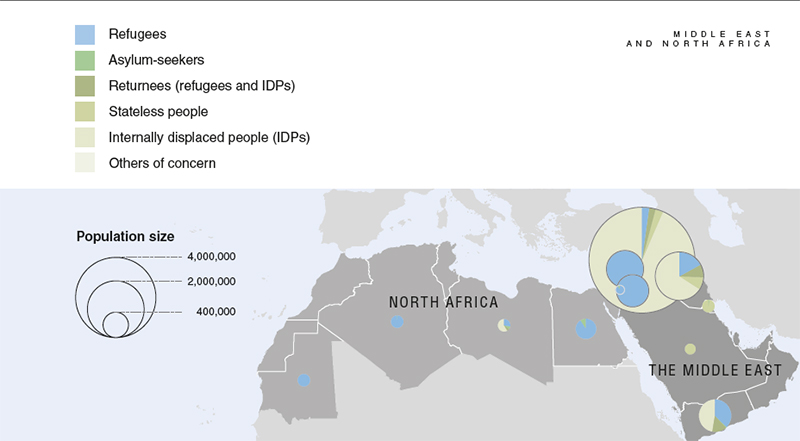
Try looking at Malta on this map. They are unfortunately located, but oh well.
Yes, the world’s largest economy is “so poor”.
As far as the OP, I think it comes down to practical concerns. As in, practically, being an immigrant is not a right in most of the world, so the country in question can deport them whenever they feel like it.
Morally, I dunno, just because I have a nice house doesn’t mean I have to let other people come live in it.
No country “has” to do anything. If a group of immigrants crosses their border, the country is well within their rights to do whatever the hell they want to those people. The UN and whatever may not agree on the basis of basic human “rights”, but sovereignty reigns supreme.
That’s the question.. should a country’s requirement by international organizations on whether they should take in versus deport immigrants depend on the country’s size and resources, rather than whether they are “western” or not ?
I’m not taking either side by the way, just inquiring into other’s thoughts.
The Cayman Islands (population ~56,000, land area 100 sq miles) are regularly visited by Cuban migrants, averaging 13 such vessels each year.
Those who choose to end their journey may apply for asylum, but few do. Lacking a successful asylum claim, such migrants are repatriated to Cuba.
Fleeing poverty is not generally regarded as being sufficient grounds to establish an asylum claim. They need to show a well founded fear of persecution based upon one of several protected classes (religious, social group, or political affiliation, race, or nationality).
Those migrants who choose to continue their journey (normal destination is Honduras which has no repatriation agreement with Cuba) may do so unassisted. Controversially, Cayman law prohibits private citizens from providing assistance or selling supplies to such migrants.
Refugees and immigrants are two different populations, IMO. If a country is part of an organization or treaty whose members have agreed to meet certain humanitarian standards, then they shouldn’t really be turning away legitimate refugees.
Keeping immigration laws so tight as to prevent an influx of immigrants, though, is their prerogative.