It’s enough to make a body believe in reincarnation.
Alternatively, you can argue that the use of “okay” which is an American term which spread throughout the world was a crass reminder of American cultural imperialism.
Or it’s just a word.
Which raises the question; if the various Apollo crewmen never took off their suits while on the moon, who is the first person to have made physical contact with the moon? I’m assuming it must be some obscure NASA technician who touched one of the sample rocks that were brought back.
I’m sure they were extremely careful not to let lunar rock touch human flesh.
Please note that if an astronaut took his boots while standing on the moon and put them back on in a few seconds he wouldn’t die. It’s like the scene in the movie 2001. Taking his helmet off for a few seconds doesn’t kill him, as you can see in https://www.youtube.com/watch?v=nbDbuOeqvKs .
If it’s even possible to remove the boots while wearing an Apollo spacesuit, I doubt that it’s possible to put them back on within a few seconds.
I am afraid they couldn’t avoid it. The landed Eagle was soon full of regolith dust, the space suits had it, the rest followed soon. And it smelled, so the contact was deep. Cite.
Officially, yes.
But a number of lunar rock samples were passed around. Some were given as gifts to museums or to foreign governments. Many are now missing and unaccounted for. Some have been stolen. At least one was unintentionally thrown out. So it’s virtually certain that some people have held lunar rocks in their ungloved hands.
Look at those space suits:
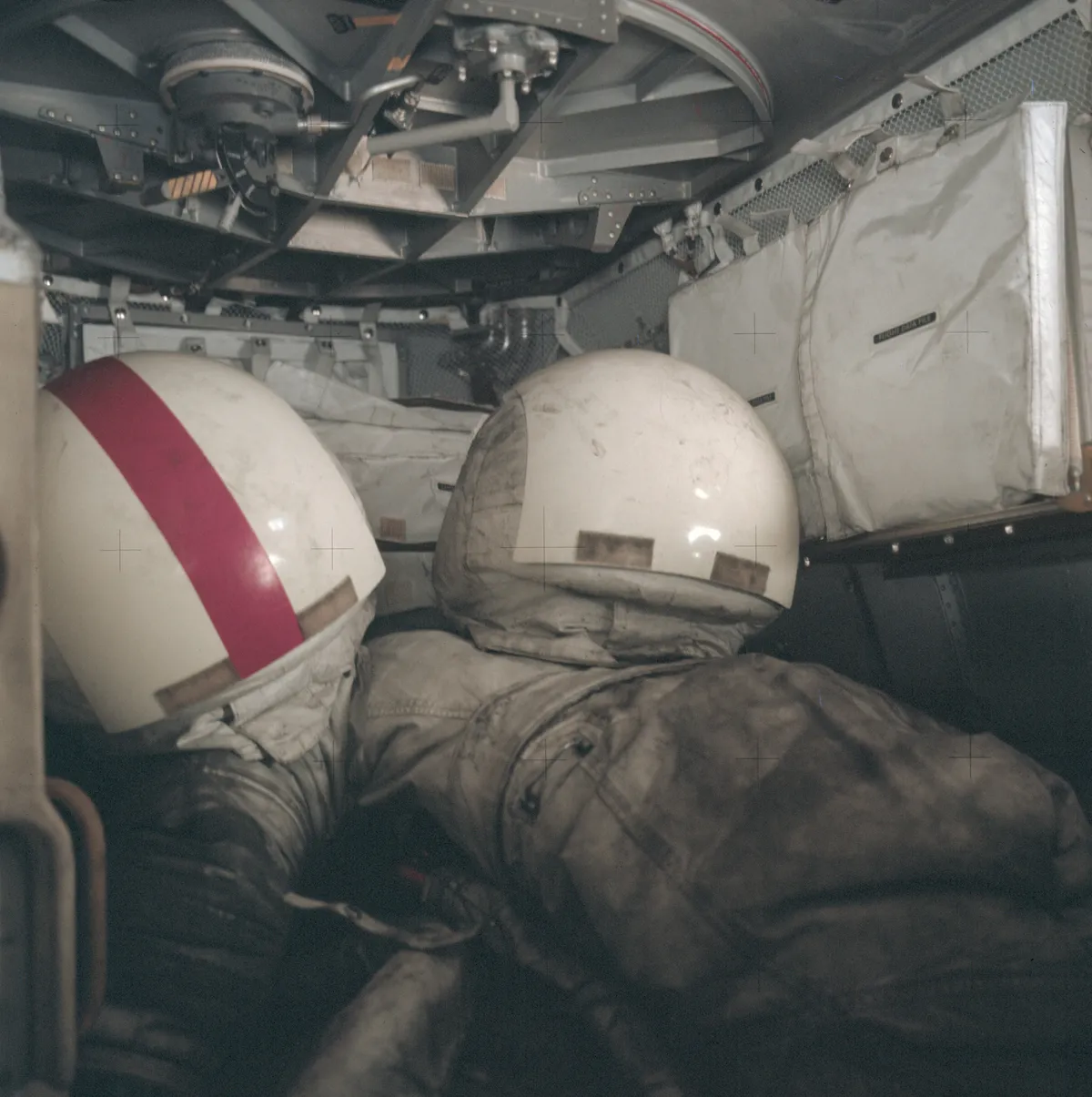
At the conclusion of Apollo 17’s mission in December 1972, moonwalking suits and space helmets are covered by lunar dust. (Image credit: NASA)
They did not put them off without touching the outer side. OK, it is not moon rock, it is moon dust.
Hundreds or perhaps thousands of scientists have touched moon rocks (with human flesh) in the course of their authorized scientific research. As have millions of ordinary people (including me) who have visited one of the few places where you are allowed to touch a moon rock. For years my office was not 100 feet from that very rock, and I touched it at every opportunity.
Although NASA’s moon rock storage facility maintains the collection in a sterile environment, ISTM that the only reason moon rock samples are not permitted to be touched is to preserve them for possible biology-based experiments. AFAIK, geologists and other non-biological scientists can, and do, touch them without any risk of affecting their results.
All of the lunar material samples that were presented to foreign and state governments were 1) very small, and B) embedded in lucite, thus not directly touchable. But, as I noted above, I agree with your last sentence.
At an atomic level, there’d still be a vast distance between the atoms of the astronauts’ feet and the atoms of the moon.
They’d need to send a compulsive eater and her feeder boyfriend up, and fashion moon dust into a couch, and then wait until she fuses into it.
Probably more often: mis yines
(my jeans)
Meteorites now known to have come from the moon (lunar meteorites) are found in many places. They would have been touched by human hands long before NASA was dreamed of and probably before space as a thing was understood.
Yes, of course. And as I mentioned in my linked thread on moon rocks, lunar meteorites are the only lunar material that is is unambiguously legal for private individuals to own.
Did you think I was suggesting otherwise, or merely adding to my reply to @Pleonast?
I was just following the subject. Plus a post on a different subject intervened. Just continuity, nothing personal.
Guy Fawkes used the pseudonym John Johnson during the Gunpowder Plot. John Johnson, the fakest fake name that ever faked. No wonder it failed.
Much like the Russian “John Doe”: Ivan Ivanovich Ivanov.
The craft was on the Moon at the point when the lunar surface was supporting the craft. When the probe contacted, the craft was still supported by its rocket engine. It was no more “on the Moon” than a helicopter with a dangling ladder is “on the Earth”.
D. D. Harriman might disagree.
If SpaceX successfully develops it’s Starship rocket into a vehicle capable of flying round trip to the Moon, they ought to bring back a bunch of lunar rock that can be sold as Very First Trip souvenir samples.
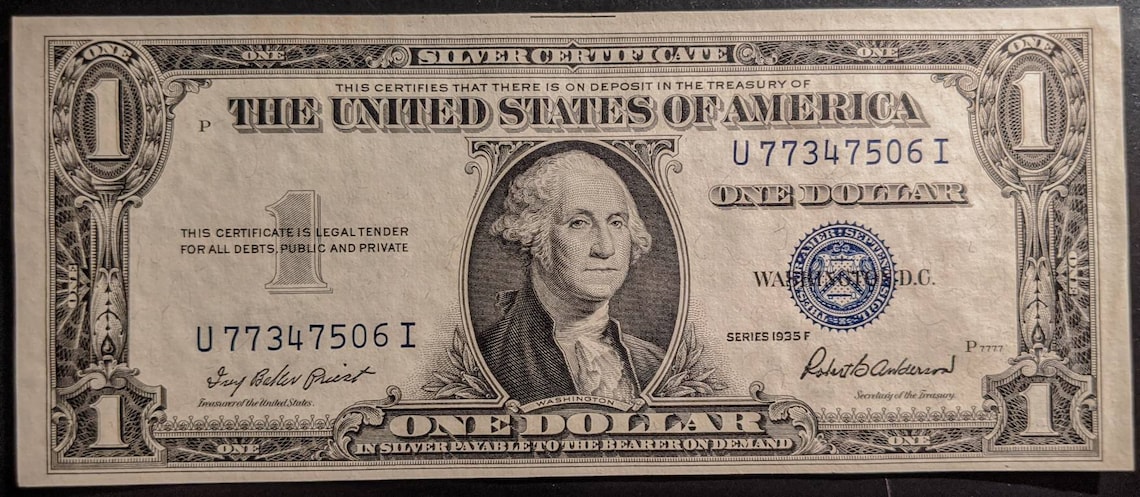
The design of the George Washington dollar bill, used since 1935, was based on the Philippines ten peso note, issued in 1903 during the U.S. occupation of the country.