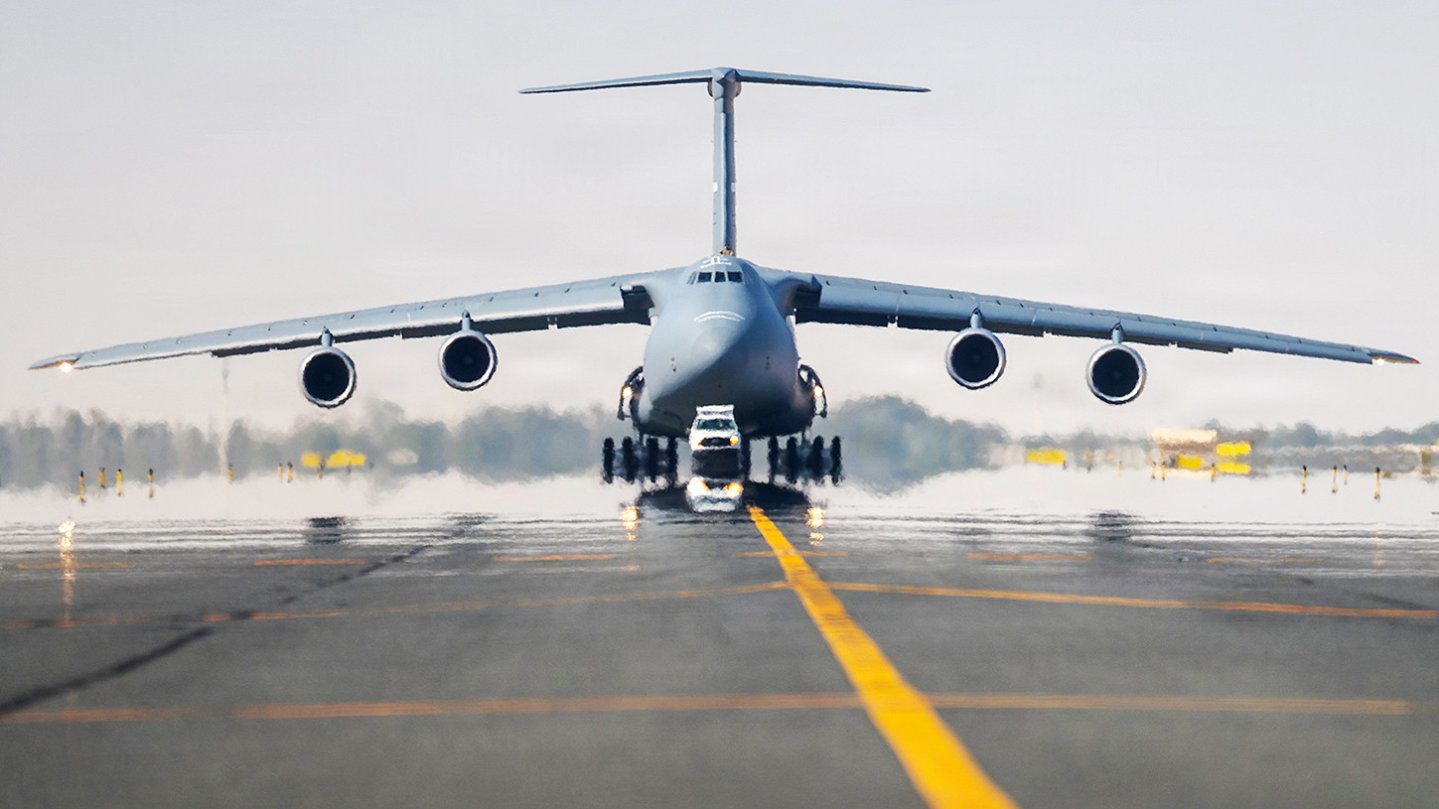
From what I can find, it depends on the specific model (it was no problem on the original low-bypass turbojets) but increasingly a problem as the cowling diameter grew larger with later high-bypass engines, where ground clearance was much lower than that – apparently as low as 17 inches. Hence the flattened cowling bottom (“hamster pouch”) on many models:
There was a minor incident some time ago where the lower edge of a 737 engine cowling knocked over a taxiway sign.
Re: The plane that clipped the truck on the NJ Turnpike while crawling into EWR 29 last week - I found this random dashcam video of a car driving the NB inner lanes of the Turnpike last year; listen to her scream when she notices it!
True, but the train engineer has the extra horror of actually watching the impact; I’m guessing the pilots knew exactly what happened but didn’t eyeball witness it, while at least one of the pax looking out the window did have that displeasure. I’ve seem some gruesome demises in my career as a first responder; they don’t just go away.
True, but if he wanted to get somewhere undetected he wouldn’t be at the edge of the runway when plane A passes, he be somewhere further back, probably lying down. IF that was the case, he was slow on the get up & start when the prior plane passed in front of his position. If he wasn’t suicidal he’s a Darwin Award winner by putting himself thru a very large Cuisinart.
Note also that from where she is, there’s another 9 traffic lanes, plus about 3 lanes’ worth of median, plus another two lanes & shoulders / medians of another on/off-ramp(?) before you get to the traffic lane closest to the runway where the airplane is at its lowest.
By my measurement on Google’s overhead imagery the distance from the runway’s landing threshold to her lane is ~700 feet. The best instrument approach for that runway KEWR RNAV (RNP) 29 wants you to cross the threshold with the main gear at 60 feet above the runway. With the required standard 3 degree descent angle, 700 feet out should be a further ~40 feet up. So if that airplane was perfectly on-path, there ought to be ~100 feet between the landing gear and the freeway pavement as the jet passes over her. Assuming the freeway and the runway are the same elevation. Which they roughly are, but with only 100 feet to work with even a few feet of elevation change for drainage or whatever is a big percentage difference.
That’s a 777-200 which is 210 feet long with a 200 wingspan. So it’s half as far up as it is big. Talk about an “aluminum overcast!”
Going back to the accident …
I don’t know which SB lane the truck was in when it got smacked, but assuming it was the rightmost = closest to the runway, the distance from the threshold is 600 feet and the correct gear height is ~90 feet. I don’t know how tall the truck was but typical trucks are ~12 feet tall to fit under 14’ bridges.
Oops.
Yes. He certainly picked a very colorful way to go.
I had a yak today with a fellow airline retiree. We talked a bit about the Frontier trespasser kill at DEN. Along the way we had an interesting speculation.
This might have been a thrill-seeker or someone trying to get a really awesome video to put on YouTube. So they figured they’d stand just far enough off the runway centerline to have the airplane roar past / over / around them. Maybe they hoped to fit between the fuselage and main landing gear, or between gear and engine, or maybe the expected to be a bit outboard of the engine on whichever side they chose.
In the event, the airplane turned out to be a different size, shape, or type than expected. Or more off-centerline than expected. Or the guy’s planning was real sloppy or maybe even nonexistent. But at least possibly, this guy was sober and he was out there deliberately with awareness seeking a close encounter of the Airbus kind. Regardless of how his plan was deficient, instead of a great vid or adrenaline rush, he got whacked instead.
Pure speculation on our part, but an interesting theory.
ETA:
See TV news story & surveillance video here which pretty well debunks our speculation. But it’s just a matter of time before somebody tries it.
That theory reminded me of another train related incident. About a decade ago I took the Coast Starlight down to Santa Barbara and back. The southbound train was actually right on time, but my return train was delayed because it was stuck behind a Pacific Surfliner train that had struck a pedestrian. When I finally did board the train some of the passengers, many of whom had been on the train involved in the incident and had been transferred to our train, were saying that the person who was hit had been attempting to take a selfie next to the train. (Note, this was just according to the passenger rumor mill; I couldn’t find any official source stating this).
But if we take the rumor at face value, then I would guess the person believed they were far enough from the tracks to get an exciting photo of themself with the train whizzing by inches away from them. But instead the train turned out to be wider than they thought.
As a photographer, I have long wanted to do this…coupled with the competing interest of not getting arrested. I figure my best hope is to get a ride-along in an Ops car but haven’t gotten in good enough with anyone to make it happen. I also know that I probably have a greater likelihood of getting killed in an MVA to/from the airport than of having anything happen to me if I was in the grass but that the FAA considers that a sterile area & it just ain’t gonna happen. Still, it’s on my “Ain’t never gonna happen bucket list”
Put a GoPro on RR tracks before, but then don’t need to worry about anything being sucked into the locomotive, either. The cost of an old GoPro isn’t that expensive but the cost of a new airplane engine sure is!
Dopers may like to know that the video shows the deceased walking across the runway. The video clip stops just before they are struck by the engine.
(It’s amazing how they are just sauntering along as if they’re strolling through a park, without breaking stride or flinching, even as the plane’s front fuselage passes within a few feet behind them, and the engine approaches at high speed closer still. It reminds me a little of that Buddhist monk who immolated himself in Saigon in the 60s, meditating and chanting as his body was consumed by flames).
Thank you. I should have included that disclaimer.
And yes, the deceased showed admirable (?) levels of self control (or abject obliviousness) as they crossed the runway in the face of onrushing noise and doom.
I was a passenger in a little Beechcraft flying out of MSP once. We were lined up on a taxiway. I couldn’t see straight back, but looking over my shoulder there was a wing and a big engine; DC-10 probably. Looked like it could suck in our whole plane.
I’ve walked around big planes in museums and such, and that’s fine. I don’t want to be anywhere near one when it’s moving under its own power.
TIL there is a hatch on top of the C-5M for a person to climb up and check to see if the wings and things are about to run into something while taxiing. Yep, there he/she is in this photo if you blow it up.
On my first trip to New Zealand I spotted this long railway bridge that spanned the Waiau River. I decided it would be cool to walk out on it and grab a photo, figuring the chances of a train coming were pretty low.
Lucky for me there was a maintenance platform, because sure enough I picked just the wrong time to go out there. I imaging the engineer had a swear word or two as he passed the stupid tourist cringing on the side of the track.
Certification standards say there needs to be an escape hatch(es) from the cockpit. For whatever reason, Lockheed favors a hatch in the roof. L-1011s had them, C-141s had them, and so do C-5s. Boeing prefers openable cockpit windows that serve as escape hatches.
If you look on YouTube for [Railroad crossing accident compilation] you’ll find many hours of cars & trucks being nerfed down the tracks. Lotta repetitions, but also a lot of raw content. It happens a lot around the world.
You’ll also see a few examples of somebody obliviously taking pix while standing closer to the tracks than was wise, and being rescued at the last moment. Yeah, trains are a bunch wider than the rails.
They also have suction. As the leading edge of the train passes, the air it’s displacing first pushes you away. But after about half a loco-length, it’s a low pressure area along the side of the rest of the train that can pull a bystander towards the train, make them lose their balance, etc. Not to mention the crazy level of noise and vibration leading to involuntary flinching, jumping, etc. Whole lotta ways for somebody to start 2 feet away from the outer mold line of a fast-moving train and still end up struck by it or run over by it.