You’re right. Access to that mishap from 1973 works. Showing you the bare database entry without any of the narrative. Probably because it’s so old. At the bottom of the CAROL input form there’s a note that everything in the database prior to 1983 is sorta skeletal.
Try looking up N915RC. It was a floatplane accident in 2009. No CVR there. You’re get the usual search results screen showing you the date, where, the aircraft type etc. With links to the docket and to the final PDF report. Those links now both take you to the page I quoted.
I discovered this yesterday when I was watching a YouTube collection of aircraft mishaps. That particular N915RC mishap was rather comically colorful, didn’t seem like it should have been fatal, and happened to have a readily visible N number in one frame. So my curiosity prompted me look it up in CAROL. Surprise; no report for me!
I also found it sort of interesting that there wasn’t any visible announcement of this change. No news release, no caveat on the pre-search page at CAROL, the search input page NTSB Aviation Investigation Search, or the search results page. Just no detailed results available once you’ve jumped through the hoops.
Kinda like the time the TSA published a throwaway picture of the magic universal luggage lock keys and the internet promptly reverse-engineered plans so now anyone can 3D-print their own set.
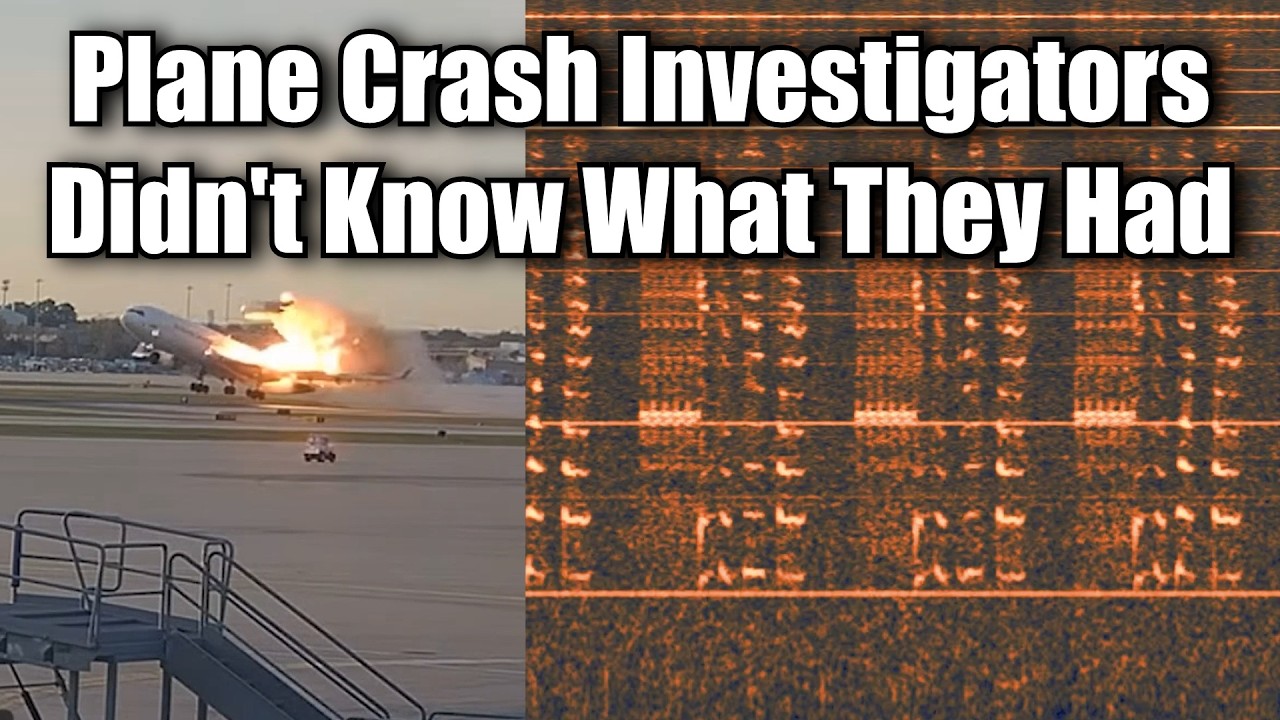
There are probably sonograms attached to untold numbers of mishap reports dating back to the 1980s. Until they can find and cull them from the public results they have a problem.
Water bomber shooter is out of jail. Bail was set at $75,000, he somehow came up with the $7500 bond. He is being electronically monitored. Due back in court May 26.
Ah, so it seems it has come to NTSB attention that outsiders are using digital tools and AI to artificially create “cockpit recordings” from what is contained in the online files?
Interesting. I’m reminded of how, just a few years ago, we realized we had inadvertent “recordings” from earlier than the earliest (c. 1877) wax cylinders:
Because the phonautogram tracing was an insubstantial two-dimensional line, direct physical playback [before the 21st century] was impossible in any case. However, several phonautograms recorded before 1861 were successfully converted and played as sound in 2008 by optically scanning them and using a computer to process the scans into digital audio files.
I watched that show as a kid, but found the Corsair ugly. Decades later I was reading an account of sailors on a destroyer that was getting hammered by kamikaze attacks off Okinawa. Their AA was depleted and more attacks were inbound when some Corsairs swept the skies clean. Did more reading on the F4U and now I think they look pretty cool.
This guy has a lot of great WW2 plane videos, including several about the F4U:
In this video, Scott Manley says that the NTSB did this in response to a tweet he made suggesting it was possible to convert these images to audio, and explains how it works, answering the question I asked above.
True, but it’s cool we can now go back further and hear things (recreate the sound from a graphic on a page) never meant to be played back. That was my rough analogy with the NTSB issue.
Again, I didn’t see the vid, but my guess would be that she had it mounted to her in some way. I think the paraglider’s hands would usually be occupied, anyway.