Douglas A-26 Invader in Grand Junction CO (from Oct 2023)
Back on 19 Oct 2023 when I was on vacation in Grand Junction CO I was driving on a street and out of the corner of my eye I caught an old Douglas A-26 Invader. I doubled back to get a better look.
She was in a quite tired condition, but still beautiful!
This is one of the first scale plastic models I ever built when I was a kid. If memory serves — I think it was a Revell model kit; the plane’s name was Li’l Nell; I think the model kit called it a B-26 Invader.
Jack Cabot, 22, who was on the plane during the crash, said it was a “terrifying moment.”
“The plane landed pretty hard, you heard a loud bang and suddenly everything was out of control,” he said. “The plane was veering back and forth. No one was driving at that point.”
So that seems to corroborate with a collision on the runway.
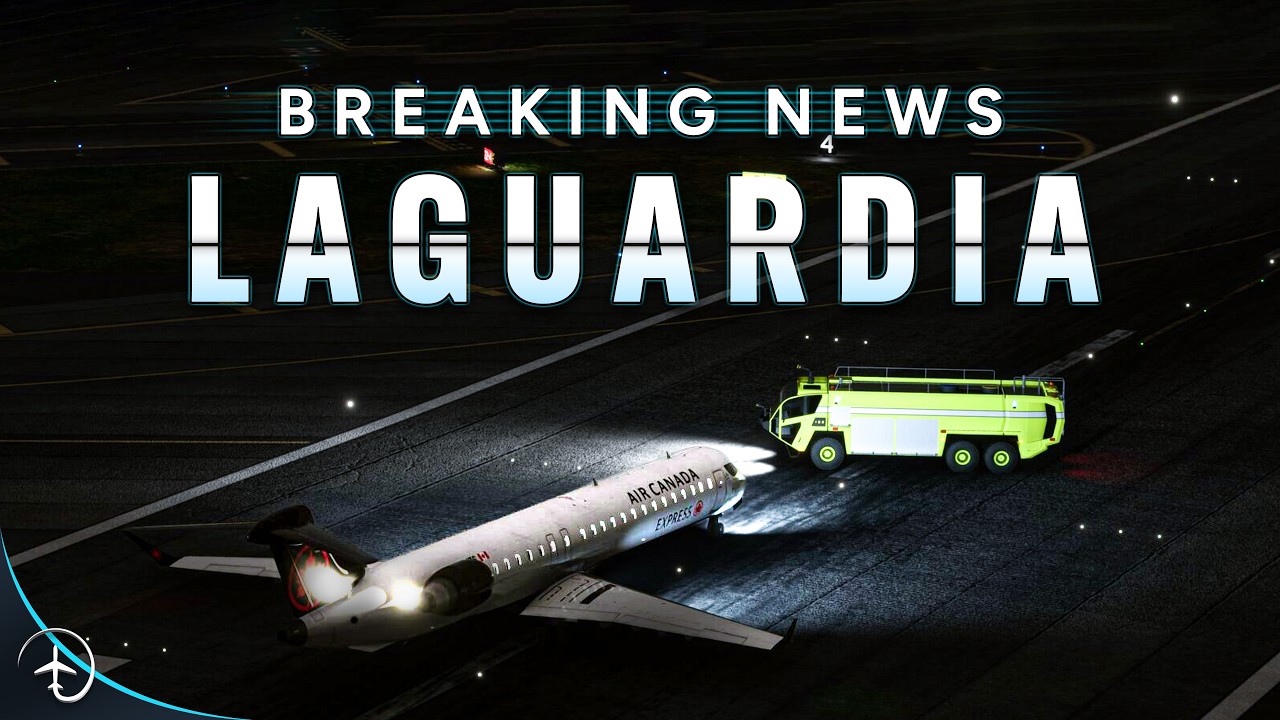
Fire trucks run all their lights whenever they’re out on the airfield. The lights are for visibility and do not give any sort of traffic priority. Lights or no, they wait for planes and follow ATC’s instructins.
Seeing fire trucks with their lights on holding short of your runway while you’re landing or taking off is very common. So damned good bet the firetrucks were in Air Canada’s sight the whole time from when the airplane was on close-in final right up until impact.
The problem is that seeing them holding short, seeing them enter the runway in front of you, and avoiding them are three very different things. The jet can’t stop that short, is too slow to lift back off, there’s no time / distance to react, and only little ability to steer left or right in the time/distance available.
Now as to why the fire truck pulled out without seeing the jet, and how / why the GC (or tower LC; it’s not clear to me yet which), issued a clearance I can’t say.
May come to find out the controller assumed the truck couldn’t react fast enough to get in front of the jet. They’re generally allowed to use something called “anticipated separation”. Which amounts to incorporating their estimate of every else’s response and reaction times into their clearances so things work out more tightly. e.g. If airplanes need 3 miles separation off the runway, don’t wait until the just-departed aircraft is 3 miles from the runway to start issuing the takeoff clearance to the next airplane. Instead issue the clearance much sooner so the second plane is breaking ground just after the first one has gotten 3 miles away. So perhaps the controller may have glanced at the jet, the truck, decided the truck couldn’t possibly jump out in front of the plane in the time available, then issued the clearance. Yet the truck did jump out in front. Possibly; maybe. We sure don’t know. Yet.
This event of course will have a full NTSB investigation and we’ll read the final some time in late 2027. Unless insane clown politics kills NTSB meanwhile.
Petter of Mentour Pilot was previously an airport firefighter. His insights as they relate to the La Guardia incident from the fire truck’s point of view are from 15:00 to 20:00 here. (He notes, for example, that the firefighters were possibly asleep just two minutes previously).
The Transportation Safety Board of Canada is deploying a team of investigators to support the U.S. National Transportation Safety Board in its probe of the crash.
Also per CBC News:
Air traffic audio indicates the fire truck was cleared to cross the runway before the collision. “I messed up,” a controller can be heard saying afterward.
Well, what should we expect? Should the controller responsible commit seppuku right there in tower? I can imagine myself saying something similarly mundane in the midst of a stunning event.
Whenever something like this happens my heart goes out to the dead and injured and their families who will be forever affected. But I also feel a great deal for people like that controller. It sounds like he may know he made a mistake and now he has to live with it too. I wouldn’t wish that on anyone.
I’m one of a few people on the boards who has operated jets out of LGA and similarly busy airports and I can tell you it gets intense at times. ATC has a very hard job in a place like that and anyone in that tower has many years of training and experience behind them. They supervise ground vehicles moving on and off runways all the time… but today it went bad. I strongly suspect any controller could have made that same mistake - and maybe they have at other times and nothing happened. I feel for this person, whose whole life changed in an instant.
Another crash today but an unknown number of casualties:
The defence minister, Pedro Sánchez, said the accident happened as the Lockheed Martin Hercules C-130 plane was taking off from Puerto Leguízamo, deep in Colombia’s southern Amazon region on the border with Peru, as it transported troops from the armed forces.
Maj Gen Carlos Fernando Silva, the chief of the Colombian air force, said that the aircraft was carrying 11 air force members and 114 soldiers. He said that 48 injured people had been rescued but gave no figure for survivors or fatalities.
Well, you’re in the biz and I’m not, but I feel a lot more for the two dead pilots and their families, none of whom did anything wrong.
Again, IANAP, and I know from other fuller audio clips that there was a lot going on at LGA in those moments. I’m just trying to figure out how someone in a position to clear a vehicle to cross a runway could not have known that a plane was landing – or likely, already landed and rapidly rollling – on that runway. I get what you’re saying, but “oops!” just doesn’t sit well with me when a tragedy happens because someone didn’t do their job.
And it will be investigated with an eye toward finding out why it happened and how we can prevent it in the future. My suggestion would be close down antiquated and relatively dangerous airports like LGA, but that’s probably not going to happen.
I realize it’s not satisfying, but sometimes “oops” does describe some bad events. There will be many contributing factors, but remember in the end we don’t eliminate risk - we manage it. And when we have short, crossing runways at one of the world’s busiest airports, we are accepting a certain amount of risk.
Let me add, I’m not trying to be dismissive of the pilot fatalities. That could have been me. But I accept a certain amount of risk in this job and if it’s not my day, it’s not my day. I’ve always said I’m not afraid of dying in a plane crash - I’m afraid of living through one. Especially if I caused it. Which is why I feel for that controller.
That’s fair. I watch a lot of aviation videos produced and presented by Petter Hörnfeldt, “Mentour Pilot”, and I’m always impressed not only by his knowledge and competency, but also with his single-minded objective to improve aviation safety. In his mind, placing blame has no place in this mission – it has to be solely about “why did this happen?” and “how can we prevent it in the future?”.
At the same time, there are concepts in law around reckless endangerment, lack of due care and attention, and similar. I’ll reserve judgment until we know more.
Yep, that looked to be about the speed that we were estimating, based on the fact that there’s no way the CRJ could have completed its landing roll by the time it got to taxiway Delta – it would have needed around twice that amount of runway to come down to taxi speed. @LSLGuy was estimating 50-70 knots at that point.
Comments are they were doing one-man ops at the time --which to me would sound daft for this location.
Damn… truck just kept rolling as if nothing. One would think that even if cleared to cross it would be SOP to do a stop-look before actually doing so.
As I was saying back at the time of an earlier mishap, one thing we do have these times is that if it happens in or near the airport it’s almost certain to have happened in at least one and likely several cameras’ field of sight.
This is discussed in that portion of the Mentour Pilot video I linked to, above.
In the UK, it is mandatory for the firetruck operators to do the same kind of “both drivers look both ways, and confirm verbally to each other” that pilots (in both countries) do when crossing a runway.
Petter and the other guy agree that making this mandatory in the US is a likely outcome of this tragedy.
D is more than 90° to 04, which means they were looking over their shoulder a bit, which may impair site lines, further, they appear to be turning left, or away from the incoming plane.
I just want to say thank you for posting that video. Petter Hörnfeldt (“Mentour Pilot”) is a sort of hero of mine and I watch a lot of his videos – and I mean a lot! It was very interesting to me to hear Petter and his collaborator Ben Watts commenting on this accident just hours after it happened.
Also, to quote my later post here, made before I saw the above-mentioned video:
And once again, here Petter is focused on improvement and prevention, not casting blame. It’s possible (we don’t know yet) that it may have been a single controller handling both tower and ground duties due to understaffing, which would have burdened him with a dangerously excessive workload.
Plus those trucks are wide, so a left seated driver, looking over their shoulder to their right as they turn even slightly left, might not have had much view up, assuming that they took their look while the plane was not yet on the ground.
If it was an ARFF truck, they have pretty good visibility; however, if it was a ‘regular’ apparatus they have much less visibility. I know that EWR has some of both & this is the same airport authority so I’m guessing there’s a mix there, too. It’s too hard to tell from the video that I’ve seen to tell specifically what vehicle it is.
Even if it was their procedure to look, a just the right angle; especially, at night, that plane would be hard to pickup.
Anyone know the landing light configuration of this plane? Are they on the wings or inline with the fuselage? Wing tip strobes blink once a second & typically together, though some planes have them staggered such that each side blinks once a second, but ½ second offset from the other wing. Any glance for < one second may not have seen wing tip strobes.