Right!? It totally ignored my ‘No Solicitors’ sign.
Never accept an invitation to talk to a peafowl about anything. They scream. Like, bloody murder screams.
I saw some ants today:

Several months ago, there was a peacock roaming my 'hood. He was someone’s “pet” who decided to fly the fence and hang with the local wild turkey flock for a while. Was the talk of local Facebook groups and NextDoor for a while - I think it was determined his name was Morris?
Made the 'hood look kinda classy, I guess, but yeah, my lord they can be loud. Turkeys chatter constantly, that quiet “gobble gobble” as they discuss acorns or bugs or whatever with each other, but once a peacock has an opinion, ALL Y’ALL gonna hear about it.
Elephant ears practice guttation, where excess water drawn up through the roots is constantly expelled through the leaf tips. The liquid also contains other substances that seem like it gives it a higher surface tension than pure water, making larger perfectly spherical droplets. Here are a couple of photos of a small plant taken last night and this morning. (The background is a normal-sized small red brick.)


(As an aside, three weeks ago I broke five growths off of larger elephant ear corms. Three had leaf buds and quickly grew into one new plant each. Two had no leaf buds and quickly started sprouting lots of tiny new growth points. As they get larger I cut the bit of corm into smaller segments supporting individual new plants. I’ve produced seven plants so far from those two small lumps. The plant in the droplet photos is one of the larger ones and literally didn’t exist three weeks ago.)


Today, as I was bending over to weed a raised bed on my allotment, a robin flew into the back of my leg. (Glancing blow, you understand. Because it’s so hot I was wearing shorts, so it was a rather weird experience.)
This level of closeness usually means that there is a nest full of hungry chicks waiting, and could I please get out of the way because there are insects to be collected.
j
Today’s visitor.

Interesting…it sort of looks like it might be the pre-pupal stage of some tussock moth in the genus Orgyia. For example this is what a White-Marked Tussock Moth would normally look like. Not the orange head, the black bands between the thorax segments, the brown dorsal stripes on the abdomen, the two bright orange glands on the abdomen. What it is lacking is most of the “tussocks” - patches of hair, but you can still see the remnants of them, especially those little grayish tuts on either side of the head. When these caterpillars get close to pupating they start shedding all that fur to help weave into the protective pupal case. I think that’s what we are seeing.
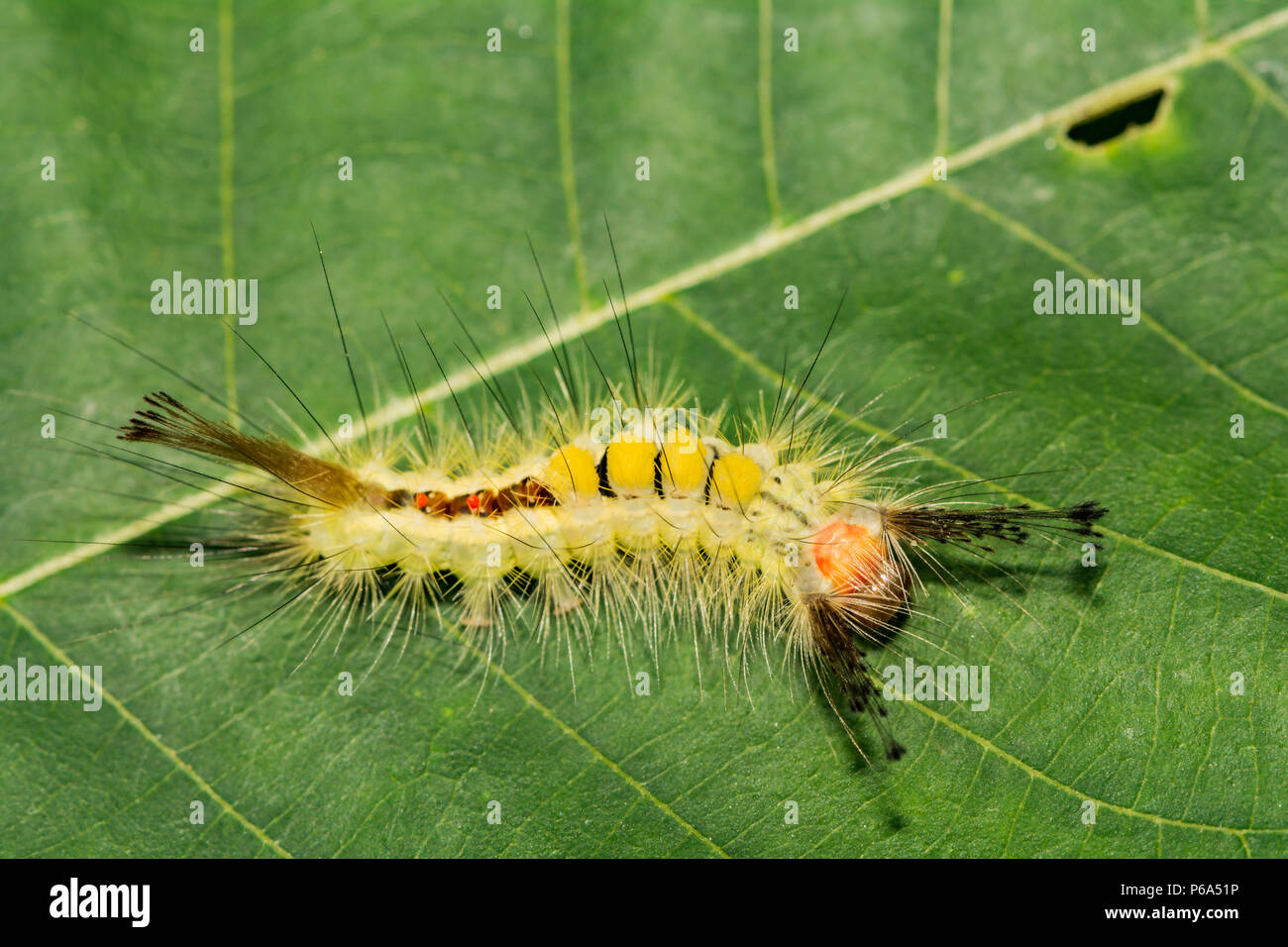
Never pet any kind of tussock moth caterpillar  . Can be fairly stingy.
I’ve been trying to sort through my attempts at shooting Pied-Bill Grebe chicks a couple weeks back, but the lighting was atrocious - they set themselves up to be backlit by the rising sun. A lot of glare and some focus issues because my camera was mistakenly in tracking mode which on my camera doesn’t love two large subjects in frame. My attempts at getting shots of them eating a whole crayfish didn’t work out great. Pretty interesting to watch though - the parent shook off the claws and legs and then three chicks took turns trying to swallow this huge (relative to them) meal. I think I counted five full attempts, with each chick getting an equal shot as she offered to each of them in turn. They’d get it about halfway down, then spit it out, the parent would retrieve it and offer to the next chick in line. Finally one got it down. A couple of the better pictures from that day:


But it reminded my of some pictures I took of pied-bill grebes this winter. Worth noting no pied-bill - that’s strictly a breeding season thing. And the same predilection for catching and eating anything that will fit down the gullet, even if barely. This was a Pacific Herring, not huge as fish go but pretty big for a pretty small bird. Interestingly this was at a freshwater (mostly) lagoon in a place where the Pacific herring, usually an ocean fish, have adapted to freshwater:


I seem to have a garden full of baby birds today. The resident blackbird’s second brood of the year fledged a couple of days ago, so they’re bouncing around the place, then today the blackcap that’s been sneaking round carrying beaks full of wriggly things for the last few weeks is stuffing them into a selection of youngsters who are hopping around the dead tree outside the window. One of them just got overenthusiastic and tried to beg off a passing house sparrow, also with a beak full. No idea where the sparrows are nesting.
<Urp.>
So I just had a weird thing happen.
I opened the back door to see a hummingbird flying straight at me about 4 feet off the ground. When it saw me it diverted to the left, quickly lost altitude and ended up in a corner.
I picked it up, gently dusted it off and took it out in the yard. It was quiet for a minute or two, and then started wriggling like it wanted to take off, so I opened up my hands and it did indeed take off - straight up into the trees.
Maybe a newbie at flying?
How cool, though! You got to hold a hummingbird.
I saw this video, glad I did not see it in person:
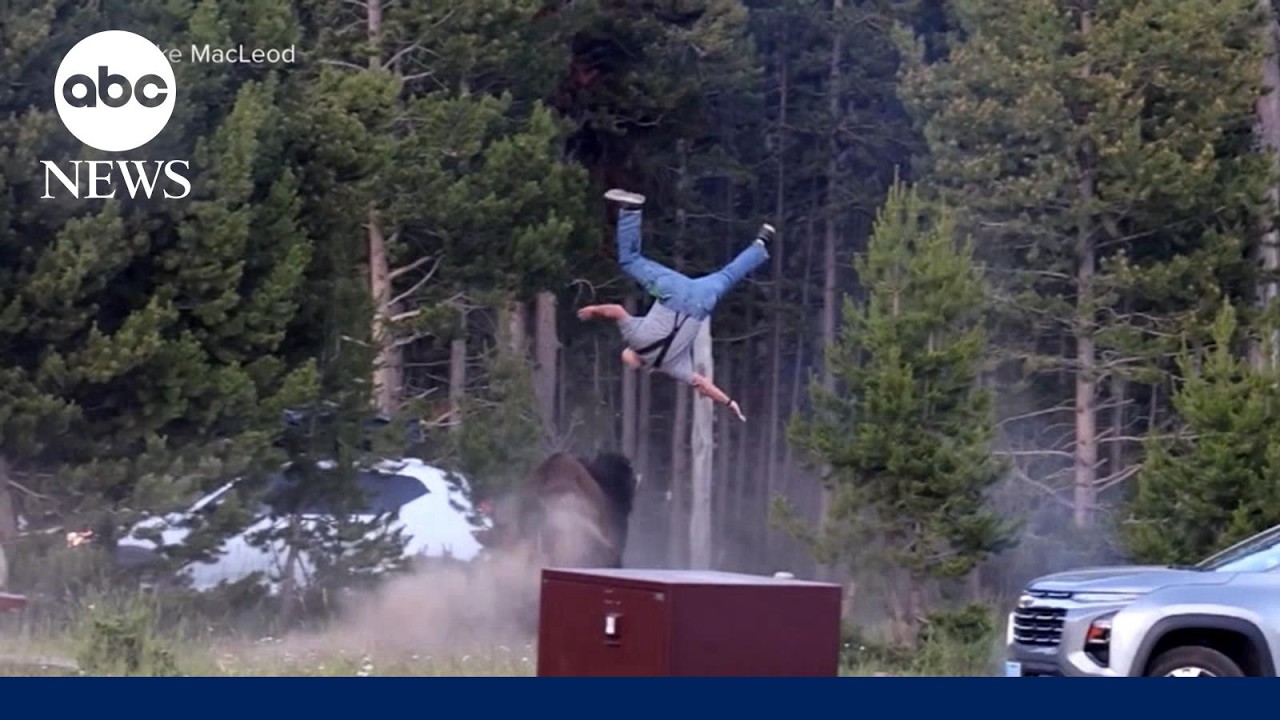
He was too close when taking pics, but otherwise not sure what he did to rile the bison.
I wonder if the trees were dense enough to hamper the bison (it could probably topple smaller trees)
Brian
I saw a cormorant while walking my dogs by a swampy area. I think they’re so cool-looking. I don’t see them often, maybe once or twice a year in that same area.
There were lots and lots of crows this weekend, a large murder of them! And they were very noisy. I’m wondering if the spring babies are starting to fly now but are still very demanding of their parents?
He was too close when taking pics. For that bison. On that day. At that hour. In that minute.
If there is one thing American Bison are known for it is unpredictability. Well, two things - unpredictability and ornery tempers. They can placidly ignore you from five feet away or decide two hundred feet is a clear provocation, particularly if it is mating season or young calves are present. It is currently peak mating season.
Bison will usually tell you that you’re getting too close, before they get violent. The problem is that they’ll tell you in Bovine, which few of us apes understand. So tourists often end up ignoring the warnings, leaving the bison no choice but its last resort of violence.
Well, that’s one of the problems, at least. The other is that word “usually”. Sometimes, if one’s in a bad mood, they’ll skip that part.
Met a smallish toad after some heavy rain.


The other night, I let the dogs out for their final potty break before bed. They all took care of business and came back to the door, except for the Great Dane, Huck. I went out on the patio to call him in. He slowly ambled towards me, his head hanging down, and it looked like he was carrying something in his mouth. He walked up to me and, “PLOP,” he dropped a toad in front of me. So Mr. Toad went on a wild ride that night. A few days later, I spotted him along the side of the house. Zeb, the German Shepherd, was very interested in him. Unlike Huck, Zeb would have killed it. So I moved Mr. Toad to my garden on the other side of the fence. I hope he likes his new home.
I think it also charged his wife; (longer video)