Correction, his grandson.
I’m suprised your dog wasn’t foaming at the mouth. I’ve seen that happen when a dog tastes a toad.
Oh, ugh. A lot of Chronos’ bovine warning signs on display. That was an animal hopped up on hormones and ready to cut loose on anything in the vicinity.
Nope, he seemed fine, thank goodness. I thought of that though!
This has been a truly remarkable year for butterflies - I’ve commented about numbers before - but they’re not easy to photograph. Here’s a couple of Hedge Brown on my allotment, one in sun and one not.

It’s also been a pretty good year for bees. Buff tailed bumblebees just love my elephant garlic.

j
ETA: as ever, click through for the full image
Meanwhile, in the stream that runs alongside the allotments….

j
I haven’t seen any butterflies in my mom’s milkweed patch, but I’ve seen tons of bees there.
Whoa, nice catch! A heron?
Yeah. A neighbor (allotmentwise) spotted it so we took a few snaps. There are a lot of trees overhanging the stream and it’s surprisingly dark down there. I have no idea how phone cameras work, but that photo has a slightly ghostly appearance to it which I assume has something to do with light levels.
j
Today this big fly came in a window and landed on my biggest horse conch. By the time I got my camera it was flying around again. So I followed it around for a while hoping it would land on something photogenic again, but unfortunately it didn’t cooperate.
It is a tiger bee fly.

Mothra.


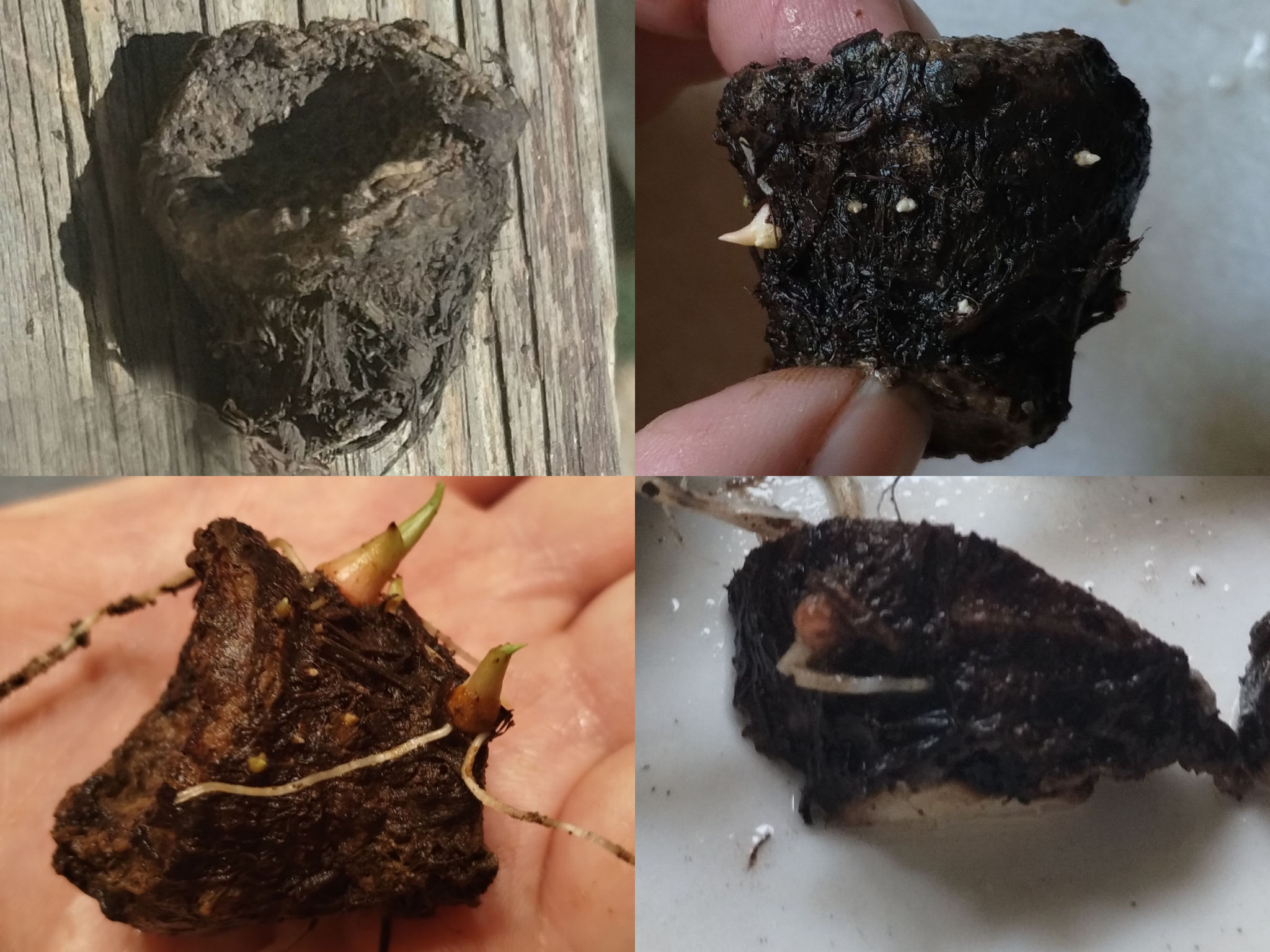
Elephant ears (Colocasia esculenta) grow each new leaf inside the previous leaf, building up pressure until the rolled leaf tears through the “skin” of the back of the petiole. I’ve noticed that on the very small leaves when backlit you can see the growing leaf inside the petiole. This is what the latest one looks like today.

They grow fast; this is what the same plant looked like 7 days ago.

And 31 days ago it was cells on a hard, dry lump that I broke off a larger elephant ear corm. Within a week it was covered in small growths. After those grew for a while I chopped that into 4 smaller pieces containing the 4 largest growths. The one in the above photos is the smallest and last growing of them.
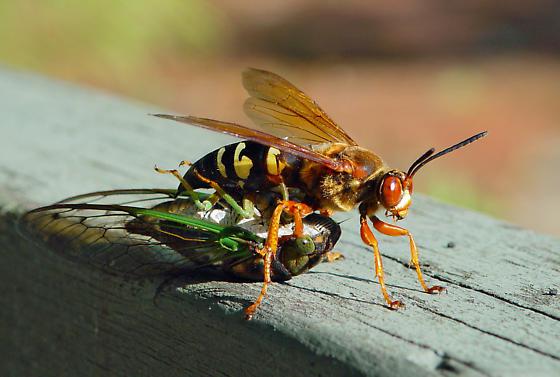
So I was outside spreading some mulch in the back yard when I heard this huge racket - it was a cicada, I was sure, but louder than I’d ever heard one before. Then I noticed the grass under one of the trees shaking wildly and went to check.
The cicada was being attacked by a cicada-killer wasp. Ugh.
That reminds me of that big fly I posted recently. For those who didn’t read the Wikipedia article
Female tiger bee flies deposit fertilized eggs in carpenter bee nests. Rather than entering the nest itself, female tiger flies lay eggs near the nest entrance.[2] When the larvae hatch, they consume the carpenter bee larvae.[3] The fly larvae may also wait for the bees to enter the vulnerable pupal state before eating them.
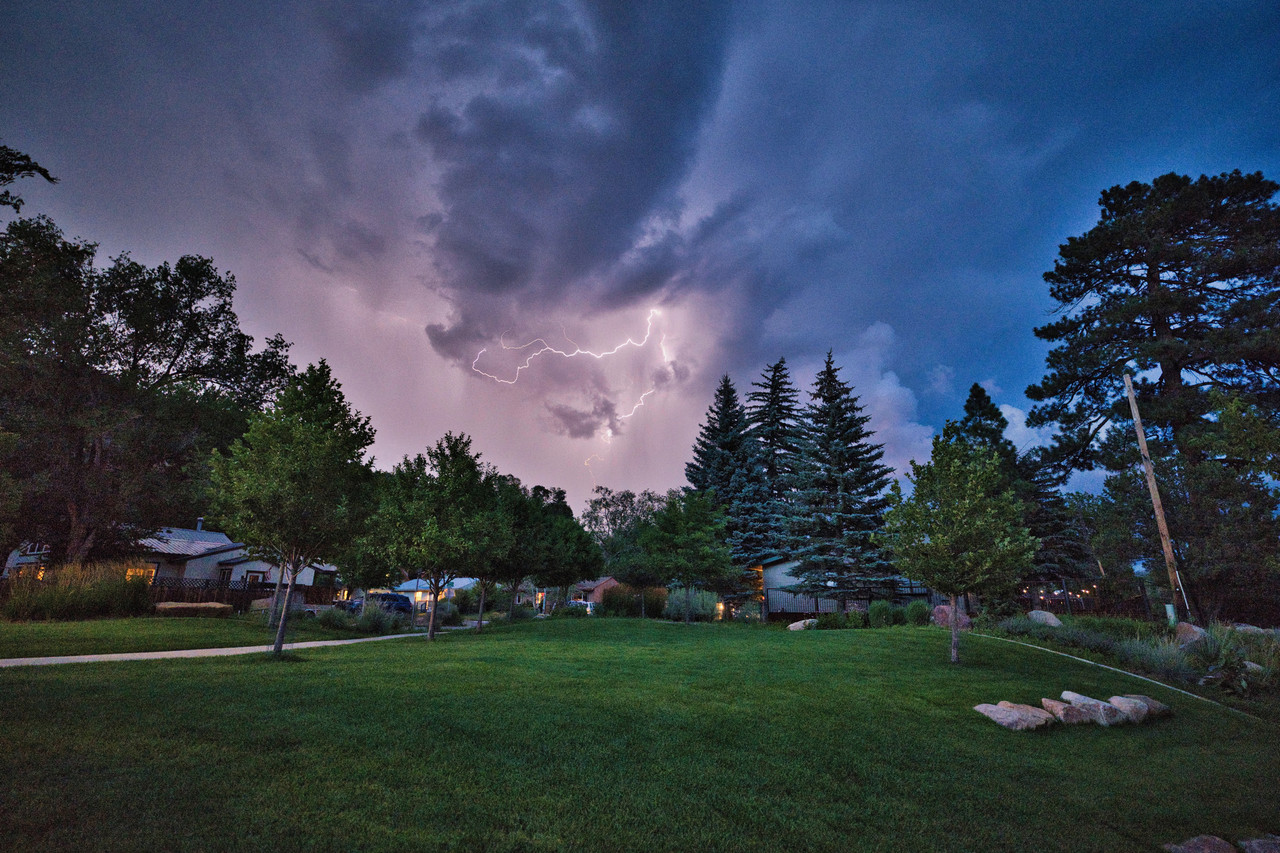
Thunderstorm over the Cottage:
Nice!
Not to worry you or anything, but I think you’ve got a gate to the Upside-Down forming, there.
I was out looking for Dart…
I happened to look out the window onto my deck yesterday and there was a hummingbird fluttering around. First one I’ve seen in a while; he hovered for a while about a foot or two from the glass and then darted off.
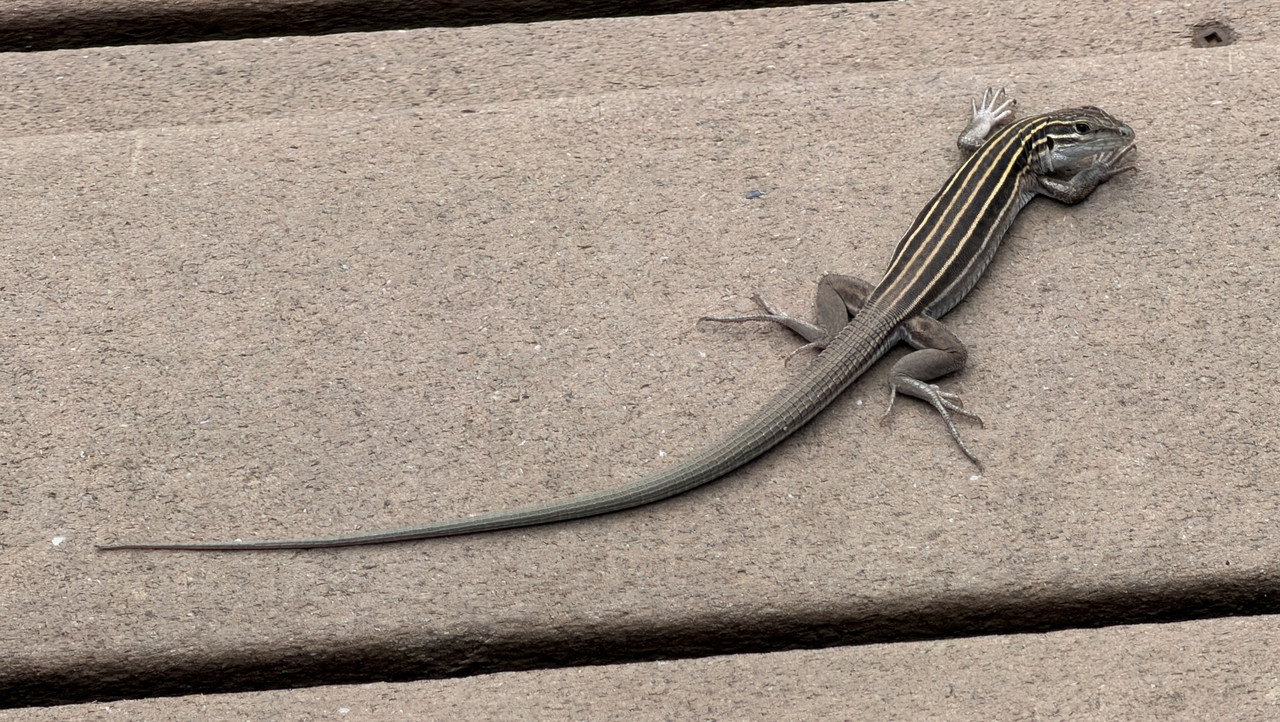
Lizard knocking at our door: