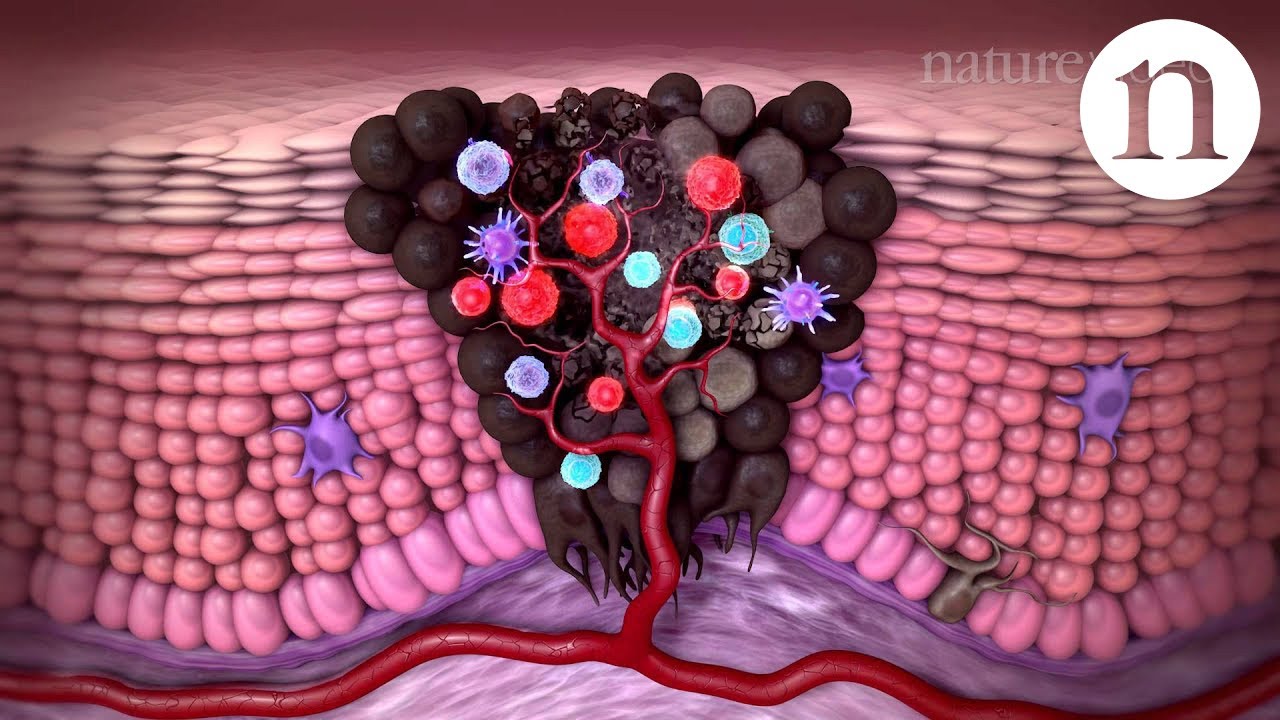
Teaching the immune system to recognise cancers and kill them is a long hoped for therapy. It actually can work. But the immune system has been programmed to ignore the self. This makes things hard. No doubt, cancers have to evade the immune system, but this just means that the cells that don’t get eaten early on are the ones that grow into proper cancers. So there is a limited set of ways the cancers might be recognised as “other”. The flip side is that the last thing you want to do is create an immune response that is at all over eager and starts to actively attack healthy cells.
Sensitising cancer cells to therapies is a thing. But again, there is a limited range of things you can achieve before collateral damage to healthy cells gets to be a problem.
Regulation of some cell lines by growth factors can help. Say prostate or breast cancer. The growth of the base cell lines is modulated by oestrogen and testosterone. So therapies can be used that slow things down. There isn’t a cure here, but it all helps. Sometimes quite a bit. Castration helps with prostate cancer. Not everyone is happy about that.
A list of targeted therapies and the cancers they are used to treat:
Sometimes they are used in conjunction with chemotherapy. The point is that while there’s still quite a ways to go, we’ve come a long way from just “cut, poison, burn”. The “cut” and “burn” (radiotherapy) parts have also gotten more precise/targeted.
Incidentally, a major part of dietary advice for cancer patients involves the avoidance of undercooked/raw foods in patients whose therapy has made them neutropenic and thus more susceptible to infection.
There’s a very rare form of leukemia whose treatment includes an arsenical compound, preceded by 500mg of IV Vitamin C. Apparently the vitamin C somehow boosts the effects of the drug in ways that are still poorly understood.
@LSLGuy understood perfectly. Chemo drugs are poisons but chosen to do more damage to cancer cells than to healthy ones. But poisons, nonetheless and you don’t want foods that counter them. Once the oncologist pointed this out, my SIL stopped doing it. Not that it did much good, for he died a few months later. But glioblastoma is essentially uncurable.
For half a century or more, I have studiously adhered to any study touting the salutary effects of coffee, while assiduously ignoring any study claiming that coffee had ill health effects.
I have, in short, a clear bias
This guy does good vids, IMHO, but he has a pretty clear bias toward plant-based diets.
He makes a Prosecutor’s case, I would say, by (probably) cherry-picking his studies, but he basically presents the studies, so there’s a bibliography of sorts if the rabbit hole calls to you.
Caveat given, I think this is worth the six-minutes:
The Best Diet for Cancer Patients
Generally, from MY POV, I find this guy to be a “can’t hurt, might help” kind of source. What I do NOT find him to be is a disreputable quack or a medical iconoclast.
In the first 90 seconds he does a bait-and-switch. He first cites the (indisputable) evidence that diet is a major factor in cancer risk, because it affects the DNA mutation rate in cells.
He then starts talking about people who ALREADY HAVE cancer, comments that oncologists don’t pay much attention to diet, and says that they should - “given the critical role that diet may play”. But he had presented no evidence whatsoever that diet is important in cancer treatment, only for cancer risk.
The first challenge was to identify patients who were medically and ethically appropriate for the study. Only men who had already decided against active conventional therapy were eligible.
So the study did not compare special diet to conventional therapy, it compared special diet to nothing.
The intensive lifestyle study did not answer the $64,000 question: Can this program improve a man’s outlook? Since all the men had early-stage, less aggressive tumors, the cancers would be unlikely to grow fast enough to demonstrate clinical differences in just a year.
…
Having conceded that there’s not really any evidence, he concludes with the usual canard:
“Why wait, what’s the downside of trying to eat healthier?”
Quite obviously the downside is that if you imply without evidence that diet works as a treatment for cancer, when conventional treatments can be extremely unpleasant, then people may foolishly decide to forego conventional treatment.
I am zero kinds of experts but he’s ignoring that for some people undergoing chemo it’s more “what can I eat that stays down” than anything. When the nurse was going over everything at my first chemo treatment they had a,list of foods you should avoid if you have Symptom X or Diagnosis Y. And of course lots of people have huge problems with nausea. Or taste changing. For 4 or 5 days while undergoing chemo and radiation I could taste root beer and raw cucumbers.
Depending on how many years ago you had chemo, the world of anti-emetic drugs has expanded a LOT in the last 10 years. Many chemo patients on many regimens now have no nausea at all. Others are less than fully successful.
The perception of flavors changing or of food being generally off-putting is still a problem, especially in late stage cancer.
Anyone who promotes an “alkaline diet”, whether to treat cancer or for any other reason, has automatically lost my respect.
“The founder of the alkaline diet, Robert Young, made the false claim that the diet aids in cancer treatment. As a result, some cancer patients have turned to the alkaline diet for treatment and found no relief.”
After she was diagnosed with breast cancer and got a mastectomy, she promptly turned to dozens of crazy diets (e.g. eating tons of carrots
My uncle tried the carrot diet when his prostate cancer returned after several years of remission. He ate so many carrots that he literally turned orange. He died. I couldn’t tell you what the relationship between carrots and death was for him, but in any case it didn’t work out so well for him. That’s not to say that anything else would have worked better, though - he had tried the traditional treatment route, too.