The Two Escobars is a fascinating documentary about the rise and fall of the Colombian national soccer team. Pablo Escobar used his cocaine-fueled fortune to finance the team, while Andres Escobar (no relation) was the biggest star. Andres, however, scored an ‘own goal’ in a World Cup game against the United States, which contributed greatly to Colombia losing the game and ultimately a chance to win the Cup. Six days after Colombia was eliminated, Andres Escobar was shot and killed outside of a bar in a Medellín suburb, supposedly in retaliation for his on-field miscue.
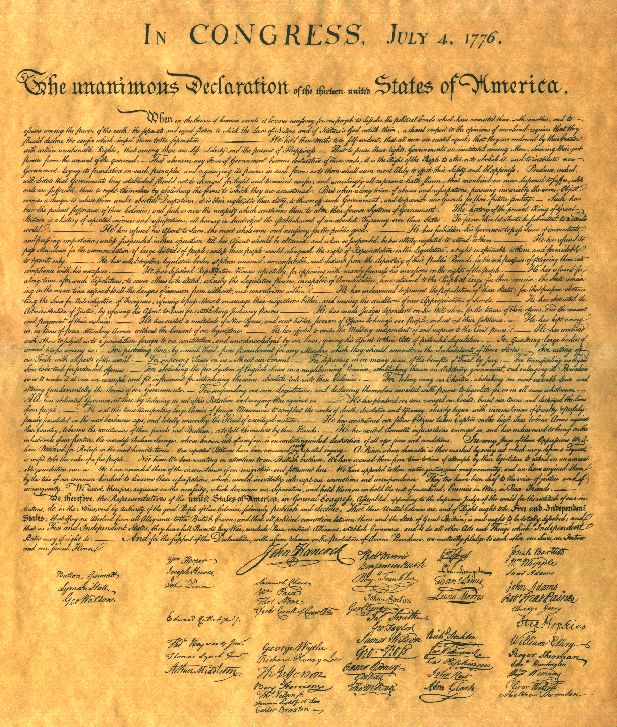
The original signed parchment Declaration of Independence refers in its heading to the “the thirteen united States of America.” The “u” in “united” is uncapitalized.
Not included in the united States were the four other British North American colonies of Quebec, Nova Scotia, St John’s Island (now PEI) and Newfoundland.
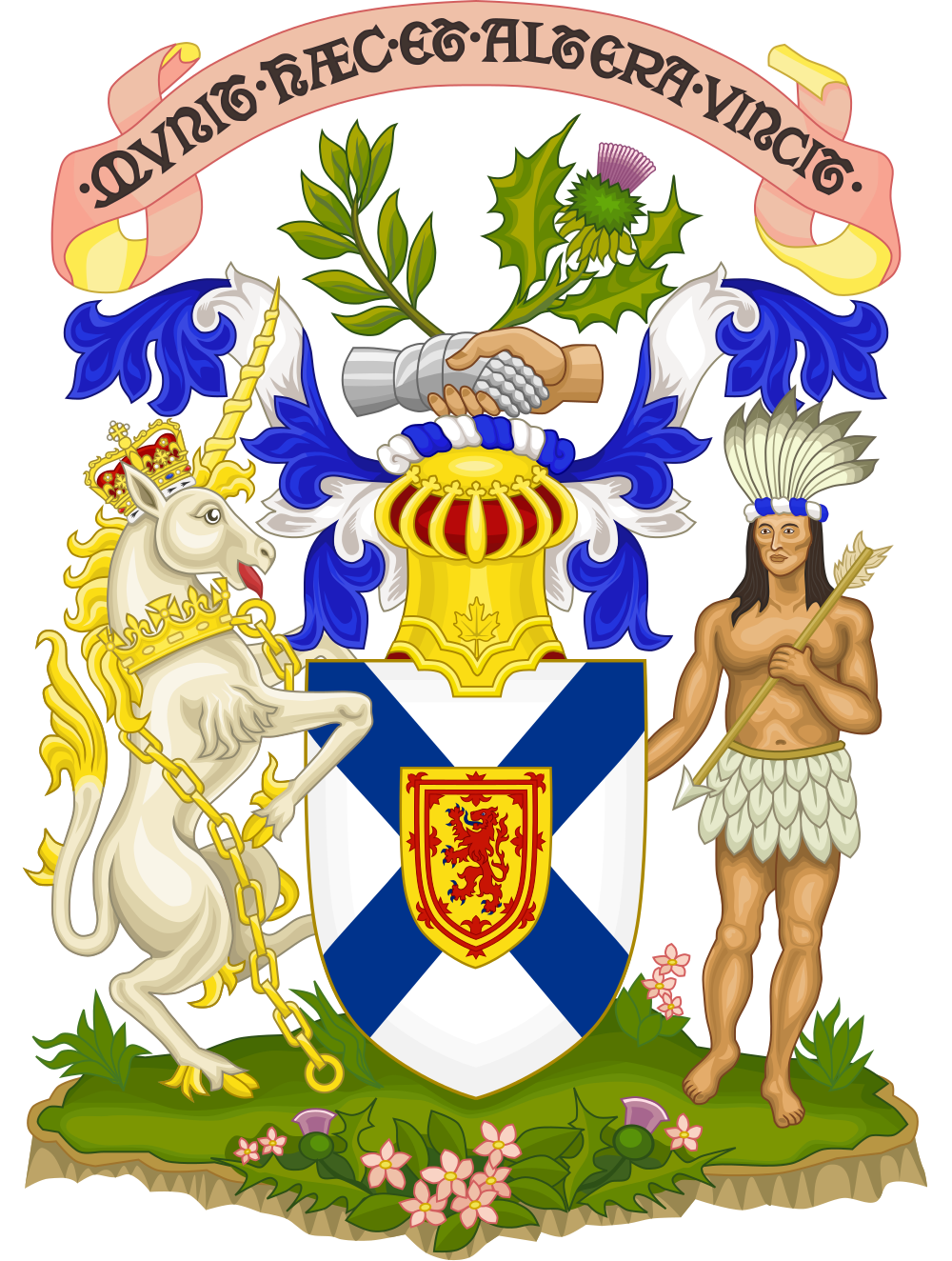
The coat of arms of Nova Scotia includes a crowned unicorn and a First Nations man as supporters: https://upload.wikimedia.org/wikipedia/commons/8/8e/Coat_of_arms_of_Nova_Scotia.svg
In Wikipedia’s list of largest islands by area, Nova Scotia’s Cape Breton Island, at 3,981 sq. mi., ranks as the 76th largest island in the world, just behind # 75, Hawaii’s big island at 4,029 sq. mi. During the War of 1812 with the US, Nova Scotia became a large military base for the British as the centre for the British Royal Navy’s blockade and naval raids on the US.
The Bretons are an ethnic group located in the region of Brittany in France. They trace much of their heritage to groups of Brittonic speakers who emigrated from southwestern Great Britain, particularly Cornwall and Devon, in the 3rd through the 9th centuries.
Although France surrendered the mainland of Nova Scotia to Britain in the Treaty of Utrecht 1713, they kept the island of Cape Breton, building a massive fort at the port of Louisbourg. It cost so much that the King would querulously joke that he expected one day to wake up and see the ramparts of Louisbourg from his bedroom window.
Devon, a county in southwest England, is the second largest county in England, and has the longest road network of any county in England. Devon gets its name from the Dumnonii, a name that the invading Romans gave to the Celtic tribe in that area. That name means “a person who lives in a deep valley”, and it comes from the hills and valleys of the area.
St. George, who legendarily slew a dragon, is the patron saint of England. St. George’s Day, April 23, doesn’t get nearly the attention (or raucous celebration) of St. Patrick’s Day, March 17.
The SpaceX Dragon 2, the Boeing CST-100 Starliner, the Lockheed Orion, and Sierra Nevada Dream Chaser are all under development to carry humans to space.
The constellation Orion is one of the most recognizable in the night sky, with its distinctive three-in-a-row “belt”. It is named for a hunter in Greek mythology, but the names of its two brightest stars, Rigel and Betelgeuse, are derived from Arabic.
In Star Trek, the Orion people were green humanoids. They were notorious for interstellar piracy, and their women were renowned for their sensuality.
The original Star Trek was promoted by creator Gene Rodenberry as a “Wagon train to the Stars”. At the time Wagon Train was a popular Western on TV starring John McIntyre and Robert Horton. It was cancelled in 1965 and never got a movie series.
Getting back to green Orion women in Star Trek, the green slave girl was played actress Susan Oliver (images!). Susan Oliver became an accomplished pilot, and she was the fourth woman pilot in history to fly solo across the Atlantic Ocean in a single engined airplane.
This was after she experienced a scary incident in a Pan Am Boeing 707 on a transatlantic flight from Paris to New York City that dropped from 35,000 feet to 6,000 feet. That was on February 3, 1959, the same day Buddy Holly died in an airplane crash (“The Day the Music Died”). These events caused her to avoid flying for quite some time, until later when she overcame her fear of flying and became a pilot.
Charles Dickens was an acclaimed celebrity in his own day, not only for his writing but for his touring performances of dramatic readings of passages from his novels. One of the most popular public readings was the horrifying murder of Nancy by Bill Sikes, from Oliver Twist, which made audience members weep and faint. Dickens’s friends and family noted that the tours were taking a physical and emotional toll on him as well; several biographers believe that they contributed to his ill health and death at age 58.
Charles Dickens hosted Hans Christian Andersen for what he expected to be a brief visit in 1857. Five weeks later, Mrs. Dickens had to evict him from her house, and Dickens cut off correspondence with the Danish fabulist.
Hans Brinker, or The Silver Skates is a novel by American author Mary Mapes Dodge, first published in 1865. The novel takes place in the Netherlands and is a colorful fictional portrait of early 19th-century Dutch life.
Within the novel is a short story that has perhaps become more well known than the novel itself. The story is about a Dutch boy who saves his country by putting his finger in a leaking dike. The boy stays there all night, in spite of the cold, until the adults of the village find him and make the necessary repairs. And this is where the legend of the boy and the dike originated.
“Netherlands” literally means “lower countries”, and only 50% of the Netherlands exceeds 3 feet in height above sea level. Much of the Netherlands’ land, about 17% of it, has been reclaimed from the sea and lakes. The Netherlands specializes in intensive agriculture and is the world’s second-largest exporter of food and agricultural products, after the United States.
King William-Alexander of the Netherlands has been the Dutch monarch since April 30, 2013, when his mother, Queen Beatrix, abdicated after a reign of 23 years.
Beatrix Kiddo is a fictional character, the protagonist of the two-part movie Kill Bill directed by Quentin Tarantino. She is portrayed by Uma Thurman. According to Uma Thurman, the character was created collaboratively during the filming of Pulp Fiction, with Thurman providing the character’s first name and Tarantino her last name.