Trivia Dominoes: Play Off the Last Bit of Trivia

The moon of Uranus named Uranus VII was was discovered from the images taken by Voyager 2 on January 20, 1986 and not actually seen until the Hubble Space Telescope recovered it in 2003. Uranus, the 7th planet, has 27 known moons. They are all named after characters from the works of William Shakespeare and Alexander Pope.

**Uranus VII **is also named Ophelia.

nm

Astronaut Wally Schirra correctly identified the glowing particles surrounding Gemini VI as frozen wastewater from the spacecraft itself, dubbing the formation “the constellation Urion”.

24 astronauts have flown to the moon, and of those, 12 walked on the moon.

12 astronauts who flew to the moon:
Frank Borman, Jim Lovell (twice!),
William Anders, Thomas P. Stafford,
Michael Collins, Richard F. Gordon Jr.,
Fred Haise, Jack Swigert,
Stuart Roosa, Alfred Worden,
Ken Mattingly, and Ronald Evans.

12 astronauts who flew to and also walked on the moon:
Neil Armstrong, Buzz Aldrin,
Pete Conrad, Alan Bean,
Edgar Mitchell, Alan Shepard,
David Scott, James Irwin,
John Young (flew twice, walked once), Charles Duke,
Gene Cernan, and Harrison Schmitt.

When I say John Young walked once, I mean he went on one Apollo mission to walk on the moon.

Wally Schirra was one of the original seven astronauts chosen for Project Mercury.

On October 3, 1962, Schirra launched in a Mercury spacecraft he nicknamed Sigma 7 to become the fifth American, and ninth human, to travel to space.

On December 15, 1965, Schirra launched in Gemini 6A with Thomas P. Stafford to achieve the first space rendezvous, station-keeping his Gemini 6A spacecraft within 1 foot of the sister Gemini 7.

On October 11, 1968, Schirra launched in Apollo 7 to be in the first mission in the Apollo program, with Donn F. Eisele and R. Walter Cunningham to carry a crew into space. It was also the first U.S. spaceflight to carry astronauts since the flight of Gemini XII in November 1966.

Schirra was the first astronaut to go into space three times, and the only astronaut to have flown in the Mercury, Gemini, and Apollo programs.
Gene Cernan, who died in January of 2017, was the commander of Apollo 17 in December 1972, the final Apollo lunar landing. He is the last person to walk on the moon.

Interestingly (or not), Neil Armstrong and Gene Cernan, the first and thus far the last people to walk on the moon, are both alumni of Purdue University.

According to Buzz Aldrin, just as he was getting ready to step off Apollo 11, he reached back and took the cassette of “Fly Me to the Moon” that Quincy Jones had arranged and conducted for Count Basie and Frank Sinatra, and he played it, making “Fly Me to the Moon” the first music to be played on the Moon.

Quincy Jones has seven children (with five different women). Of the seven, at least five are involved in the entertainment industry: musician and artist Jolie Jones (Levine), music producer Quincy Jones III, model Martina Jones, actress Rashida Jones, and designer Kidada Jones.

Rashida and Kidada Jones are both daughters of Peggy Lipton, best known for playing Julie on “The Mod Squad”.

Lipton Yellow Label tea has been sold since 1890, when Sir Thomas Lipton created the first version. It is sold in 150 countries worldwide.

Sir Thomas Lipton, the tea magnate, was the most persistent challenger in the history of yachting’s America’s Cup. Between 1899 and 1930 he challenged the American holders of the America’s Cup through the Royal Ulster Yacht Club five times with his yachts called Shamrock through Shamrock V. His well-publicized efforts to win the cup, which earned him a specially designed cup for “the best of all losers”, made his tea famous in the United States.

Cool trivia! I love stories of good sportsmanship.

The history of the San Diego Sir Thomas Lipton Challenge Cup dates back to the early days of yachting on the Pacific Ocean, circa 1900. The Commodore of the San Diego Yacht Club wrote to Sir Thomas in 1902 to request permission for the Club to name a cup in his honor. Sir Thomas not only granted the request, but once again demonstrated his nobility and he gifted a trophy to SDYC which became known as the San Diego Sir Thomas Lipton Challenge Cup.

A picture of the cup can be seen here, https://peggybawn.files.wordpress.com/2012/11/san-diego-yc-lipton-cup1.jpg, from this article, 98th Challenge for the Sir Thomas Lipton Cup | www.peggybawnpress.com.
ETA from the SDYC, the challenge cup race comes up next month.

http://sdyc.org/liptoncup/

Yacht rock (originally known as the West Coast Sound[2][3] or adult-oriented rock[4]) is a broad music style and aesthetic[5] identified with soft rock.[6] Its name, coined in the 2000s by the makers of the online video series Yacht Rock, was derived from its association with the popular Southern Californian leisure activity of sailing. The term describes one of the commercially successful genres of its era, existing between the late 1970s and early 1980s.[7] Drawing on sources such as smooth soul, smooth jazz, R&B, funk, and disco,[5] common stylistic traits include high-quality production, clean vocals, and a focus on light, catchy melodies.

The band Toto, now considered to be one of the exemplars of the Yacht Rock genre, was formed by a group of successful session musicians in Los Angeles in the mid-late 1970s. Four of the original band members had known one another at Grant High School in Los Angeles. When the band formed, guitarist Steve Lukather and keyboardist Steve Porcaro were still teenagers, though both were already active as session players and as touring band members.

Stories vary on the origin of the band’s name: it may have been inspired by the Latin phrase in toto, meaning all-encompassing (and a reference to the variety of musical genres in which the members of the band had played), or it may simply have been a reference to Dorothy’s dog in The Wizard of Oz.

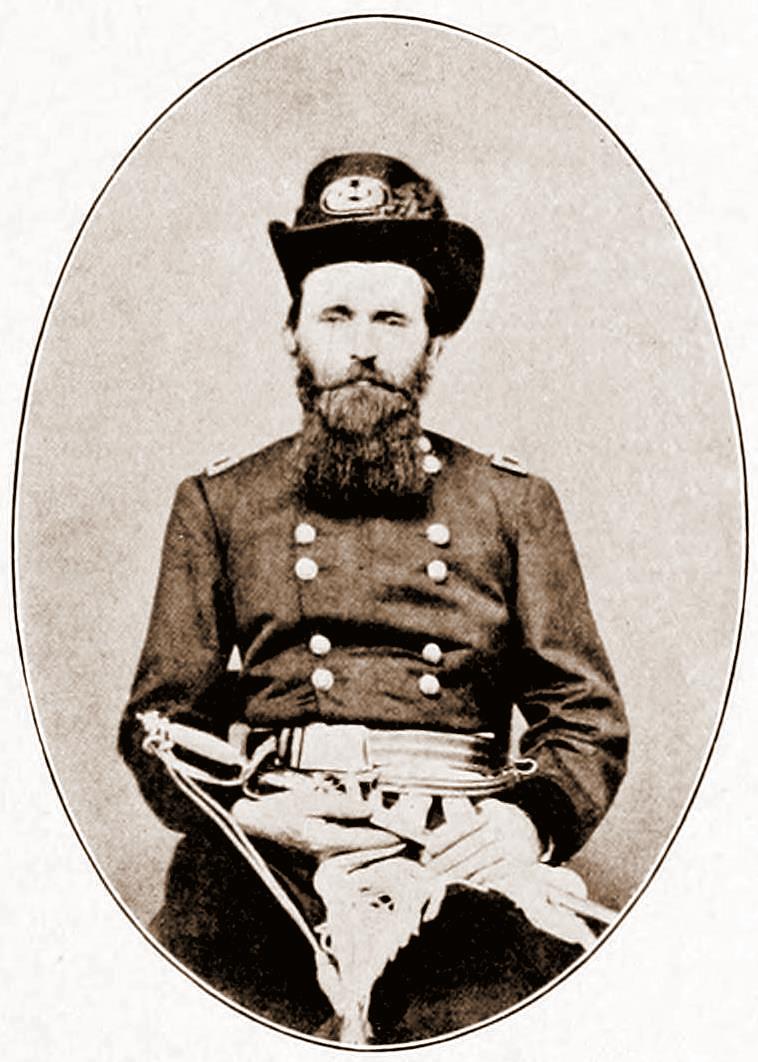
Ulysses S. Grant had a much longer beard at the beginning of the war, when he was an officer of Illinois troops, than at the end, when he was lieutenant general in command of all U.S. Army troops.


While General Grant was often portrayed with a cigar, it was a case of a story making reality. As Grant told it:

"“I had been a light smoker previous to the attack on Donelson … In the accounts published in the papers, I was represented as smoking a cigar in the midst of the conflict; and many persons, thinking, no doubt, that tobacco was my chief solace, sent me boxes of the choicest brands … As many as ten thousand were soon received. I gave away all I could get rid of, but having such a quantity on hand I naturally smoked more than I would have done under ordinary circumstances, and I have continued the habit ever since.”

Grant died of throat cancer.

Aware that his throat cancer condition was terminal, and that he had no other way of providing for his family, Ulysses S. Grant determined there was no better time to write his memoirs. He had been swindled out of all his investments by his business partner, 33 year old Ferdinand Ward, who was running a Ponzi scheme. With the help of his friend Mark Twain, Grant finished his memoirs—and saved his wife from an impoverished widowhood—just three days before he died. Twain’s marketing efforts earned $450,000 in royalties for Grant’s family.

Grant’s Tomb, where Ulysses and his wife, Julia, rest, is the largest mausoleum in North America

Cuthbert Grant was an early Métis leader in the Canadian North-West.

Born at what is now Togo, Saskatchewan, in 1793, he rose in the ranks of the North-West fur trading company, and then in the Hudson Bay Company after the two companies merged. He was active in the fur trade in the “pays d’en haut”, the area now in northern Saskatchewan.

He later founded a Métis settlement in the Red River area.

The Red River, which forms most of the boundary between the states of Minnesota and North Dakota, flows from the United States into Lake Winnipeg in Manitoba, Canada. Unlike the vast majority of rivers in the United States, it flows northward, which means melting snow and river ice, as well as runoff from its tributaries, often create ice jams, which cause the river to overflow. The valley is essentially flat, leading to overland flooding, with no high ground on which to take refuge.

This river is sometimes called the Red River of the North, to distinguish it from the so-called Red River of the South, which forms part of the border between Texas, Oklahoma, and Arkansas.