Napoleon Dynamite was a 2004 film, directed by Jared Hess, and co-written by him and his wife, Jerusha. The two of them had attended film school at Brigham Young University; while there, they had met actor Jon Heder, who starred as Napoleon in the film.
Apparently unbeknownst to Hess until late in the production of the film, “Napoleon Dynamite” was also a pseudonym that musician Elvis Costello had used since the 1980s.
Bob Dylan’s “Like A Rolling Stone” was rated the #1 pop song of all time by Rolling Stone magazine, but nobody seems to know what the lines “You used to be so amused at Napoleon in rags and the language that he used” is really a reference to.
Bob Dylan was born Robert Allen Zimmerman in 1941, in Duluth, Minnesota. When he was six years old, his family moved to Hibbing, Minnesota, where Dylan was raised. When he was 17, he attended a concert by Buddy Holly in the Duluth Armory, just 3 days before Holly’s death. In his Nobel Prize speech, Dylan remembered this about Holly at the concert: “He looked me right straight dead in the eye, and he transmitted something. Something I didn’t know what. And it gave me the chills.”
The Zimmermann Telegram was a secret diplomatic communication issued from the German Foreign Office in January 1917 that proposed a military alliance between Germany and Mexico in the event that the United States entered World War I against Germany. In return, Mexico would recover Texas, Arizona and New Mexico at the end of the war. Revelation of the contents (due to British intelligence) enraged Americans, especially after German Foreign Secretary Arthur Zimmermann publicly admitted the telegram was genuine on March 3, and helped generate support for the United States declaration of war on Germany in April.
During the Civil War, the U.S. Army created the first American system of licensed prostitution and medical examination to cope with the horde of prostitutes (“public women”) visited by soldiers on leave.
The motto of the US Army is “This We’'ll Defend.” It is not, as is commonly thought, “Be all You Can Be,” which was just a recruitment marketing slogan.
Cool trivia. Continuing with a Veteran’s Day theme…
The motto “This We’ll Defend,” traces back to the founding of the ‘War Office’—an intermediary between the states and the Army. In a 2012 post, former Army Chief of Staff Gen. Ray Odierno said “the pronoun ‘we’ reinforces our collective or team effort, and ‘defend’ remains our Army’s main mission.’”
The Army is the senior branch of the U.S. armed forces, having been founded in 1775, even before the Declaration of Independence was adopted. Accordingly, when all of the service flags are displayed, the Army flag should be in the position of honor, farthest to the viewer’s left (the flag’s own right), as in this famous Oval Office picture: Elvis Presley and Richard Nixon: The Story Behind the Photo | Time
According to DODLive, the United States has seven branches of uniformed service. Five of these are under the Department of Defense: Army, Navy, Marines, Air Force, and Coast Guard. The other two uniformed services are the U.S. Public Health Service Commissioned Corps and the National Oceanic and Atmospheric Administration Commissioned Officer Corps.
The Royal Air Force (RAF) is the United Kingdom’s aerial warfare force. Formed towards the end of the First World War on 1 April 1918, it celebrated its 100th anniversary this year and is the oldest independent air force in the world.
The RAF’s very first headquarters was the Hotel Cecil in London, a grand hotel built 1890–96 between the Thames Embankment and the Strand in London, England. It was named after Cecil House (also known as Salisbury House), a mansion belonging to the Cecil family, which occupied the site in the 17th century. The hotel was largely demolished in 1930, and Shell Mex House now stands on its site.
The Westminster Palace Hotel was just across the street from Westminster Palace, i.e., the Houses of Parliament. It was the site of the London Conference of 1866, the third conference of the delegates of the provinces of British North America, where the delegates hammered out the final terms of Confederation. The result was the British North America Act, 1867, which created Canada.
The Hotel was demolished in the 1960’s and Barclays Bank now has a building on the site.
On VE (Victory in Europe) Day, 8th May 1945, short services of thanksgiving were held every hour in Westminster Abbey from 9.00am to 10.00pm. An estimated 25,000 people attended during the day, with the Lord Chancellor and House of Lords attending at 3.00pm. A service was also held on the following Sunday, 13th May, when the standards of Canada, Australia, New Zealand and South Africa were laid on the High Altar to symbolize the loyalty of the whole Empire during the war.
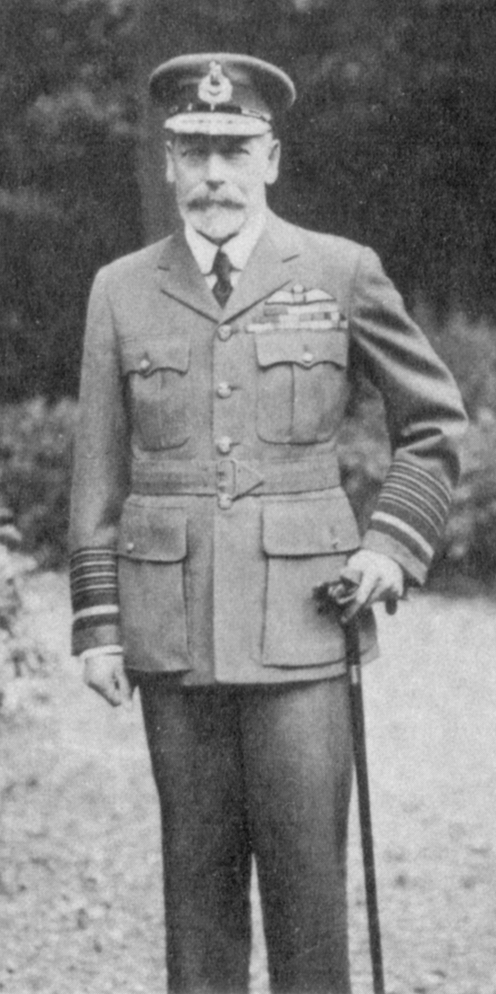
King George V and his son King George VI, both monarchs of Canada, Australia and New Zealand, occasionally appeared in Royal Air Force uniform, but I have found no pictures of Her Majesty Queen Elizabeth II thus attired.
The battleship HMS King George V was commissioned in 1940. She operated during the Second World War in all three major theatres of war, the Atlantic, Mediterranean and Pacific. She was present in Tokyo Harbor when Japan surrendered to end WWII.
Prince George of Cambridge, eldest son of Prince William and Catherine Middleton, Duke and Duchess of Cambridge, is third in the line of succession to the British throne, behind his father and grandfather. If he keeps his own name when regnant, and his predecessors do likewise, he will be King George VII.
Cambridge, Massachusetts, is deservedly well known as a “college town” as the top employers there are Harvard University and Massachusetts Institute of Technology with the City of Cambridge rated a distant third.
prince tennis racquets (http://www.princetennis.com/) were oversized, yet still legal, tennis racquets created in the early 1970s. The company was founded in 1970 by Robert H. McClure of the university town of Princeton NJ (hence the name prince) as a manufacturer of tennis ball machines.
prince later went on to manufacture their signature racquets when Howard Head, founder of the Head Ski Company, joined prince. Head had taken tennis lessons in his retirement (his company was acquired by AMF in 1969). He used one of the tennis ball machines made by prince, but was frustrated by his slow improvement in the game. Head joined prince in the early 1970s and developed the company’s signature oversized tennis racket.
The princeClassic aluminum racket was the first oversized racquet to be patented.