The candy bar Mounds’ original slogan, “Indescribably Delicious”, was created when Mounds ran a contest to come up with the best two words to sell a candy. Leon Weiss, the person who came up with the slogan, won $10, while Mounds went on to use the slogan in advertising and on the wrappers, still continuing today.
A company including Peter Paul Halajian introduced the Mounds bar in 1920. It became a hit with the U.S. military during World War II. They introduced the Almond Joy bar in 1946. In 1988, Hershey’s purchased the United States rights to their chocolate business for $300 million, which included Mounds, Almond Joy, and York Peppermint Patties.
Charles Schulz modeled the Peanuts character Peppermint Patty after a favorite cousin, Patricia Swanson, who served as a regular inspiration for Peanuts. Swanson’s roommate Elise Gallaway served as the model for Peppermint Patty’s best friend Marcie. In later years, especially after lesbian groups began identifying with Pthe charactera, Schulz downplayed the fact that the character was based on Swanson to protect her privacy.
Peppermint Patty’s closest friend, Marcie, calls her “Sir”. It is never revealed whether this eccentric habit, dating to Marcie’s first appearance in the strip in 1971, is the result of misguided manners, poor eyesight, a snarky reference to Patty’s tomboyish ways, or some other reason.
On April 1, 1970, President Richard Nixon signed legislation banning cigarette ads from airing on television and radio. The ban took effect on January 2, 1971, which meant that cigarette companies had a final chance to advertise on TV during the New Year’s Day college bowl games. The last televised cigarette ad ran at 11:50 p.m. on January 1, 1971, during “The Tonight Show Starring Johnny Carson.”
N/M
President Richard Nixon founded the Environmental Protection Agency in 1970 as a response to the rising concern over conservation and pollution. The EPA oversaw the passage of the Clean Air Act, Clean Water Act and the Mammal Marine Protection Act.
Only two mammals are indigenous to Hawaii, both of which are endangered species: the Hawaiian monk seal and the Hawaiian hoary bat. The seal is related to the endangered Mediterranean monk seal and the extinct Caribbean monk seal; its population is currently around 1,400.
Charles Lindbergh, noted aviator and the first man to fly the Atlantic Ocean solo, spent his final days on the Hawaiian island of Maui, died there in 1974 and is buried there.
Charles Lindbergh’s famous plane, The Spirit of St. Louis, with which he made his solo Transatlantic flight, had no forward windshield. This was an intentional design choice; the plane’s forward fuel tank was placed between the cockpit and the engine, which left no room for a forward-viewing windshield.
Lindbergh, who was accustomed to piloting from the rear cockpit of a mail plane (with bags of mail obscuring his forward view), apparently didn’t find the lack of a forward view to be a problem: when he needed to see ahead of him, he would briefly yaw the plane, and get a view from a side window. The Spirit of St. Louis also had a small periscope for forward viewing, though it’s not clear if Lindbergh actually used it during his famous flight.
Lindbergh brought along some water and a bag of sandwiches for his 33.5-hour-long trans-Atlantic trip from Long Island, N.Y. to Paris, France. He didn’t eat any of the sandwiches until after he sighted the Irish coast.
The world’s first non-stop transatlantic flight was made by British aviators John Alcock and Arthur Brown in 1919. The pair flew a modified World War I bomber from St. John’s, Newfoundland, to County Galway, Ireland, in less than 16 hours. The total distance covered was 1,890 miles.
By contrast, Charles Lindbergh’s flight was from Long Island, New York, to Paris. It took him over 33 hours and covered 3,600 miles.
Charles Lindbergh was an aircraft mechanic and wing-walker before he got his pilot’s license. He did not solo during his first round of piloting lessons because he couldn’t afford the security deposit for the instructor’s plane.
The 2018 film Solo: A Star Wars Story, which was about the early adventures of Han Solo, Chewbacca, and Lando Calrissian, had the working title of Star Wars: Red Cup, a tongue-in-cheek reference to the plastic “red Solo cups” that are ubiquitous at barbecues, picnics, and college parties.
Billy Dee Williams is a trained painter and has had several exhibitions of his works.
gImages, Billy Dee Williams paintings: http://bit.ly/2RUDB6t
The Pee Dee River is a river in the U.S. states of North and South Carolina. It is named Pee Dee after the Pee Dee Indian Tribe. Today the Pee Dee Indian Tribe still occupies some of their ancestral lands, although the tribe only consists of just over 200 enrolled members.
(Billy Dee Williams was Lando Calrissian — I should’ve been explicit about that.
In play:
Pee-Chee school folders were first produced in 1943 in Kalamazoo MI. They had fallen out of general use by the 2000s, but are available from Mead as of 2014. Pee-Chee folders are named after the original peach color, but they are now made in five colors and have been renamed “Color Talk Pee-Chee Folders,″ but the original color remains the most popular by far.
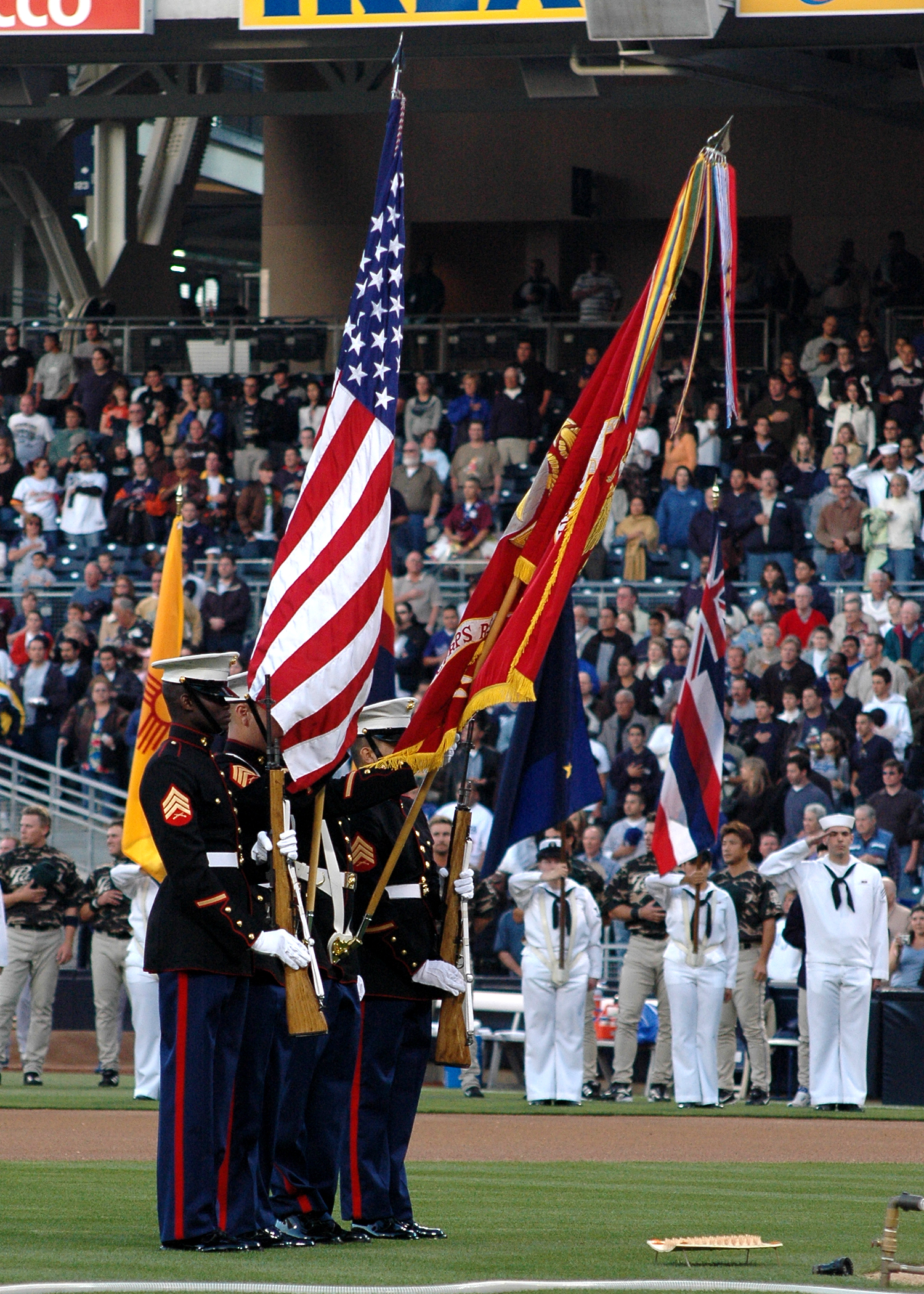
In U.S. military contexts, the American flag is typically referred to as “the national colors.” A military color guard customarily includes four personnel, including two bearing weapons and one each bearing the national colors and the service colors.
Mead, the alcoholic drink made from fermenting honey with water, is featured in many Anglo-Saxon and Germanic myths and folktales such as Beowulf, where it is served in the king’s “mead-hall”, the special building where warriors spent time drinking, feasting and storytelling.
The Saxons took their name from their weapon, the seax, a sharp knife.
The saxophone was invented in 1846 by Belgian instrument-maker Adolphe Sax. Sax wished to create an instrument that combined the projection of a brass instrument, with the agility of a woodwind. It uses a single reed, similar to that used on a clarinet.