I did not claim it is better because it is more realistic. I may have focused more on examples that showed realism, but I do appreciate things that aren’t photo-realistic.
This exampleof something I like, after some quick Googling.
The Rodin examples a I gave above.
I don’t know the names of modern artists or have access to their works, so that’s why I mentioned mostly the classics and gave links to works I knew about, which were very photo-realistic.
Having said that (that photo-realism is not the end-all be-all of art), I should say that many works of art (from the West *and *the rest of the world) *do *attempt to portray a natural scene (with or without humans) and, due to lack of skill/training/cultural issues, utterly fail to portray it well (e.g. the hands are too skinny, the legs are out of proportion to the rest of the body, the perspective is all wrong, etc.)
So, if it’s clear that you want to portray something from real life in a realistic manner, if you do it at a fifth-grade level (with lack of proportions and lack of perspective), then that is not a great piece of art no matter your cultural background.
But, some artists can definitely make the canvas or a piece of stone come alive and amaze people, without depicting a photo-realistic subject.
I should note that I was a bit tepid when I brought up the issue of architecture in the OP
[QUOTE=Polerius]
I would venture to say architecture also (are there any buildings outside the West that match the beauty of, say, the Parthenon?)
[/QUOTE]
So, I wasn’t as sure about it. I do admit that the Taj Mahal is very good, and that there may be other buildings that can also compete with the best the West has to offer.
(BTW, even though I think the Taj Mahal is great, I think calling it “the most extraordinary monument in the world” is overkill)
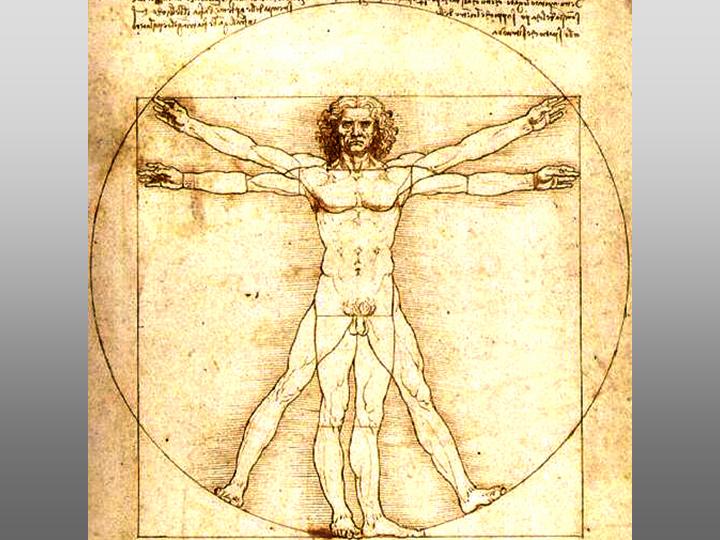
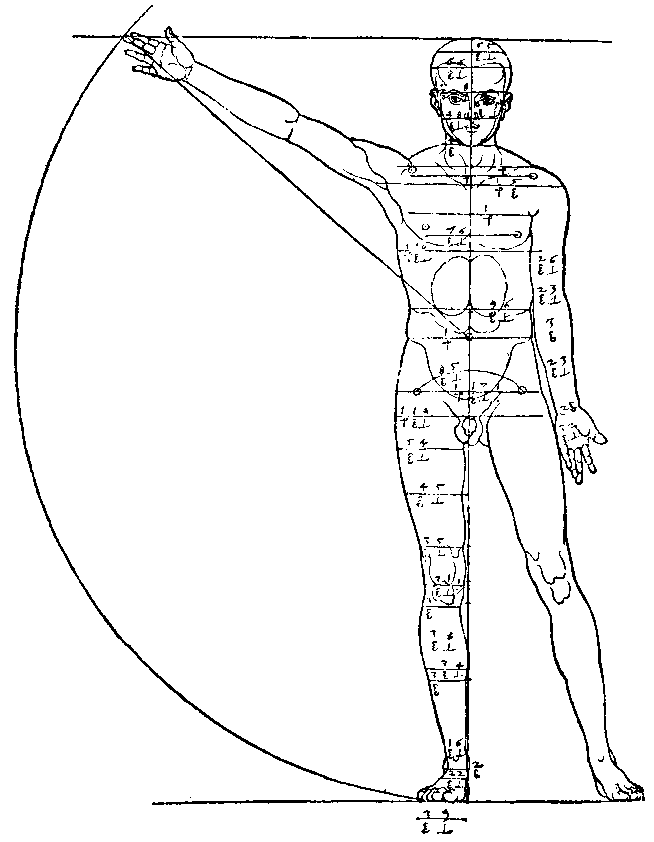
You do realize that all of the old, great masters were just making stuff up, right? They studied the human body for years and came up with what they personally thought the best proportions were. Compare Da Vinci to Durer. It may look right to you, but it’s as artificial as any other system of proportion. As mentioned above, they also made perspective up, too.
But precisely I don’t think they attempt to do that (portray a natural scene). They attempt to convey or express something. And also they follow the local convention about how something should be depicted. For instance, if in a given culture, and for a couple centuries, people keep producing human representations with abnormally large legs and abnormally thin arms (I’ve an example in mind, but can’t find a link), do you think it’s because nobody noticed the discrepancy, or because they were unable to make the same representation with thinner legs and larger arms?
I made no such claim. In the OP I specifically asked whether I was “just horribly biased”.
Interesting that you bring up food, because I was trying to think of other things that different cultures came up with that was not equal across cultures, and I thought of food.
That is, not all cultures came up with equally tasty food.
Think about it, there are Chinese, Indian, French and Italian restaurants all around the world, but how widespread are British or Finnish restaurants?
Of course, there may be many reasons for this, but it seems to me that the Brits and the Finns just didn’t come up with a set of foods that was as tasty as the set of foods that the Chinese, Indian, French and Italians came up with.
There is no reason that all cultures reached the same level of quality in every aspect of life (art, music, food, etc). Due to social/economic/historical/geographical reasons, some things blossomed in some parts of the world but didn’t in others.
FYI, unrealistic proportions in South and East Asian art are most often deliberate. Statues of the Buddha/Guatama are often rendered with stick-thin arms and legs and a potbelly because they generally depict him in the emaciated state from which he reputedly emerged from under the pipal tree where he attained Enlightenment.
Sexual organs are often rendered in giant proportion (as in the carvings decorating the Kahurajo Temple) to emphasise the sexual aspects of the people and activities depicted.
Just to mention : besides the exterior appearance of this monument, which is well-known, if you look at close pictures of the walls, the carvings and decorations are just maddening (there are some example on the wiki page, like this one : File:TajCenotaphs3.jpg - Wikipedia). If you’re talking about skill, there’s no way the Parthenon can compete.
I’m pretty sure you’d be hard pressed to find a fifth grader who could produce anything remotely close to a single image that’s been presented in this thread. I mean, if it takes so little skill to create this stuff, why don’t you show us how it’s done, and create some of it yourself? If a fifth grader can do it, surely you can do it, as well.
That example is a little too busy for my taste. And before you think I’m saying that because it is non-Western, I find anything too busy distasteful, e.g. some of the wall-papers/wall-paintings in some European homes/palaces from past centuries.
I do not doubt that some cultures had for instance reached a better technical ability. But your claim was vastly different and much more encompassing. And besides, using a better technique doesn’t necessarily make the art produced inferior. An excellent technique can perfectly result in something mostly bland and an imperfect one doesn’t prevent an exceptional creativity.
Saying that during such or such era, such or such art was mostly so-so in such or such part of the world isn’t at all the same as saying that western art in all its forms has ruled supreme during the last 3 000 years. Nor that the most exceptional achievements (assuming that such a thing could be defined) in all arts were European.
What about an example from the Bayeux-Tapestry mentioned above? I’m not sure what grade level you need to be to recreate that, but I don’t think it’s much past fifth grade.
Actually, I mentioned it at first just because it so thoroughly impresses me, and I wanted you to know there was more to the Taj Mahal than the usual picture.
Then, I remembered that you had insisted on skill, and I thought that from this point of view, the Parthenon couldn’t compete. Whether you find it “too busy” or not, it doesn’t detract from the skill of the carvers.
Have you ever tried embroidering a picture? Now try embroidering 100 yards’ worth.
Regardless of the skill level of the artists involved, one has to consider that they were using materials and dyeing techniques, not to mention needles, from the 10th century.
By your standard, the CGI sequences in Terminator 2 would have been the greatest artistic achievement in history in 1992.
If I am not mistaken, even paintings from that era looked like that, so the look of that Tapestry is not necessarily limited by the fact that it was embroidered.
Well, I generally don’t like a “too busy” style, either, like the palaces you mentioned, but it doesn’t apply for me in this case. The carvings are just too delicate and perfect for me not to be fascinated.