Are you suggesting the Model S is not a niche market? They’ve sold 100,000 in 4 years.
I’m saying that for whatever definition you pick, if the Bolt is not niche, then neither is the Model S. And if the Bolt is mass-market, then so is the Model S. You can’t have it both ways.
Of course, we have no idea if the Bolt will sell anywhere close to 50k units. Perhaps they should offer a preorder so that we could have an indication of interest.
Compare to:
“See, I wanted to do a 200-mile-range concept car, essentially what EV-1 did, except mine was going to be a four-door sedan and have three times more range…”
Very different statements, right? Lutz said the former, and you insist he thought the latter.
Lutz has never been a designer. His background is marketing. Remember the iconic BMW tagline: The Ultimate Driving Machine? His. He just happens to also be a huge car guy, and EVs and autonomous cars just aren’t in his DNA, even if we accept that their rise is inevitable.
to be fair, execs trash talking the competition is nothing new. Ballmer was also famously dismissive of the iPhone and look how that turned out. But you have to read what he’s actually saying. He’s got a point about the Model X; those falcon doors were (IMO) a bone-headed decision. They added a lot of weight and cost with them and the engineering time sunk into what’s not much more than a “Gee whiz, look at that!” feature.
Tesla got burned on their Chinese pre-orders. [They were bogus:](Tesla’s abortive attempts to enter the critical Chinese market were thwarted last year by speculators who “misled” the company by placing huge numbers of orders, inflating demand that then fell flat in a glut of unsold inventory. Musk (and more importantly investors in Tesla’s overvalued stock) were desperate to believe that China was about to become a massive market for the Model S, and their outsized ambitions led to a major strategic setback from which Tesla’s Chinese operations are still recovering.)
Tesla’s abortive attempts to enter the critical Chinese market were thwarted last year by speculators who “misled” the company by placing huge numbers of orders, inflating demand that then fell flat in a glut of unsold inventory. Musk (and more importantly investors in Tesla’s overvalued stock) were desperate to believe that China was about to become a massive market for the Model S, and their outsized ambitions led to a major strategic setback from which Tesla’s Chinese operations are still recovering.
But back to whatever point you’re trying to make. Yes, a $100,000 sports car is a niche market. A $35,000 sedan is not. If GM sells 20,000 the first year it still won’t be a niche car. The Model S only sold a handful the first year. People waited to see if the wheels stayed on and I suspect they will do the same for the Bolt.
My take on it is (as of today) electric cars themselves are a niche (couple hundred thousand units out of 15-18 million cars sold annually,) and Tesla owns that niche for the time being. When the Bolt hits the market, it will be part of that niche.
Well the trash talk is certainly true. Whatever car company he’s working for on any particular day is the greatest at something.
I would love to have been a fly on the wall at Tesla when the engineers discussed the gull wings.
i’ll say it again, Tesla cars demonstrate the power potential of electric motors. When fast charge batteries hit the market that will drastically accelerate the change over from ICE to EV. When that happens the idea of sports car is going to radically change because the production cost/performance difference between a Dodge Dart and a Viper or Hellcat will be much narrower.
That would be totally reasonable, but I don’t think it’s what Magiver meant.
At any rate, all vehicles live in some kind of niche. Narrow down to a price range and vehicle class, and no car can take more than a few percent of the market.
If one wants to carve out all EVs as a separate niche, that’s fine also–and as you said, means the Bolt will live there also. Model 3, too. Though I hope the Model 3 proves successful enough that we don’t consider EVs a separate category; at least not any more than diesel vs. gas cars are separated.
I think that Tesla is counting on a reduction in battery costs to get the $35,000 price of the Model 3, and they think they will achieve this through the Gigafactory they’re building in Nevada. Wikipedia says the batteries in the Model S are the 18650 type of battery, which is a standard one already produced in volume by Panasonic and others in Asia.
So is it realistic that Tesla can make their price target? Wikipedia also says that the list price of a replacement battery for the Model S sedan was $44,000 in February 2015, and the Model 3 has a range of roughly two-thirds of the Model S. So that would put the battery cost for a Model 3 at about $30,000, way too much for a car expected to sell for $35,000.
Nissan had planned on selling many more cars. The low price of gas and the recharging delay on long trips are the controlling factors. Again, when batteries can recharge in 5 minutes then there won’t BE ICE cars. They’re dead at that point.
And we better hope there’s an electrical grid to feed it or we’re all screwed.
Thank you for finally providing number behind your claim.
Hey! I wanted to be the one who check mated him! :mad:
Umm… what? Went to Teslamotors web site and tried to get info on the model three and the ONLY thing that was offered was a short Madison Ave type vid with glamor shots of a red car. Yep. It’s red. Oh, and there were some claims about distance per charge below. But Zero. 0. Real info.
The Model X looks pretty cool for a small family second car. The gull wing doors might actually be ok. Except that you won’t be able to put a rocket box or anything else on the roof. That it is marketed as an SUV is a joke I guess.
here’s the thing. based on their projected ship date, these are the first working prototypes of the Model 3. For most other automakers, that stage is where you might see heavily camouflaged cars being secreted around and only seen in spy photos (like this. ) Typically a car is unveiled to the world about 8 months before it’s supposed to go on sale. Tesla is dispensing with all of that and showing their prototypes early.
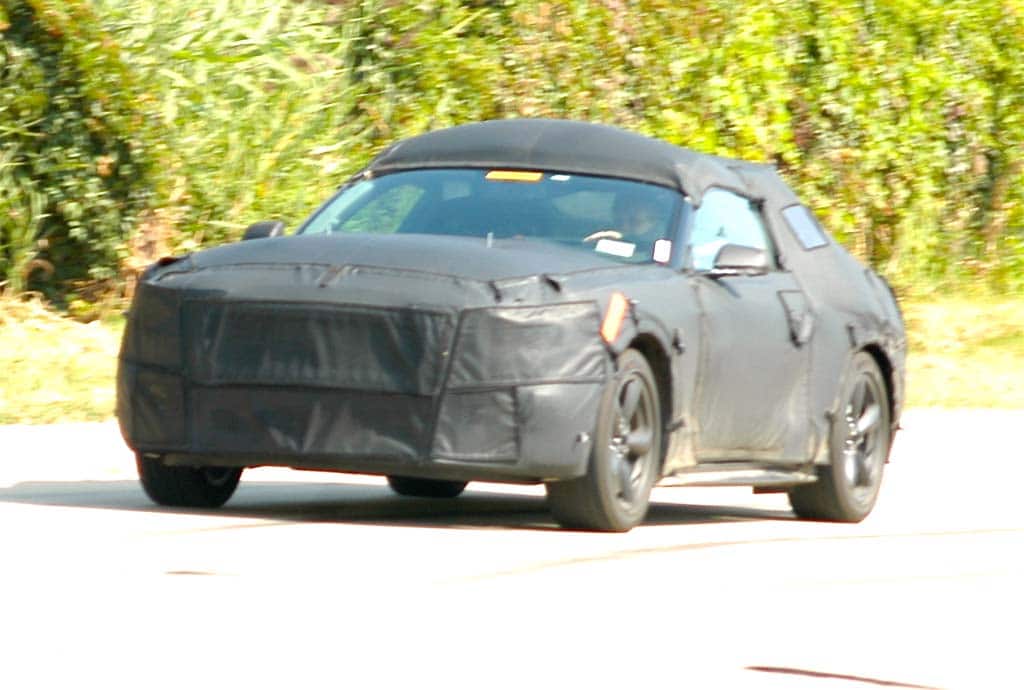
The cash injection from all of those pre-orders doesn’t hurt.
number of model 3’s available this year. zero. But hey, there’s a video to look at.
Those prices seem rather high. No one knows the real price that Tesla and others are paying, but there are some indications. Take this article, for instance–GM claiming current prices down to $145/kW-h. If Tesla can only just match those prices, that would imply $7250 for a 50 kW-h pack. That doesn’t include integration costs of course, but Tesla has a new architecture here and presumably this piece won’t be tremendously expensive. $10k seems reasonable.
If the Gigafactory is successful, it seems like $100/kW-h isn’t totally unreasonable. $7.5k for integrated pack costs might be achievable. Either way, it seems adequate for a $35k vehicle, considering that the rest of the drivetrain is relatively cheap.
Oh, I suppose so. I see a lot of those camouflaged cars going over Hoosier pass here in Colorado. They seem to use it as a real world testing ground.
For the auto engineers:
If a car the size of a Tesla Model 3 is to retail at $35K (let’s ignore the costs of electric v ICE and just assume a drive train purchased from GM, Honda, whoever comes in cheapest), there is a cost of production for the thing as it rolls down the line.
Q: How much can I pay for the shell with all sheet metal formed and welded?
I’m talking about the shell onto which all else is bolted (drive train, doors, lid etc.) or glued (glass, insulation, maybe internal panels). the interior and electronics get added and thing gets painted.
For a $35K (ok, call it $38K) retail price, how much can i have invested at this point?
Second and obvious Q: is that enough to get Chrysler/GN/Ford/VW/Hyundai to make them and sip them to me?
AIUI, the Gigafactory is taking in Panasonic cells and producing the battery packs - not yet at the point of raw materials in, battery packs out.
So: Can the Fremont plant take in Chrysler shells and turn them into Model 3’s without bleeding too much while the rest of the robots get installed and trained?
There will hardly be any Bolts to purchase this year either. Certainly nowhere near 50000.
I have to ask, are all of these statements of yours also pure speculation (along with everything else you’ve posted) or do you have the inside track on cutting edge research that no one knows about, mainly dealing with time-warp machines? So far it seems to me that you don’t have basic knowledge of economics, nor chemistry.
So…
You got nothing then?
I guess fast charge batteries based on a chemistry of radon-unicorn-oxide aren’t available yet… Personally I’m holding out to invest in argon-sasquatch-metalhydride batteries unless environmental permits come through for the companies making xenon-sauron-phosphate and radon-skeletor-air batteries.
I don’t think Magiver has any insight into a mythical 5-minute charge EV, just using that as an arbitrary requirement for when mass-market adoption of EVs will occur.
Personally, I don’t buy it. I think there are two hurdle stages an EV needs to meet:
Stage 1- The dedicated commuter EV. Needs to handle ~95% typical of daily work commutes (say >120 miles total range), and to be able to charge overnight at home to full. Owner has a second ICE car for long distance/family trips.
Stage 2 - the family trip EV. Needs to handle 6 hours of driving at highway speeds (~420 miles of range), with charging stops of <45 minutes. This is roughly comparable to ICE trips, since people rarely drive more than 6 hours without stopping to eat somewhere. Charging network must be convenient and widespread along the highway system so that special trip planning is mitigated.
Achieve both of those stages with cost parity to ICE cars, and you’ll start to see mass-market adoption. As total costs (including initial price, depreciation, maintenance and fuel costs) for EVs get substantially better than ICE cars, the range requirements for both stages lessen. Same thing with charge time.
Right now EVs are maybe at Stage 1.5, and cost of batteries are dropping rapidly, but not yet close to the cost of an ICE. Mass market EVs are still a few years off, and even then there will still be people out there where EV’s don’t meet all of their needs. But 5 minute charging is not required for 95% of drivers, at least when the other benefits of EVs become self-evident.