All phrases are still around with some people in some areas. That’s distinct from being a common phrase that is seen generally and frequently in popular media.
Look at the Google ngram.
Use falls off precipitously after WWII. Even those uses are mostly historical references to its use in the past.
I have no idea what that late bump means. Clicking on the 2017-2022 button yields only one single hit.
That wouldn’t even give you the delicacy of the Midwest!
A Chicago-style hot dog is an all-beef frankfurter on a poppy seed bun, “dragged through the garden” with a specific set of toppings: yellow mustard, bright green sweet pickle relish, chopped white onions, tomato slices or wedges, a dill pickle spear, pickled sport peppers, and a dash of celery salt, with ketchup strictly forbidden.
Wow. We had garlic granules that were used on everything because Mom was sure that salt made her gain weight. Pepper wasn’t used unless a recipe called for it.
There was also chili powder (almost never used) and spice mixtures. Pumpkin pie spice got the most use. But I think that there was also Italian spice mix and Mexican spice mix. Again, almost never used.
Spaghetti sauce was hamburger and diced onion, fried, with tomato sauce, tomato paste, and the garlic granules added. Add water as needed.
The (uppercase) Southwest is the US region with proximity or heritage connections to Mexico. The (uppercase) South is roughly the former Confederacy states and historically has no connection to or awareness of anything Mexican (or generally Latin American for that matter).
The (lowercase) south is ambiguous, but most US readers will read it as “South”. If you mean the entire southern layer or two of states, “southern US” is the term that doesn’t mislead.
For sure. Having lived in SoCal, Phoenix, Las Vegas, St. Louis, NYC briefly, and Miami, I have never seen a pierogi in real life, nor noticed them on a menu. I have only a vague notion of what they are, something dumpling or empanada adjacent.
Hm, I’m not surprised by California, Phoenix, Vegas, or Miami, but I’d have thought that pierogi would have at least made it to New York (everything makes it to New York), and probably St. Louis.
And yes, it’s a dumpling. Around here, the most common sort is filled with mashed potatoes and cheese, but there are also varieties with sauerkraut, I think probably meat ones, and fruit fillings. You boil them and then fry them in butter.
Pierogi absolutely did make it to NYC, but like many things in NYC, it depends a lot on where exactly you live/work/hang out. There are Polish restaurants and delis and bakeries galore in my mother’s neighborhood - but in my neighborhood, 15 minutes away there’s a single Polish-European deli ( as in it carries imports from multiple European countries , not just Poland.)
Back when I was living in Manhattan’s Lower East side, there was a great little Polish restaurant (called, appropriately, Little Poland) around the corner from my apartment. I used to each pierogi there all the time.
The ethnic foods I remember from my childhood are pierogis (both the potato and the sauerkraut kind, but mostly potato, with sour cream), cabbage rolls (both the baked kind served with sour cream, and the kind made in tomato sauce) and – best of all – studinetz!
Studinetz was a jellied pork dish made by long simmering pigs feet (pork hocks) with a variety of vegetables. As much as kids are reputedly picky eaters, I just loved the stuff. The texture and umami flavour of the jelly and the bite of added vinegar was just heavenly!
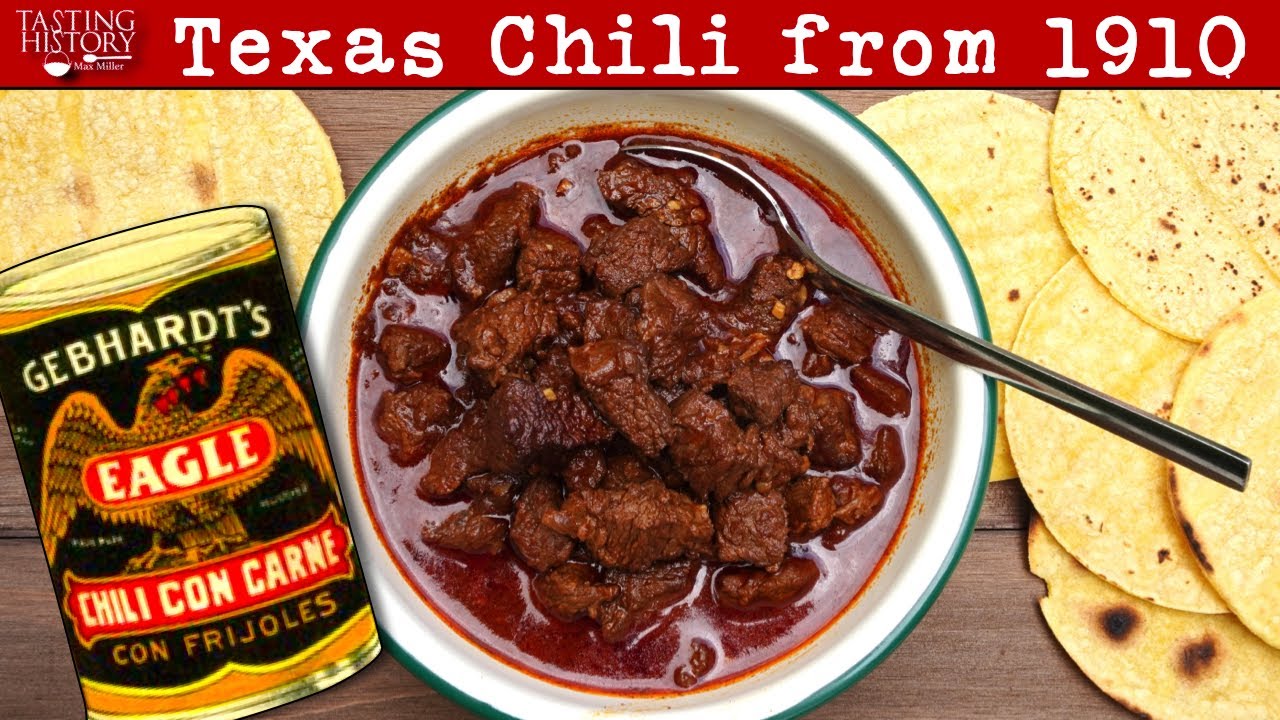
The earliest description of chili comes from an 1828 journal. Recounting a visit to San Antonio, J. C. Clopper writes about it as “a kind of hash with nearly as many peppers as there are pieces of meat – this is all stewed together.”
Historians often cite Texas as the birthplace of chili con carne.
Haggis is most certainly not 'bland", nor is blood sausage. Surströmming is a lot of things- but bland isnt one of them.
Louisiana, however, has a rich tradition of Creole and Cajun cuisine, neither of which is “bland.” This is hardly surprising, given the many different cultures (e.g., French, Spanish, African, Caribbean, and Amerindian) to which it was exposed.
(In the late 1800s, it was also the main hub of Italian/Sicilian immigration in the US. If I recall correctly, the first in-print reference to the Mafia can be found in a New Orleans newspaper from around 1890.)
 I mean the concept of whiteness, as it is currently defined, isn’t much older than that.