Slang is great - slang that’s forced on you isn’t. Slang should be borne from rebellion, not fear. Kids should say things that make the powerful angry, not things intended to placate them. I’m sorry, but words like “unalive” leave a bitter taste in my mouth.
No, slang should just be born from generation churn. Teens from my generation weren’t making a revolutionary statement when we started using “bitchin’” as a term of approval, we were just trying to differentiate ourselves from old people.
That said, slang that does come from a place of rebellion and defiance is pretty cool. Which is why I kind of dig “unalive.”
See, I don’t see it as rebellion - I see it as the equivalent of minced oaths, like saying “gosh” instead of “God” so people don’t accuse you of blasphemy. There’s nothing admirable about it, IMHO. But I doubt we’ll agree on that.
“Kids aren’t making slang in the way I approve.”
They don’t need my approval. They apparently do, however, need TikTok’s.
I’m glad kids are doing things I disapprove of; I just wish they’d do things the billionaire class disapproved of, too.
You seem to be missing the point that what they are doing is what the billionaire class disapproves of. Those in charge are saying “We will silence you from talking about these topics,” and the kids respond by saying “No you won’t, we will find ways to break your stupid rules.”
From what I remember about my own elementary school experience it was Mrs. Willits who made those rules.
That’s one of mine as well.
I’ve also heard creators use ‘2nd amendment’ as well.
In a statement about the students killing the gunman at Old Dominion, FBI agent Dominique Evans stated in a press conference that they “rendered him no longer alive".
It was used by the Einsatzgruppen but I’ve always liked “rendered harmless” in reference to killing or incapacitating someone.
I could be wrong but from what I’ve read so many companies have insane censorship to stay on the good side of payment processors. I understand this from a practical point of view but it just leads to two questions. Why do payment processors have so much power and for whose sake are they demanding this censorship for? People had no issue with these extremely common words online for over a decade and now all of a sudden we’re supposed to believe there’s a significant percentage of the population that can’t handle reading or hearing the words kill, rape and suicide? Did a horde of Helen Lovejoys emerge from suburbs across the US and demand payment processors take action against bad words?
Eh, it’s a slight exaggeration to say that “people had no issue” with those terms. Traditionally, words like “died”, “killed”, “raped” were avoided in the context of individual traumas: people spoke of a loved one as having “passed away” or “departed”, a rape victim was “assaulted”, etc.
Personally, I don’t think filterblocking those words in online discourse is particularly constructive, but I don’t ignore the reality that a lot of people coping with those phenomena in their own lives do find the words emotionally painful. As for the evolution of content moderation speech codes banning such words, here’s an article, with special reference and link to policies pushing back on encouragement of suicide, after a notorious posting of a suicide video that went viral.
I don’t know if it’s all the sudden. While I laugh at the euphemism treadmill, I do so with the full knowledge that changes are inevitable and I often participate. In polite company, I’m more likely to say sexual assault than I am rape. In less serious conversations I might say ganked instead of killed. I’ve even found myself using enslaved person rather than slave and I find the former rather silly. I’m not going to refer to the homeless as unhoused though, but that seems like a silly line to draw in the sand.
I think a lot of online companies have always had some concerns about the government stepping in to control their content as well as public perception regarding what’s available to children. I don’t think it’s payment processors who are driving this, it’s the platforms themselves. In some cases, as with TikTok, they were subject to government censors. In others, the platform made their own decision.
It was borne from rebellion. The modern usage of unalive comes from a 2013 Spiderman cartoon that got turned into a meme on Roblox as a way to evade censorship there.
It got imported into TikTok in 2021 as the Roblox generation graduated to TikTok. You have to understand that the TikTok back then was very different philosophically. It was going for a very sanitized, positive, safe space for content. Just a year before, TikTok had been caught algorithmically suppressing content by people who were overweight or had visible disabilities.
The use of unalive and similar metonyms was a way for creators to communicate to the audience that TikTok was a restricted space where they weren’t allowed to fully express themselves, especially as this was right in the middle of the George Floyd/Me Too era where the personal was political and creators wanted a serious space to talk about uncomfortable topics. That’s why stuff like corn & seggs was deliberately juvenile and clunky, you were meant to notice how awkward all of it was. The creators were deliberately telling the audience that TikTok wasn’t any less controlled than Roblox and how absurd it all was.
And it worked. TikTok underwent a pretty significant philosophical shift from 2020 - 2025 and became one of the more queer friendly places online. Prior to the US sale to Oracle, it was notably much more pro-Palestine than other platforms and was a place that allowed for content that was unfriendly to US corporate interests because it wasn’t beholden to US owners.
As with all slang, the usage of the slang word has the underlying word in subtle but useful ways. You cannot do a simple 1:1 substitution anymore, “he unalived himself” actually means something very different now to “he committed suicide”. And like all young people slang, they’re fine with the oldsters not understanding it and choosing not to use it, they’d prefer it that way over someone unfamiliar with the slang coming in and using it in clunky and tone deaf ways.
It’s fine if you don’t understand the full story of it but just understand that you’re a part of an extremely long tradition of oldsters not having the full context of a youth movement and raising your ire at entirely imagined ghosts under some fear that the youth of today are ruining society.
I haven’t detected any shifts in the core meaning of that phrase, but maybe that’s because I’m just old now. How does this new meaning differ in any significant way to referring to someone committing suicide?
“Commit” implies that suicide is a criminal or immoral act, whereas the current trend is to depict it as morally neutral. This is also why you see “died of suicide” more often of late, when 20 years ago that phrase was a joke on an episode of the Simpsons because of how strange a thing to say it was.
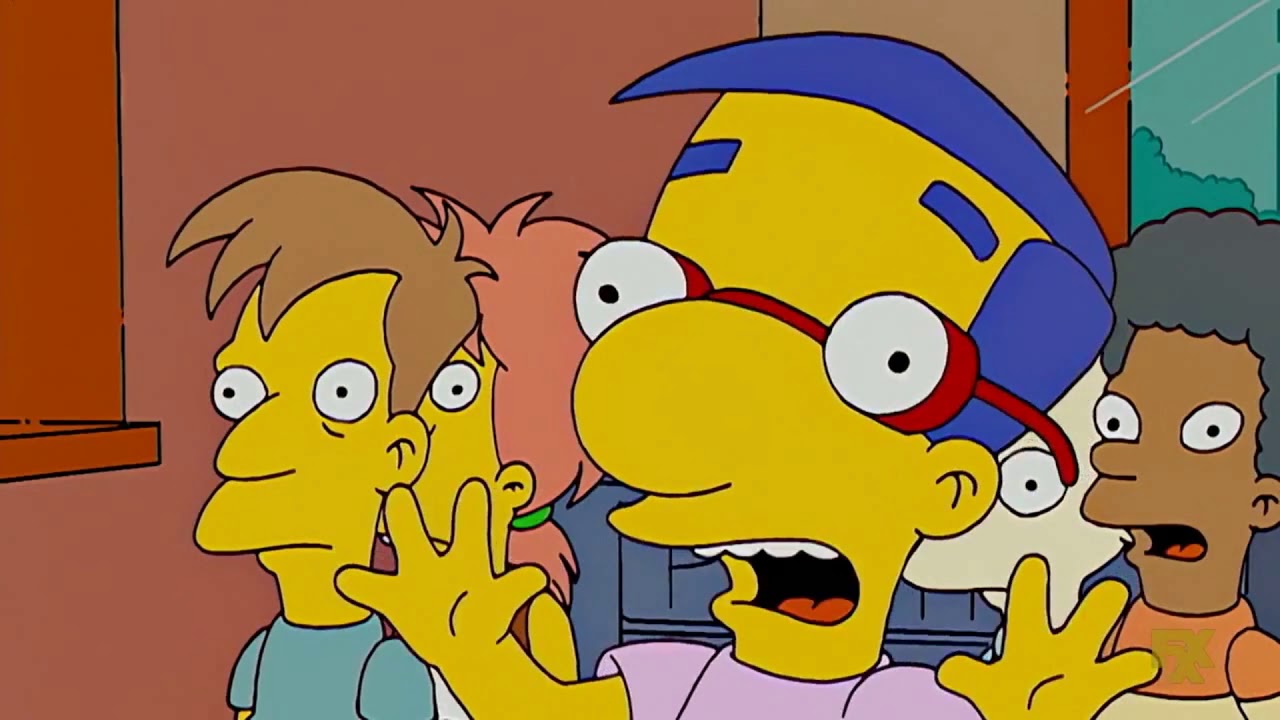
To address Alessan’s comments from further upthread;
IMO, the current Tiktok slang isn’t that different from Cockney rhyming slang or Polari - it’s a way of being able to speak freely without the authority figures being able to understand you. And that can be very liberating.
It carries all of the context of the history of the term.
Coincidentally, I was just browsing reddit and came across the following exchange:
Person 1:
Panama trying to big dog China is the funniest thing lmao what were they thinking
Person 2:
Can you blame them? USA was threatening to unalive their whole country?
It was either try to big dog China or be a dead dog.
Unalive is being used to convey a very specific meaning here where there’s no trivial word substitution that wouldn’t drastically alter what they were trying to convey.
When the verb form of “unalive” is meant to mean “died of natural causes”, and “was killed by somebody deliberately”, “was killed by somebody or something inadvertently”, and “died by their own hand deliberately”, and “died by their own hand inadvertently”, well, I’m not real sure how I could ever use the word and hope to communicate clearly.
At least not without a couple of sentences to set the stage and tell the detailed tale.
Yeah, originates as a natural reaction to the censorship/redflagging/demonetization protocols in every venue these days, a way of saying NO I will not stop talking about this subject because you say I must not use those words, I’ll use other words. As pointed out it has always happened organically in the culture but today it’s more noticeable due to spread and speed.
The apps and sites basically force even serious channels to adopt this mode through applying their overbroad censorbotting to everything.
As to the app/site owners, advertisers and payment processor side, let’s be fair and pause and think of what happens shortly after someone doing something bad: ”OMG look what they found in their browsing history!! How come nobody redflagged that?? How come your company sponsors and enables that???”
As to overgeneral use, yeah, that is a flaw, but I must exoect like with all language it will evolve. At least this one doesn’t sound cooked up by some Graduate Studies Department somewhere.
Reading an article this morning where they chose to censor the n-word.
No, not that one. They wrote “naked” as “n____”.
( I naked hope naked I naked didn’t naked draw naked the naked wrong naked algorithms naked here naked by naked typing naked “naked” naked.)
I have only one word to say about that last sentence.
Buffalo.