If you do come to Hawaii, don’t reveal your reason for coming here. You’ve the worst kind of malahini (newcomer), coming here not because you appreciate the local culture and aina (land).
And being fluent in Japanese isn’t a big plus. 14% of population is local Japanese and 38% is Asian. With a large number speaking Japanese. And how do you expect tourism, which has been down since the start of Covid and only now slowly recovering to continue if Hawaii were to claim their independence. Which the federal government would never allow because of Pearl Harbor and Hickam Air Force base, as well as the military, who comprise 10% of the population.
As for being a blue State, who’s to say that the State wouldn’t flip if the Democrats are blamed for the union split. We’re not mindless robotic bees following a party line. We have voted for Republican politicians, most notably Linda Lingle as Govenor twice, Nixon and Reagan.
Back to the core question–is Hawaii a great refuge if the United States somehow breaks apart, I would say it is not. Primarily because Hawaii is of strategic importance, and it is small. This means in a world without the United States running much of the Pacific, it would be at risk of domination from larger and more powerful countries. What form that domination would take is not easy to predict.
I think the concerns about whether Hawaii can “feed itself” are specious. The idea of food security is important, but the idea of being able to feed your population exclusively through your own domestic agricultural produce is not the be all end all it is made out to be. The United Kingdom has not produced food at that level since the 1700s, and Japan certainly doesn’t today, I am not sure when it last did.
Both countries have had a good bit of food security, which is not the same thing as food self-sufficiency. I know less about Japan, but the United Kingdom very technically does have enough arable land to grow and sustain its demand for calories with staple crops. But actually achieving that would require a major rework of the current agricultural industry in that country, and would frankly be undesirable and poor policy. Part of being in a global market is you can import crops that are better grown elsewhere, and focus on growing the crops your country can most profitably produce. Given things like land prices, labor prices etc, that might even mean some arable land just isn’t used at all (that is certainly the case in Britain.) But Britain has not suffered particularly serious food insecurity for most of the past 300 years. Even WWII, a worst case scenario, where food rationing was a thing, the British never came particularly close to starving.
The Japanese certainly did eventually, but that was due to a situation in which their incessant war mongering lead to their merchant navy essentially ceasing to exist, and being subject to a relentless Naval blockade by the largest Naval force the world has ever seen (and possibly the largest we will ever see.) Even in eras of political hostility that is an unusual situation and likely would not be seen outside of a major globe-spanning war, in which case lots of things will be a problem in any case. Remember even during the Cold War we (the West) regularly traded in staples with the Soviet Union.
Anyhow, I want to avoid the permanent outsider thing. I did that in Japan for a long time.
I don’t suppose many of the long-term locals are fluent in Japanese. I would be helping Japanese tourists, businesspeople, etc. But for all I know, it’s a terrible market. It’s not hard to get a good interpreting job on the mainland.
I think this makes a lot of sense. Also, with rich people taking over the place, it would likely be even more expensive if others were motivated to get away from the chaos and Hawaii proved to be good for that.
What’s Hawaii got going for it? Sure, it’s a set of tropical islands, and that’s not nothing… but there are loads of tropical island nations in the world, and most of them are pretty poor. What sets Hawaii apart is that it’s tropical islands that are part of the US. American tourists can go there without a passport, without changing their money, and without fear of some local warlord arresting them for ransom.
Perhaps an unavoidable return to nuclear power is in the cards in order to power desalinization. Maybe I’m wishing for a miracle but it seems possible. Necessity is the mother of invention, eh?
If SoCal becomes a source of water the agricultural areas might be mollified.
This has been discussed at length broadly speaking and in other threads, desalination is a video game solution in that there is a technical process to take seawater and turn it into fresh water, and we have plants that do that, and in some theoretical sense you could build lots of nuclear reactors and hook lots of those plants up to them. But at the scale of water use involved it is a practical impossibility.
The core issue for California is it uses water at rates for its agriculture which simply cannot be sustained by the amount of water it receives through natural processes, it is unlikely unless we go back to the conditions of 75 years ago this abates–which means a lot of big money agricultural interests that run high-water need farms are going to have to go away, at some point.
Also desalination is not without environmental costs to the oceans.
The real cultural changes need to happen to agriculture, not residential. Stop producing crops like alfalfa, rice and almonds in the desert. Drip irrigation rather than flooding fields to keep hardier crops watered.
Of course, to do that, you need to subsidize the capital costs associated with switching to drip, and - more importantly - change water law so that conservation rather than waste is rewarded. And to do that, you need to overcome the political force that is the nation’s agricultural industry and embedded interests in the status quo.
As others already mentioned, while there are gains to be made with reduced water usage among homeowners, the real heavy usage is for agriculture. Canada isn’t going to “ramp up” agricultural output to replace the output of the Central Valley, one of the most agriculturally valuable regions in the entire world. If they had such a largesse of potential agricultural output laying inert right now that would defy common sense as they would have long ago been exploiting it for their own ends.
I am not a farmer or even much of an agriculture expert, but what I do read a lot is that the Central Valley grows a lot of crops that while more profit per acre, aren’t necessarily that “important” as core food crops, and are incredibly water intensive. I think almonds were once claimed to need some crazy amount of water per almond tree to remain viable. Something like 2,000 gallons to grow a pound of almonds–which there are residential homes that use less water than that in a month as a comparison point.
I don’t know exactly what proportion of Central Valley crops are particularly water-inefficient like the almond, or what crops are out there that they could be replaced with. I would imagine “something” could be done, but as long as the water intensive crops are the most profitable it is unlikely anything will be done until actual straight lack of H2O forces the matter on the farmers.
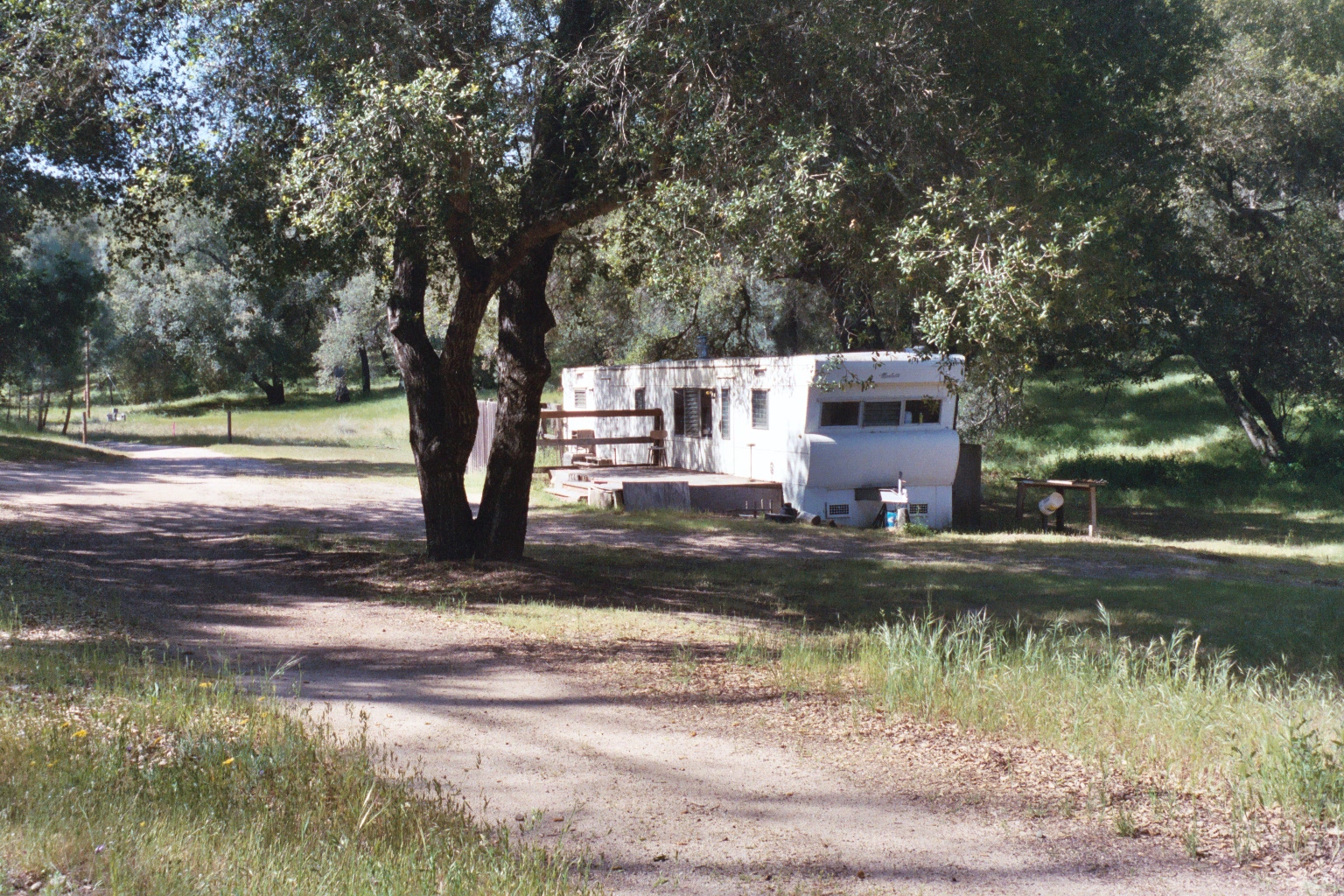
There are still some vestiges of that in California. You might have considered San Luis Obispo County. As recently as 2002 I lived there, in this relatively unspoiled place:
ETA: And I currently live is a smallish farm-ish town in the San Joaquin Valley, population about 12,000, with one main street three blocks long and a total of two traffic lights – and a mere 90-minute drive from the Bay Area should I occasionally wish to go there. Quiet one-bedroom apartment in a one-story building, sizeable for a one-bedroom, for $775 a month, and it even has a non-negligible front yard and outdoor deck. Nice quiet town, more-or-less away from it all, but not too far away from it all. And not too cold in the winter.
And they’re not really a sustainable crop. They just don’t reproduce or grow fast enough (especially the old ones), so once you’ve eaten the current generation, they’re mostly gone, only being replaced by a stream of imported malihini.
Now, where’s that copy of “To Serve Man” cookbook that I’ve had laying around all these years?