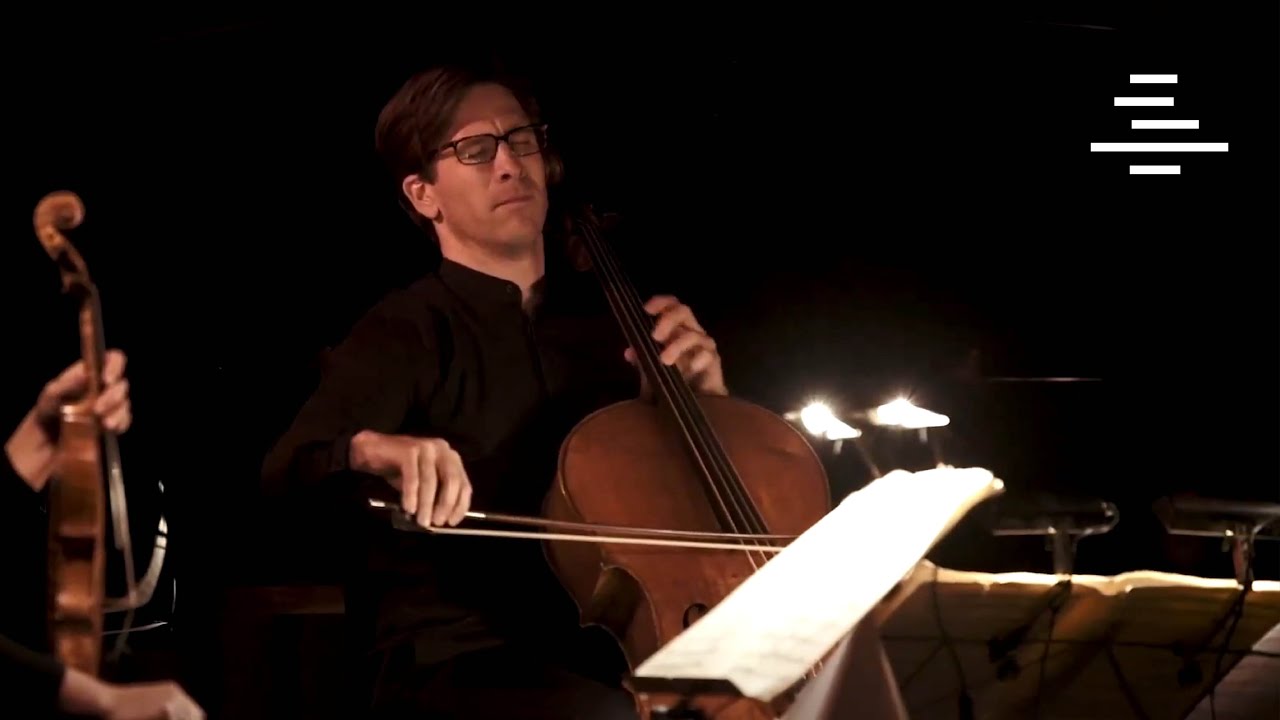
Best cello recordings

Continuing the discussion from Best ambient music for masking conversation:

Give me your music reviews. What are the best cello recordings / cello pieces / cello performances / cellists ? I’m most interested in landing a recording on spotify that reflects the beauty and potential of the instrument. Does not have to be a solo piece.

For cellists, here’s a top 20 list:

Bonus tangent: compare and contrast the cello to other instruments.

Well, not Pachebel that’s for sure!

I’ve always like Bach’s BWV 1007 (don’t know if there’s a definitive one but first on search)

…Discourse not letting me embed for some reason…

If I’m reading this correctly, the Penguin Guide to Classical Music lists a total of 4 recordings that receive 4 stars for BWV 1007. That’s insane. I’m opting for the first entry staring Rostopovich.

Dvorak cello concerto. This is the most beautiful concerto for cello and will make anyone fall in love with the instrument. It reflects those characteristics mentioned: the cello sings plaintively, growls in the depths, dances merrily with the orchestra. It showcases everything the cello can do.

I think Jacqueline du Pre played it the best: there are several recordings (I have one with Chicago Symphony), but those are older so sound quality is not as good. You can find some of her performances on Youtube, as well as more recent ones by contemporary cellists.

I just happened to be listening to the Benedictus from The Armed Man: Mass for Peace by Karl Jenkins. The version that came up for me on Youtube has a cello solo by Hauser, a relatively young cellist who’s not on the list of bests in the link above:
HAUSER - Benedictus (by Karl Jenkins) - YouTube

And here’s a great documentary featuring Jacqueline Du Pre at the peak of her tragically short career, age 24 in 1969, playing Schubert’s Trout Quintet with Daniel Barenboim, Itzhak Perlman, Pinchas Zuckerman and Zubin Mehta. I have it cued to where she shines, but it’s worth watching the whole video https://youtu.be/VNBiJcsnJ6M?t=2585

It is just a short traditional song, but I heard it so many times:

Still ties a knot in my thoat. They play this every time there is a memorial minute of silence before the matches at FC Barcelona’s Camp Nou when someone significant has died.

Now that Bach’s Cello Suites and the Dvořák cello concerto are out of the way, let me suggest these pieces :

Cello and orchestra
Dutilleux’s Tout un Monde Lointain, premiered by Rostropovich in 1970, has already become a standard with about 15 distinct recordings by some of the greatest cellists of the late 20th-early 21st century, which saying something considering that so many post-World War II works have only a handful of recordings (and even more haven’t been recorded at all). While it is demanding music, it is far from the tuneless, arrhythmic caricature that characterizes some contemporary classical pieces. There is a very clear (albeit weird) melody woven in various guises throughout the 5 movements, the orchestration is absolutely gorgeous, and the cello’s expressive qualities are fully displayed - it sings, ponders, cries and wonders. Mysterious, oneiric, otherwordly, sensual. Rostropovich’s recording set the standard, Harrell and Mørk are worth a listen too.

Prokofiev’s Symphony-Concerto. Perhaps over-ambitious and over-long (40 minutes, occasionally rambling it still contains some of late Prokofiev’s best melodies and most striking orchestral writing, especially in the first movement. Check the stratospheric last minute too, I have idea how cellists can pull off that coda after such lengthy, insanely virtuosic work. Rostropovich and Mørk again, as well as Maïsky.

Cello and piano
Franck’s cello sonata. Actually a transcription of his famous violin sonata, there is evidence that he originally intended it for the cello but repurposed it for the violin as a wedding present for his friend Eugène Ysaÿe. After decades of neglect, cellists are starting to include it in their repertoire, with good reason. Intense and breathtakingly seductive. Maïsky.

Brahmstwo cello sonatas. It seems that the second one is more highly-regarded but I have a soft spot for the first one. Its first movement has two of the composer’s most beautifully moving themes, which - again - is saying something. Rostropovich and du Pré.

I played the grooves off of the Mishima soundtrack by Kronos Quartet. Joan Jeanrenaud was the cellist.

Despite being among the largest string instruments, there’s always room for cello.

I bow to your superior punmanship.

Haydn has several wonderful cello concertos. Here’s a recording of the first two, played by Lynn Harell, who’s #17 on the list of great cellists in the 1st post.
Haydn: Cello Concertos Nos. 1 & 2 : Joseph Haydn : Free Download, Borrow, and Streaming : Internet Archive

I’ve been a fan of Haydn since singing his Lord Nelson Mass with a community chorale. Our choir director told us that professionals like playing Haydn: he’s a musician’s musician and makes them sound good.

Elgar’s Cello concerto was a failure when it first appeared in 1919. Casals and others recorded it, but it didn’t become a cornerstone of the cello repertoire until Jacqueline du Pre performed it in 1965: https://www.youtube.com/watch?v=OPhkZW_jwc0

There are loads of recordings of it on YouTube.

Here’s Dvorak’s “Song to the Moon”, from his Opera Rusalka, arranged as an instrumental for orchestra. Joshua Bell on violin, https://www.youtube.com/watch?v=IHJKd8V_E_I&list=RDIHJKd8V_E_I&start_radio=1 compared to Jian Wang playing the same piece on cello: https://www.youtube.com/watch?v=90WNleRmWiI&list=RD90WNleRmWiI&start_radio=1

Coincidentally, this year’s edition of the prestigious Queen Elisabeth Competition was dedicated to the cello. The winner was announced yesterday.

I was happy to see that both of the concertante works I mentioned above were performed during the final. Four candidates chose the Prokofiev and two the Dutilleux. Actually, the first prize went to Ettore Pagano, who played the former.

Moreover, the Franck sonata, and both Brahms sonatas had been played by several candidates during the early stages.

You should be able to watch the performances of the six prize winners here : Queen Elisabeth Competition.

Firstly: cellists. Looking at the list you’ve linked to:

W H Squires - I didn’t realize he’d actually recorded anything. Mostly he’s remembered in cello circles for his little Tarantella showpiece, which is fun to play but a bit of nothing really.

Lynn Harrell has a lot of excellent recordings with Vladimir Ashkenazy on piano. I recommend the Beethoven Sonatas for Cello and Piano in particular.

Julian Lloyd Webber - never really got into his style, although he was certainly a champion of the instrument to the public. Most noted for the stuff his brother wrote for him.

Sheku Kanneh-Mason - seems to be splitting his time between putting out pop classical albums and doing serious stuff in concert. Although I know other cellists disagree, I rather like his take on the Shostakovich Cello Concerto. He’s got a lot of depth for one so young.

Jacqueline du Pre - This is where I differ from the crowd. I certainly recognize her talent but her style just does nothing for me. That said, her Dvorak and Elgar Concertos are considered great by many, so your tastes may align more to the general consensus than mine.

Mstislav Rostropovich - On the other hand, Rostropovich suits me down to the ground. Big, lush sound, wallowing in every note for the sheer love of it. Shostakovich wrote for him and they were also great drinking buddies, so you may want to start with those works.

Pablo Casals - Like du Pre, his style doesn’t always align with my tastes but his talent is undeniable. Whereas Rostropovich’s playing is indulgent, Casals is light and always leaning forward (but without rushing) into the next note, as if excited to see what comes next.

Which brings me to the Bach Cello Suites. I have long been of the view that these pieces are like Rorschach tests for cellists (and for other performers, I suppose - they’ve been transcribed for many other instruments). There is so much room to interpret them in whatever way you like without ever being wrong about it, that I consider them some of Bach’s best works.

And you can hear it in all the different recordings. Casals used to play the pieces every day, and his light and nimble playing makes them dance. Yo-Yo Ma is more restrained and precise, but never soulless, while of course Rostropovich is big and booming. Maisky is pretty good too, but really you have to listen to lots of them to find one that appeals to you.

Finally, if you want lots of cellos, why not try the Bachianas Brasileiras No. 5 by Villa-Lobos? Lots of good renditions of this as well; I picked this one because I’m a big Barbara Hannigan fan (the singer, not any of the cellists).

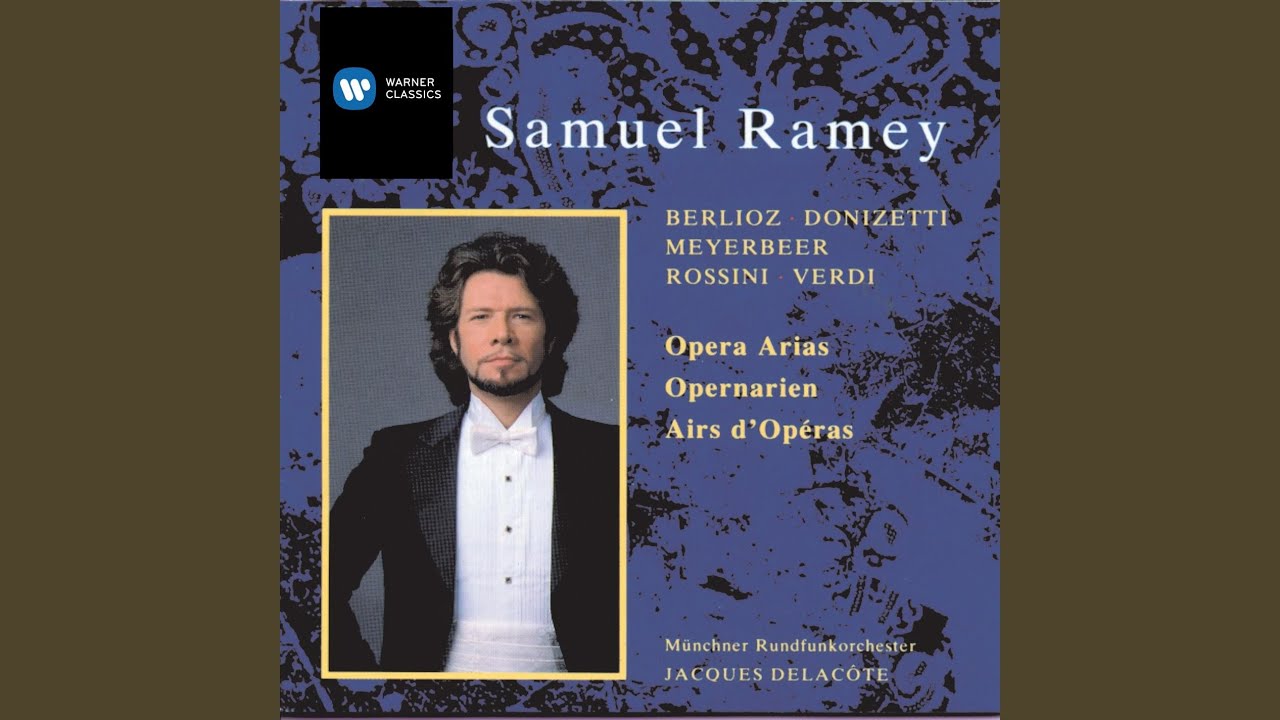
I almost forgot because it’s not really a “cello” piece but rather an opera aria. Verdi’s aria “Elle ne m’aime pas” from Don Carlos opens with a long cello solo, and the cello continues to provide obligato support once Samuel Ramey starts singing, to the point where it’s almost a duet.

The cellist isn’t individually credited here - presumably it’s whomever the first chair of the Muenchner Rundfunkorchester was at the time - but it’s beautifully done nonetheless.

In addition to being perhaps the greatest cellist of the 20th century, he was also the dedicatee and/or commissioning performer of dozens of pieces from some of the leading post World War II composers, many of which have become standard repertoire. Off the top of my head, Prokofiev, Dutilleux, Lutoslawski, Britten, Messiaen, Penderecki and, as you mention, Shostakovich wrote concertos for him. His contribution to the broadening of the cello repertoire is invaluable.

I’d definitely add Wispelwey’s second recording of the Cello Suites, it’s my favourite interpretation of these works.

Queyras is also excellent, striking a fine balance between Wisplewey’s historically informed approach and Rostropovich more traditional, i.e. (paradoxically) modern in this context, version.

As much as I like Maisky, I’m on the fence about his take on the suites. His intense vibrato and elastic rubato work wonders in the romantic repertoire, but they’re a bit indulgent in Bach. Still, he’s a cellist who’s always worth listening to, even if I’d pick him as a third, idiosyncratic option after Wispelwey’s raspy, very articulated authenticity and Rostropovich’s big sound.

I’ve also got Phoebe Carrai’s recording of the Bach Suites, which are probably as close to my own interpretive choices (if I were a better cellist technically) as I could find. But that’s definitely a personal choice rather than a recommendation.

He was also the dedicatee (and namesake) of Bernstein’s Slava! A Political Overture for Orchestra.

Ooh, speaking of Messaien: another great cello piece comes in the fifth movement of his Quartet for the End of Time. The full orchestration for the work is violin, cello, clarinet and piano but the movement is cello and piano only, and it is absolutely sublime.

The cellist in this clip is Guy Johnston, who (like Kanneh-Mason) won the BBC Young Musician of the Year award (in 2000 in this case).