Within seconds of an event or statement by a prominent or obscure politician/agency/entity/country, there are a flurry of comments on a zillion different public platforms by, well, anyone and everyone. Twitter now known as X, Blue Sky, Substack, and others that I haven’t heard of and don’t follow.
Increasingly people do not know and don’t have to know the meaning of an unexpressed thought. There are plenty of places to express those thoughts. Instantly and constantly. Back in the day, how did we find out how Senator Joe Bloke, or Congresswoman Jane Doe reacted to some statement or event? Did we not know until they did an interview or appeared on some talk show? Hours or even days later?
When Twitter first began to be considered a legitimate source for a government entity to state policy, it made me furious. To me that was the equivalent of writing policy statements on the walls of buildings, the outsides of buses, or park benches. Now, like the rest of us, I’m used to whole conversations and debates taking place on the patchwork, crazy quilt mosaic of internet social media.
I’m having a hard time remembering what it was even like before the public conversation was instantaneous and constant. Do you remember? Is this better?
I remember when the media had to “reach out for comment” or await an official press release. This was usually a matter of hours rather than days because newspapers had more than one daily edition. The immediate reaction you get from social media doesn’t seem to be the drastic change. The drastic change is that these people don’t have competent PR people (plural - that’s important) carefully vetting their responses and allowing discussion of consequences before posting.
We had to wait for them to do an interview. Usually they’d do meet the press on sunday, or if it was important they’d do a 1 hour special interview with a journalist on one of the major networks.
I wonder if the old-style delay/pause between an event and politicians’ reactions to it, versus the immediacy of today’s media landscape drives extreme partisanship to some degree.
I mean, in say… 1985, something goes down and a politician typically had some amount of time to consider it and craft a response that would be properly measured and everything, while not necessarily being unfaithful to his party or contradictory to his past statements and positions. And often they could confer with each other and PR people/speechwriters/etc. before their press conferences/press releases.
Now they’re on the spot and expected to have nearly immediate responses a lot of the time, so unless you’re really good on your feet, the safe option is to basically have a canned response to everything that lines up with wherever your party is on a subject, or at least where you stand. So there’s not so much nuance or consideration as there used to be- it’s all reactive and reflexive to a degree we didn’t see in the past, and they’re just parroting the party line.
Sure, but how many actually do that? I mean, there’s no reason that a politician couldn’t go retro and do everything at the pacing and style of 40 years ago, but I think it might not be looked upon as being ‘in touch’ by many, and possibly even as derelict in their duty by some more extreme types.
I mean, someone who merely doesn’t have their phones notifiy them when they get emails and texts and who chooses to read them at their own pace is viewed as a bit off these days. I can’t imagine that public figures who say “I’ll respond tomorrow afternoon at 3” would be viewed positively when their political opposition is already blathering away 10 minutes later.
This, basically. Politicians made every effort to get noticed and to get their views known in the press and broadcast media. Before broadcasting, the press was much more varied, and your local paper could well have lengthy reports on local speechmakers and campaigners (at least here in the UK). Even after broadcasting, local political party organisations tended to have many more active members to deliver leaflets, to publicise what their local and national politicians were saying.
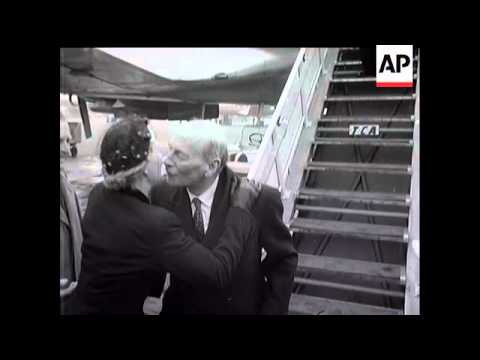
Of course, some politicians of the old school never quite got the hang of politics as a running commentary - see, for example, 19 seconds into this clip of Clem Attlee (then Leader of the Opposition) reacting to the announcement of the 1955 general election:
It occurred to me later, tediously, that they said he was en route to the party executive committee meeting, so the proper thing from his p.o v. was not to say anything relating to campaigning until they’d met and agreed the line to take. (Mind you, Labour lost that election and were probably always going to).