I’ve flown a couple of the Lear jets, which are no longer in production.
This has the possibility of being amusing - Trump interfering with people who own and utilize private jets? Seems like that’s biting the hand the feeds, no?
I’ve flown a couple of the Lear jets, which are no longer in production.
This has the possibility of being amusing - Trump interfering with people who own and utilize private jets? Seems like that’s biting the hand the feeds, no?
I once started traing on the CRJ-300 but events intervened and I never got past the book learning phase.
Ref the Miami 767 overrun, here a free article for a week that pretty neatly summarizes what’s know so far.
Quoting the lede for posterity …
Pilots flying the 21 Air Boeing 767-300 freighter that overran its runway at Miami on Sept. 6 attempted a go-around following a problematic landing that may have prevented automatic speed-reduction devices from activating, data released by the NTSB
They didn’t seem to try very hard.
Would the go-around have worked at that point? There must have been some rationale for them abandanoning it after four seconds.
On my phone; gonna be semi-terse.
Hard to say wo more details on exactly where on the runway at what speed they started the go-around attempt.
Like w a late takeoff abort, there comes a point where your choices are run off the end going fast and still accelerating, or slow and still decelerating.
Assuming the go-around procedure is done correctly once decided …
Just before touchdown: no worries. After touchdown w little or no braking: still no worries. Spent distance bouncing gear to gear while braking by 20 knots: you’re screwed.
Be real interested to learn about weather in the area, traffic backlog, their fuel state, and fatigue issues. 3 miles out they should have known this would be ugly, if not necessarily a crash. At 50’ AGL starting the flare at that IAS they should have known they were screwed / screwing up.
So what was going on in their heads just then & was it stupidity or were they already more cornered than we presently know?
By this do you mean that the crew should have known they were going to touch down too far down the runway? And maybe later, the tower should have?
(Sorry if the point is obvious)
Yes, exactly. The crew should have seen they had too much speed + altitude to dissipate in the remaining ~3 miles = 1 minute to touchdown. If not 2 minutes ~= 6 miles before that.
And that should have been glaringly unignorably obvious as they got right down over the runway.
There may have been some plausible reason they’d convinced themselves they had to land & go-around simply wasn’t an option. But if so, they sure should have, 3-5 minutes earlier, made damned sure they weren’t so high on energy that a go-around would be forced onto them.
Accidents happen when enough “shoulds” have turned into “didn’ts”. That’s certainly the case here.
FWIW, tower has no real role here. They’re spacing airplanes; your job is to fly it. It’d be rare, but not unprecedented for a controller to see the developing situation & say something. But whatever they might say would amount to an unexpected input from an unexpected source at an inopportune and busy time. And hence probably not even heard, much less acted on.
Thanks for the explanation. The part about the tower is interesting too. Makes sense though – one decision maker.
Interesting discussions online: there’s some concerns that these contract cargo carriers operate under a safety culture that is devolves a lot of on-time delivery pressure to the pilots.
Many parallel discussions on Reddit, here’s just one associated with an article in the Miami Herald
Tom Scott goes to Britain’s National Flying Laboratory Centre and takes an interesting training flight.
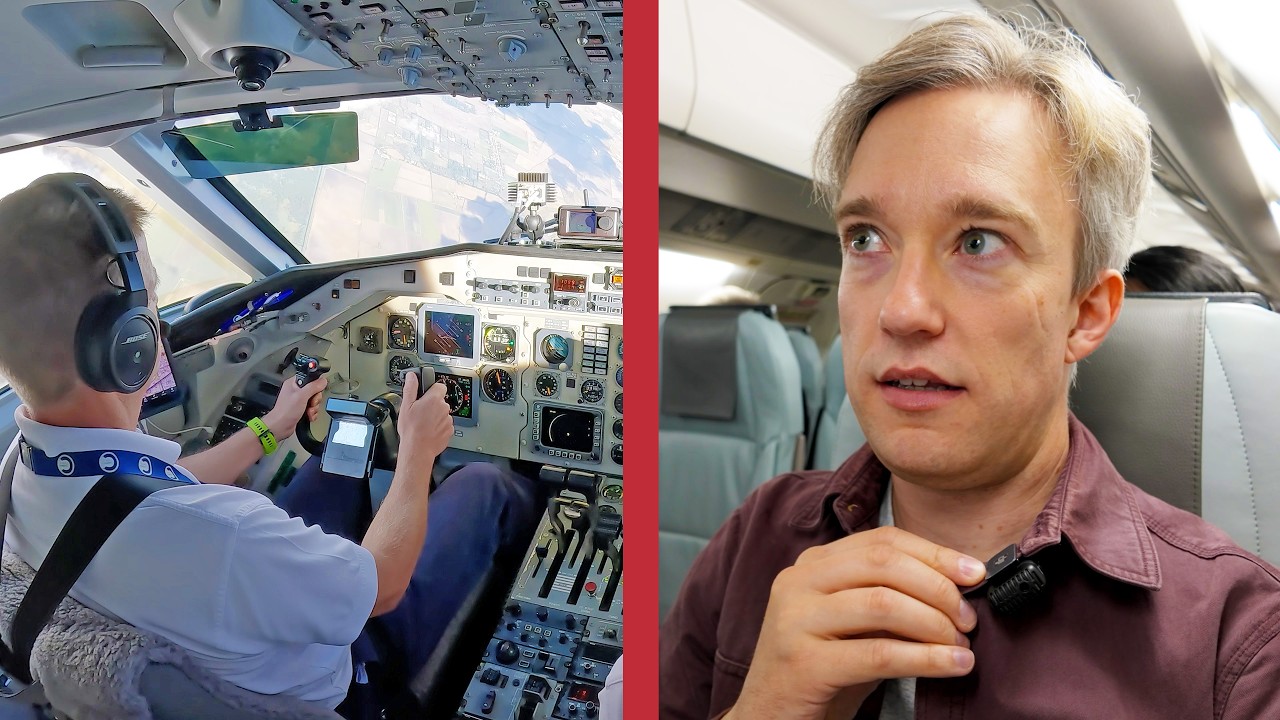
Tom attempted to land a 737 (in a training simulator) a guest on Mentour Pilot a few years ago.
Yes, they were at least 30 knots faster than they should have been at the beginning of the runway. That speed equals lift which makes it harder to plant the main gears down. The plane will float until speed is bled off. The antilock brakes won’t engage until BOTH main wheels are solidly on the runway. It also means they have to manually engage the spoilers. The spoilers will not auto engage (as they’re normally set to for landing) until the wheels are level. On top of this the winds are changing and you can see the crew struggle with the left main coming up multiple times. They either touched down on all 3 gears at the same time or landed nose first.
All of this should have been obvious on short final.
RE Amazon crash in MIA - lots of prior safety complaints by former employees
T-6 / RAF Harvard 3 variant does a roof landing last night; hopefully it’ll buff out
There’s a T-6 at an airport we sometimes fly from; I have some great sunset shots of him, including a few with smoke on coming into Runway 4/(22).
A summary of the Miami CVR is here:
I tried to paste it in here but the SDMB wasn’t playing nicely with the iPad.
They had multiple events that would require a go-around in any functional airline. Sink rate warnings, terrain warnings, too fast, didn’t have final flap selected until they were in the flare. It reads as bad as, if not worse than, the A320 that landed fast with the gear up.
So, has the aroma of pilot error (possibly induced by employer culture and business pressure).
Sad.
The fact they both survived mostly intact says NTSB and FAA will have an opportunity to hear from them. Of course whatever they say will be at least partly self-serving. But some whistles might get blown so loudly even FAA can hear them.
Business pressure from Amazon, their primary customer, comes to mind.
Yeah.
Normally on a 767 you set flaps 15 then gear then 20 then 30 for landing.
Them dropping gear at flaps 5 is the only hint they knew they were fast early enough to maybe resolve the situation. But even that was way late. Them leaving the autopilot flying that late into the approach is another clue they were asleep while HAL flew them into a corner they failed to anticipate and then utterly failed to remedy correctly.
They could have deployed the spoilers to slow it down and reduce altitude.