I think the pictures you linked to are showing the 2nd engine inboard. There is what looks like an aerodynamic spacer between the engines. But I’m not betting any money on it.
I did notice a giant hinged panel on the inboard side of the intake. I’m guessing that extended into the airflow of the passageway.
Yep. Supersonic inlet design is serious dark voodoo.
I have only the vaguest notion of the details, but the biggee is you need to have the airflow entering the engine be subsonic. So somehow you have to slow the airflow entering the duct from supersonic airplane speed to subsonic. And not create an insane amount of drag while doing it.
Yah, the SR-71 has 5 stages of airflow starting with the engine inlet spikes that move in and out.
I think it would have been safer to let people walk through the XB-70 bomber inlet than climb in into the B-52. That was not ergonomically easy cockpit to navigate. I hate to sound old but I expected more handholds to help the crew move around.
Canada geese. “Canadian” geese are geese that possess Canadian citizenship. The Canada goose (branta canadensis) is a particular species of goose.
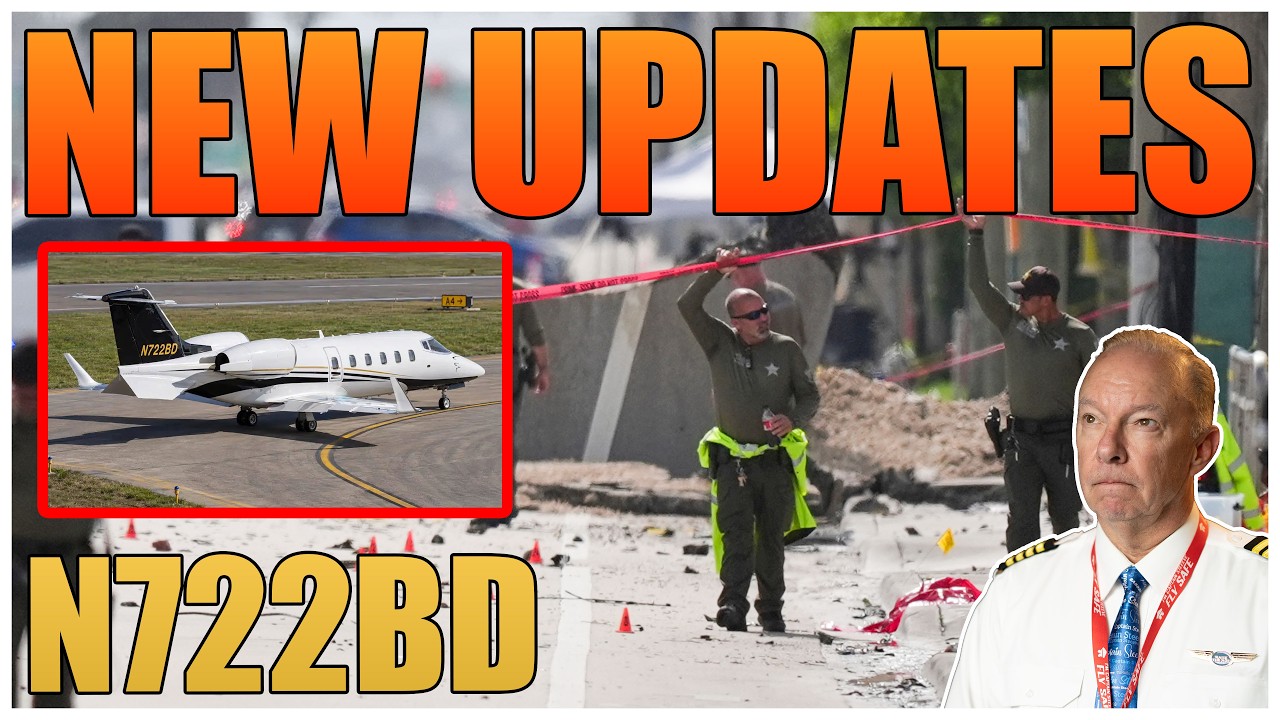
Back on topic, I don’t think it was mentioned yet but the cockpit voice recorder from the Learjet 60 crash was found recently – I think just yesterday – and is on it way for analysis. Not sure if it will be readable due to the horrific intensity of the crash.
Here, Captain Steeeve discusses new NTSB findings – mainly, a recording of a conversation with ATC from May this year, from the same plane. He’s careful to not confirm that it’s the same two pilots, but it sure sounds that way. It’s possibly important for two reasons: 1. It shows a pattern of downplaying severe turbulence; 2. The airframe was apparently never inspected for damage after this other turbulence incident.
If something got cracked in the tail on the earlier incident & failed this time, that should be evident from metallurgical analysis of the tail parts that fell off and fluttered down.
I don’t think NTSB is gonna get much out of that crater. Even if it impacted in soft swamp mud. Which I don’t think they did.
A commonly used colloquialism does not make it conformant with standard practice: (from wikipedia)
The species name Branta canadensis derives from the Neo-Latin specific epithet canadensis, meaning “from Canada”. Using a noun adjunct (Canada) follows traditional English naming patterns for animals or plants named after places (e.g., Virginia opossum, Cape May warbler).
There were a couple of crashes in Washington on Saturday. In one, a Skylane RG’s nose gear did not deploy. Good missing-wheel landing, and nobody was hurt. In the other, a helicopter lost power 40 to 50 feet above the ground. They just had an update about it on the KING5. The woman on the news desk said, seemingly with awe, ‘The pilot pulled off an emergency maneuver!’ Well, yes; as one does. (Also in the video I saw on TV, they said the maneuver was ‘an autorotation’, complete with aural quotes.) I forget sometimes that not everyone knows about the most fun thing to practice in a helicopter.
IANA helo pilot. But IMO a successful autorotation from 50 feet is pretty dicey bordering on impossible unless they had a lot of forward speed. And quick reactions.
James Fallows is often a good read and this article is a nice basic history of air safety in the United States. Disturbingly, he has identified a fair bit of correlation between safety lapses and Trump’s people being in charge. Here’s a section that got my attention:
When Homendy, the N.T.S.B. chair, testified to Congress about the Potomac crash, she said she had noticed something different about the aviation culture of facing hard truths. “Throughout our investigation, we found numerous people were afraid to talk to us,” she said. “I can’t tell you the number of people who were just scared to speak up because they were worried about retaliation.”
My reaction to this development causes me to use a dirty word. Sorry if it offends anyone, but here it is. This is stupid.
A great deal of the point of our modern safety systems is to take the risk out of reporting observed issues. Pilots who make an error can submit a report (by a couple of means) confessing and examining what they would do differently next time.
The intent is to prioritize data gathering rather than punitive action, and that is precisely what Trump and his people are undermining. That’s stupid. It’s really stupid.
Trump’s era has largely been about retribution and retaliation. Bringing that into aviation is going to get people killed.