I’m claustrophobic. I find flying in a narrow body very confining. Particularly if I’m in the back. I’m not sure if that matters in a 12 hr flight. I would have to get some kind of medication.
I’ll expand this sentence just a bit.
Payload capacity is a blend of total seat count, total cargo compartment cubic volume, and total weight of pax + their carry ons + their checked baggage + any unrelated cargo-y cargo. As soon as you fill up any one of those factors you’re pretty well done loading more of the others.
Designing a plane so all those factors tend to run out together is a tough balancing act. And changes depending on whether the airplane is to be operated long haul or short haul, domestic US, US-based international, or by other carriers based in other countries whose network and average customer profile is “shaped” very differently.
On a volumetric basis, the A321XLR has less belly space per seat than other A32X series. Which gets even more critical in the high seating density configurations favored by budget carriers. All of which suggests the delicate tradeoffs outlined above will bite more, and more often, with 321XLRs than the other A32X aircraft.
Lastly, Airbus has an interesting issue with the whole A320 series. They built the supporting structure under the belly cargo compartments a little too lightly. If the carrier loads too much heavy stuff too close together too often, the metal cargo floor sags and cracks and that’s an expensive problem. So managing cargo density across the compartment floor becomes another factor to juggle.
I do not know whether this shortcoming has been fixed among all the other changes made to the A32X NEOs and the 321XLR in particular. But it’s definitely a problem in the pre-NEO A32X series.
You’ve actually put your finger on the thing that could maybe possibly potentially have had some influence on what the pilots did or didn’t do.
This many warnings at once might cause them to not process the most relevant one or even any of them before it is too late. There is such a thing as information overload and tunnel vision. I mean, there have been multiple instances where trained professional pilots suffered in flight engine damage, recognised that there was a damaged engine and then misidentified the engine in question.
I don’t know whether any cameras would help pilots in cases like this, and you are right to be doubtful. At the same time, it is legitimate to wonder whether a different form of information would be helpful.
I thought modern airplanes display a list of faults and the pilots just work down that list.
To be sure if things are seriously going bad the pilots may not be looking at that but it is there.
Of course, not all planes have this feature.
That reminds me of a story I read, that took place in Vietnam. A Phantom pilot was in an engagement, and there were all sorts of noises in his headphones; targeting radar, radio transmissions, and I don’t remember what else. When he got back to his base/ship, he was asked why he didn’t do anything when a SAM was trying to lock on his aircraft. He said he didn’t hear the warning. Tapes were played, and the SAM warning was clearly there. The pilot was just too busy to hear it. (Sorry for the lack of detail. It’s been35 or 40 years since I read it.)
Sort of.
In my pretty modern bizjet the alerting system gives priority to emergency (red) items, then cautions (amber) and lists subsequent cautions in the order they arise. However, there’s a very big “but” coming…
Take for instance, an electrical problem caused by an engine-driven generator going offline. Depending on the nature of the failure, the faulty generator could cause several other issues as it shuts off. This could happen in such a way that one or more electrical “symptoms” could be listed before the actual culprit generator.
Fortunately, our jet is smart enough to distinguish this sort of thing (usually, but not always). But we need to ask the computer to reset the list of problems, at which point it filters out irrelevant or associated warnings. Crews have been known to get fooled by this and begin troubleshooting the wrong item because it came up earlier.
And I’m thinking the MD-11 is probably not a super smart modern cockpit with a dark philosophy (lights off is normal, lights on are things pilot needs to know…).
I did a bit of pseudo-training on a plane simulator of a design from the early 90s and all the lights wanted to be on at all times. The start up procedures had you do things like turn on one battery, which immediately prompted warnings that the other battery had failed until you turned on the second one. Same for the engine: turn on #1 and the cockpit is panicking because #2 is out and ZOMGGONNADIE even though you’re on the ground in all three gears and not moving. (Ok, I might be exaggerating but not by much and that’s how it felt to me!).
The urge to just clear all nuisance alerts was strong, but buried in there could be an actual alert you had to pay attention to. Like the door not being closed.Clear that warning, then try to take off, and you end up with a door ripping off and landing on a golf course when you pressurize after take off.
MD-11 was a 3-crew to 2-crew cockpit remodel of the electromechanical wall of idiot lights DC-10 cockpit that really did end up very much dark cockpit and modern EICAS style.
Ah, good to know! I was too lazy to look it up or try to judge from online photos.
It pretty much takes one blinky light for me to be overwhelmed by what I’m expected to do. I’d focus on the lights and miss the mountain ahead of me!
Everything seems fine until BAM! Maybe the pilots here can spot something I am not seeing (I do not think anyone was hurt in this but I do not know)
ETA: Flat tire maybe??? Would a pilot know if they had a flat tire before landing?
There’s a comment a bit down with the straight dope. Also and “after” picture, the cockpit section and tail is relatively intact, the cabin is just a charred line in between.
Per the Aviation Herald
“An Airjet Angola Embraer ERJ-145, registration D2-AJB performing flight MBC-100 from Lubumbashi to Kolwezi (DR Congo) with 26 passengers and 3 crew, landed on Kolwezi’s runway 29 but touched down before the displaced runway threshold resulting in a main gear collapse and came to a stop off the runway on its belly, the tail area burst into flames. The occupants evacuated. There were no injuries, however, the aircraft is reported completely burned down.”
What someone else said up above in the comment section is there was construction or something on the tarmac, the plane ended up touching down too early and hit a part that was torn up and the height difference between the runway and the ground buckled the landing gear which is what that loud crash in the video was
Per the Aviation Herald

"An Airjet Angola Embraer ERJ-145, registration D2-AJB performing flight MBC-100 from Lubumbashi to Kolwezi (DR Congo) with 26 passengers and 3 crew, landed on Kolwezi's runway 29 but touched down before the displaced runway threshold resulting in a main gear collapse and came to a stop off the runway on its belly, the tail area burst into flames. The occupants evacuated. There were no injuries, however, the aircraft is reported completely burned down."

What someone else said up above in the comment section is there was construction or something on the tarmac, the plane ended up touching down too early and hit a part that was torn up and the height difference between the runway and the ground buckled the landing gear which is what that loud crash in the video was
Construction or no, touching down short of the runway and hitting the pavement lip generally tears one or both main gear off.
Even with a rather small plane like an ERJ-145 the touchdown forces and then just weight per tire contact patch area are enough that dirt or light asphalt won’t hold you and you’re plowing a shallow furrow until you hit the end of the real runway.
New information out:
An investigation into a deadly plane crash in Hong Kong last month found an engine of the aircraft accelerated after touching down, according to a preliminary report on Tuesday… Examination of the flight deck showed thrust levers of Number 1, 2 and 3 engines were closed and their reverse thrust levers were selected to the maximum. “The Number 4 engine thrust lever was in the full forward thrust position. Number 4 engine reverse thrust lever was fully forward,” the report said. The bureau said the investigation would focus on why Number 4 engine’s thrust lever was in that position, including whether there were problems that caused its loss of control.
Preliminary report is at:
Darn thorough preliminary. The way they started the landing was what you’d expect for a one reverser inop landing. So far so good.
Having the autobrakes trip off was a surprise to them and the start of the off-nominal excursion. Rather than that being a malfunction, that may have been a response to the #4 thrust lever being advanced (however that motion happened). The autobrake logic on other Boeings has it disarm if a throttle comes way up on landing with the expectation that that represents the crew starting a late go-around that will amount to a touch and go. OTOH, you’d also expect the spoilers to auto-retract under that go-around logic, and that didn’t happen.
Regardless of what caused the autobrake drop-off, for sure that event, and the ensuing change of control, created a flurry of activity that may have contributed to a delayed understanding of what #4 was doing. The Captain would grab the whole mass of reverser knobs as one, normally expecting all 4 to be closely aligned. Getting a handful of three would make sense for the reverser inop situation. All that’d be done without looking over at the quadrant. It’d be real easy to completely skip recognizing that the #4 throttle was in the wrong place.
And about then the #4 engine fan has spooled up, serious directional control problems are ensuing, you’re decelerating downwards through the relevant Vmc speeds (which aren’t computed for a landing), and it all turns to shit before you know it.
It appears that after the airplane came to rest they did not run the evacuation (AKA post-crash) checklist, they just un-assed the jet. If it’s sinking I could sure understand that.
Sucks to be them for sure; at least they all got out alive. Unlike the poor security folks in the truck. The report doesn’t say anything about injuries to the crew. Suggesting they were minor or none.
So the FAA has extended the MD-11 grounding to include the DC-10 as well. This will be the second time the DC-10 has been grounded by the FAA (the first time being after the 1979 crash at ORD). Has any other plane been grounded twice by the FAA? (Albeit, there are only maybe 10 DC-10s still in service, so grounding them isn’t all that consequential, but still…)
Did B-36 pilots have to have especially large hands?
ETA: Apparently, yes – one big hand (for the turnin’), and one smaller hand (for the burnin’) (video is cued to the appropriate scene):
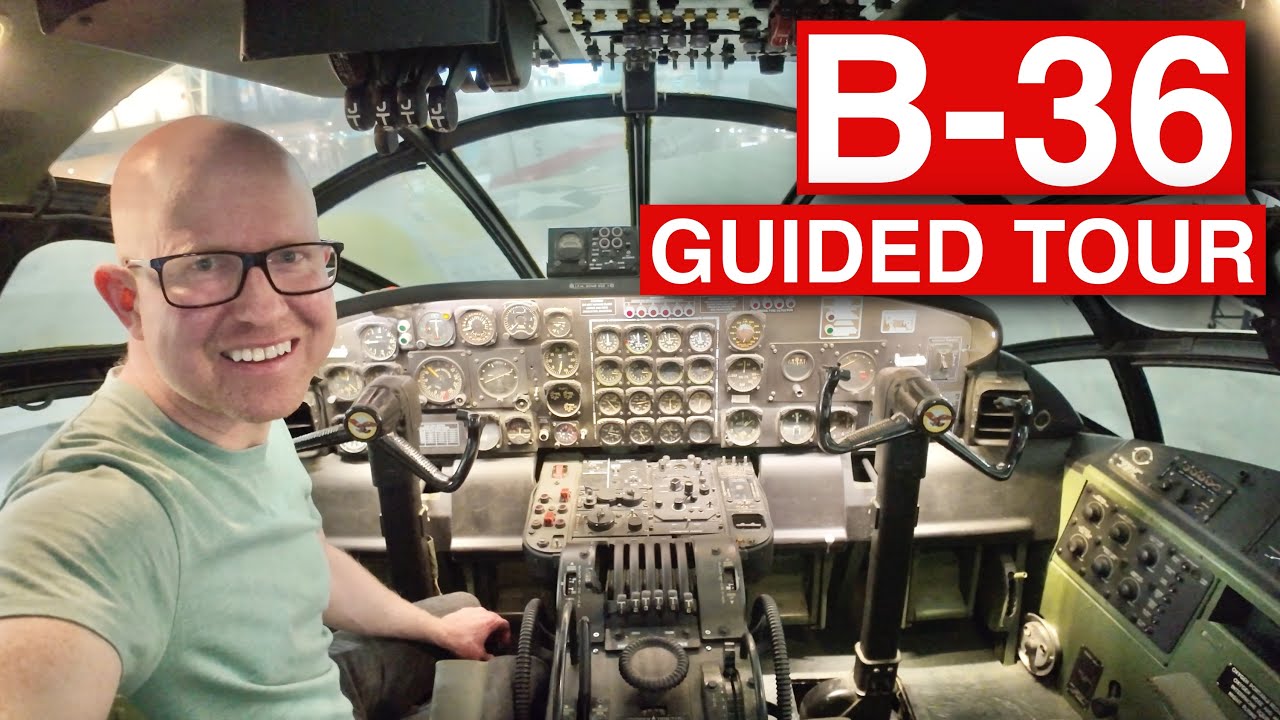
B52 drivers need big paws too. No reversers though.
Seriously, the individual knobs on a -52 are quite narrow. The 707 & 747 knobs pretty well match the 4 finger widths of an adult male hand. The 727 throttle quadrant was just the 707 part with #4 throttle lever left off and the slot covered w an afterthought strip of aluminum.
The 737 NG & MAX and 757, 767, 777, & 787 are almost the same parts. Two wide throttles the collective width of the same adult male hand. So two fingers per throttle.
The earlier 737s resembled a 727 where somebody stole #1 as well as #4. 
Hmm. Lot of mechanical commonality there.
But that implicates the work done back in '79 when AA191 (cited upthread) had #1 fall off.
That probably signals they’re all going to the scrap heap now. Not worth a major engineering effort at this point in the type’s service life.
USAF will hate to lose their KC-10s though. Formally they’re not subject to FAA jurisdiction, but practically they sorta kinda are. At least the shiny new KC-46 program is a complete trouble-free success. … Oops, not so fast.
Some of the few that are still in service are the 10 Tankers used for wildland firefighting. As a California resident, it would be a shame if they had to go.
As it happens, my office is actually right by Cal Fire’s base at McClellan airfield, and I see the DC-10 tankers here quite regularly.
Blue Angels get some MES* time in a PBY Catalina (one of my favorite airplanes)
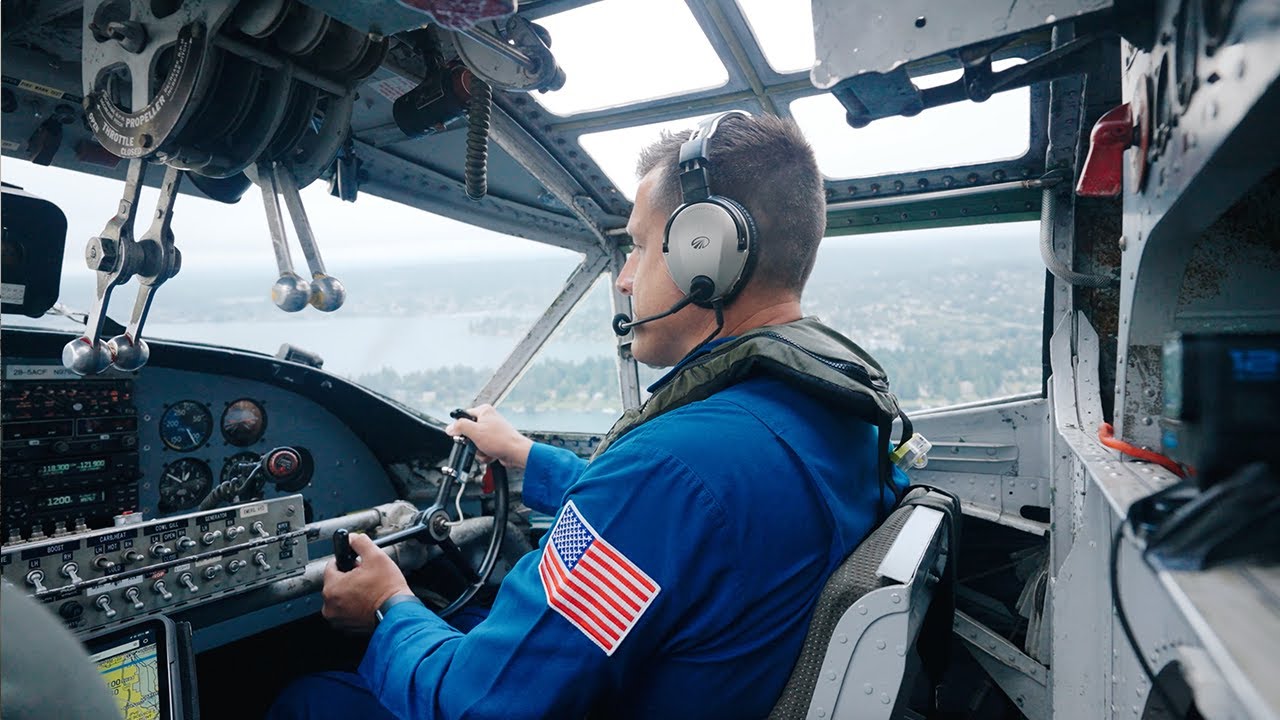
Brian
* Multi-Engine Sea