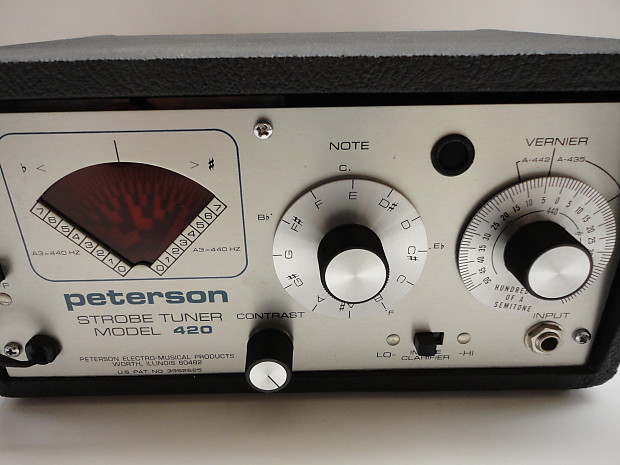
That’s one where I’d pick the emulation every single day over the original. I’ve seen one once, in kind of a vintage shop that was, TBH, almost more of a museum.
I wouldn’t want to deal with getting the tape reels/bobbins/capstans/whatever in good shape, much less keeping them in good shape. I like my Rhodes stage piano and an old Wurlitzer electric piano well enough, but even those comparatively simple instruments can be a hassle, especially for people who are less mechanically inclined (or in my case, both that as well as terrifically lazy).
And speaking of tuning…well…best not to speak of the subject in those cases! Although some people manage that fairly easily on those. Probably sorcery!
I still think that’s a keytar, just strategically photographed to hide its essence! I’m assume for reasons of being humble! Or perhaps not wishing to be associated with the mighty “keytar”!
Yeah, that’s checking out with what I’ve been reading about the three-barrel bridge. It’s even more adjustable than just a regular wooden bridge/saddle, and I can get that plenty close enough to taste.
Plus, apparently that was the original bridge design from the very beginning (or nearly so) in the 1950s. For me, simpler is better, provided I can get tolerable results, which in my case is pretty much “good enough,” when it comes to intonation (don’t have especially golden ears, you know). Holding tune is far more important to me. If it came to replacing tuning machines, which I’d not bother on the Squier Sonic, I’d consider locking tuners, just because they seem neat, and probably could easily find some that fit the headstock/holes of a basic guitar like a Tele.
I don’t especially mind changing strings, though, and can usually manage to wind them about the posts well enough, and from what I hear locking tuners don’t actually improve tuning stability per se.