If they really want people to eat more real food, how about drastically reducing government support for ingredients (corn, soybeans, wheat, rice) and increasing support for fruit and vegetables that can be eaten directly. But I don’t expect them to actually do that.
I’ve realized for a long time that official government dietary recommendations were nonsense. What made me most aware was a couple of decades ago, when the official recommendation was “Eat lots of carbs! Unless carbs are actually bad for you, in which case don’t eat much carbs!”.
But the whole “real food” thing, and avoiding “processed food”, is mostly pseudoscience. It’s not like there’s some ingredient called “processing” that is bad for you. There are lots of different kinds of processing, and there’s no reason to expect that they’d all have the same effects. And while there are some studies that show that “most ultraprocessed foods are bad”, they never seem to control for the obvious culprits like “most ultraprocessed food has too much salt”.
Eh, I was at the supermarket today and was about to go into an aisle that had some of the stuff I wanted. But then I noticed all the green lettering on the aisle marker, proclaiming “natural foods”. I backed off. There was a store employee nearby and I was tempted to ask (though did not) “can you direct me to the aisle that has unnatural foods?”
I hate these artificial meaningless labels. I will occasionally buy “organic” vegetables, not because they claim to be “organic” (I mean, what would other vegetables be made from? Silicon?) but because some vegetables labeled as such actually look and taste better – sometimes much better – than the kind grown with pesticides and other pollutants. But if there’s no obvious differece, then to hell with it.
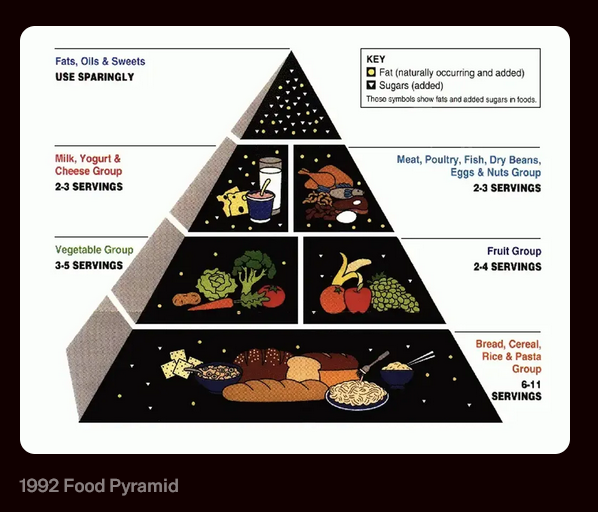
One might note that the Food Pyramid doesn’t depict any processed foods.
I haven’t checked the serving recommendations but I wouldn’t be surprised if it comes pretty close to modern understanding. For all the craze that the thing was influenced by Big Grain, it’s far from the worst guideline that you could ever have.
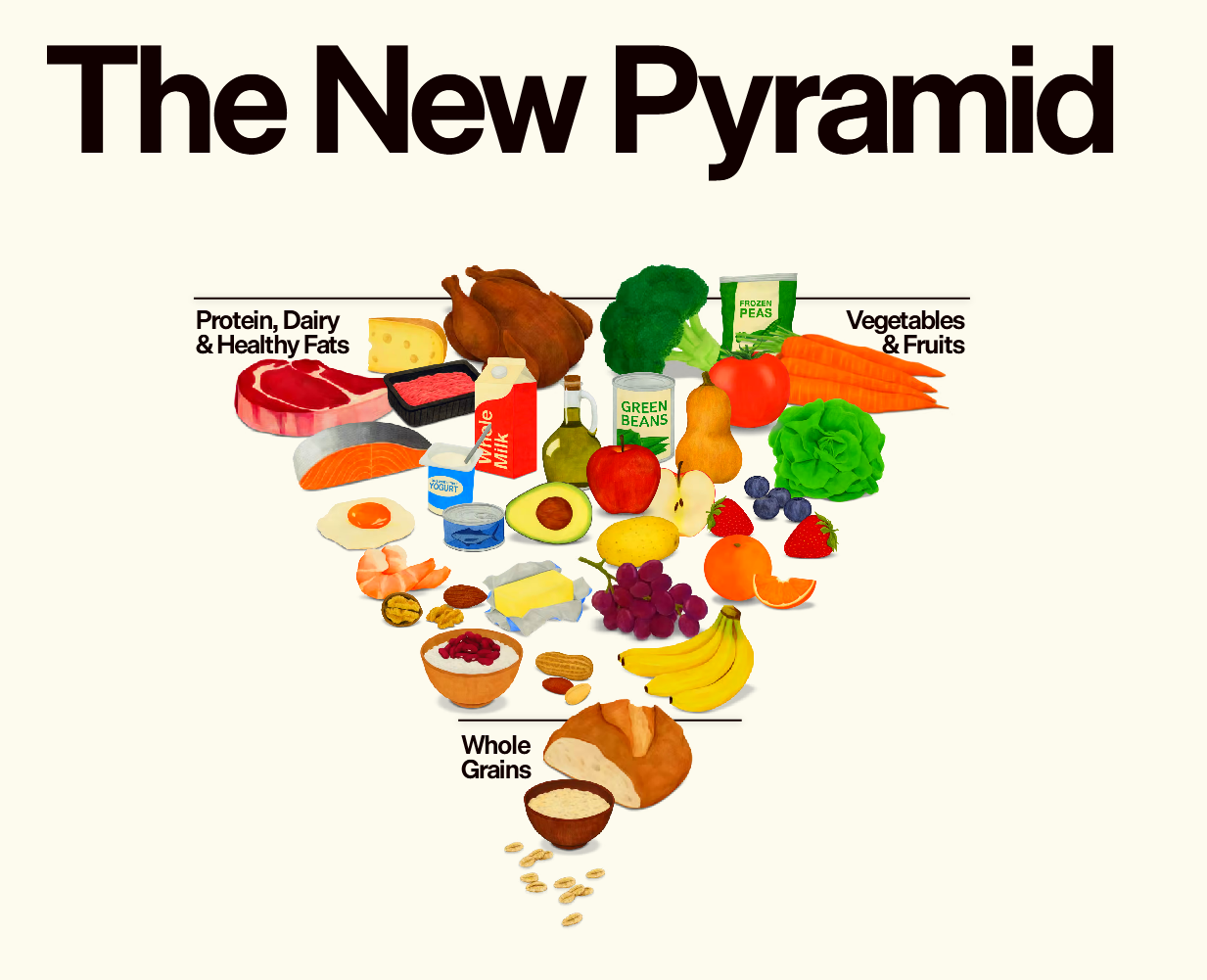
Whereas, the idea that you should have almost no carbs - as depicted in the inverted pyramid - is nonsense. Grains are amazing. The issue that we have is that we’re stripping them of their husks and not branching out across different varieties (e.g. barley, Native American rice, quinoa, etc.)
The old pyramid was 3-dimensional, which gave one a much better idea of relative quantity. The new one is 2-dimensional and only has one line in it, between whole grains and everything else, so it is much less clear. What I do get from it is that what one should eat the least of is whole grains. I don’t see how that can be nutritionally sound, nor how it can be practical for any family that isn’t rich. Meat, dairy and fresh fruit tend to be much more expensive than (even) whole grain products. Fresh vegetables can also be affordable, depending on if you have a supermarket or shop you can go to that carries good ones, not so much if you are in one of many food deserts. Also, the choice of vegetables will make a big difference on the amount of fiber you are getting, if you are not allowed much whole grain, which is an excellent source of fiber. So the poorer you are, probably the more your family will be constipated. Perhaps Republicans are heavily invested in the laxative industry.
In general this strikes me as random crackpottery, some of which might be good, much of which is not supportable.
Four of the five people who came up with this notion have ties to the food manufacturing industry. I don’t know for sure, but I’m betting they are invested heavily in meat/dairy production.
Eating real food is a great idea. Unfortunately, the same guy that brainstormed this is also promoting policies that allow all of our favorite eradicated diseases to return. That’s his other gift to the world.
Yeah, I am stunned at the apparent implication that we’re being recommended to eat more meats, eggs, butter and sugar-laden fruits than whole grains. (Also, what tf is with that bowl of (I think) rice-and-toppings sitting just above the “whole grains” dividing line? Is rice not a grain?)
This new “pyramid” just looks incoherent and dumb.
Hmmm, okay. Still looks like rice to me, and is depicted in the exact same sort of rice-bowl-looking vessel that contains some kind of grain or porridge in the “whole grains” bottom section, but I would accept that explanation. (Still a stupid chart, though.)
In general few of the general public have ever paid much attention to these guidelines; the power they have is that they gird directives for various government programs like school lunch guidelines, SNAP, meals on wheels, so on.
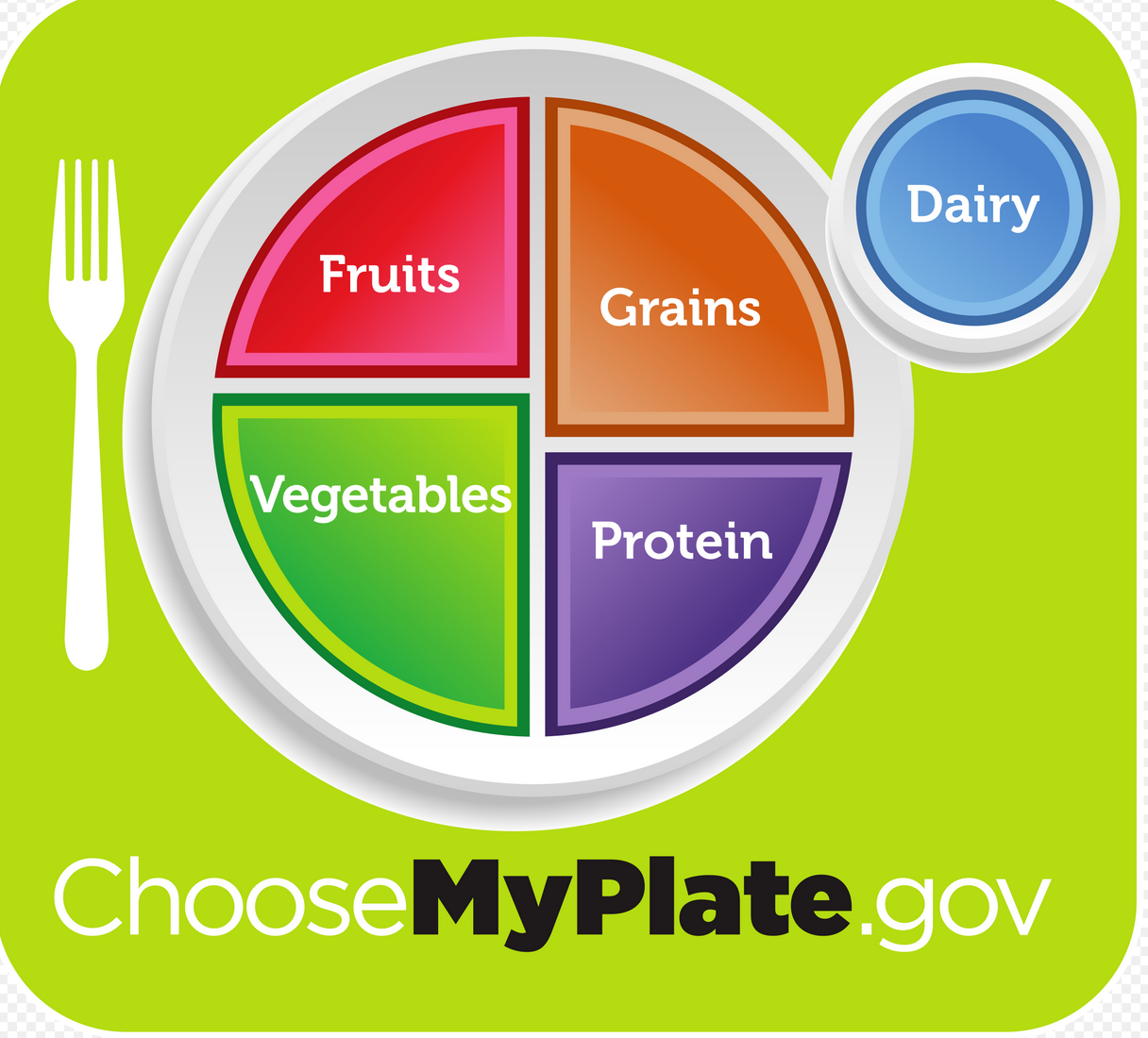
For the general public it is my strong belief that plant forward nutrition plans (such as the Mediterranean diet, DASH, or the Nordic diet) are best, and MyPlate was reasonable communication tool, but a government edict that will result in more protein and less ultraprocessed shit in school lunches is fine by me. I don’t think they will push his favored beef tallow too hard …
What I think is that the meat & dairy lobbyists finally got one up on the grain lobby for once. The overall idea isn’t that crazy, but there are 2 major issues I see with this:
Animal fats and dairy fats are healthier than a carb foundation, but they’re still not “healthy” nor “healthy fats” and never will be.
But are we even sure that’s the recommendation? What are we to infer from the shape and orientation of this “pyramid”, anyway? It seems intentionally noncommittal.
The takeaway seems to be “eat what you want as long as it’s not processed.” It could’ve been better, but I can’t see how it’s drastically worse than previous offerings in this category.
A large reason for using grains as a dietary basis is that, besides having a fairly decent nutritional profile, they’re cheap enough to get up to the raw calories that you need (and store well, for a long time).
Ultra-processed foods are probably popular in schools for the same reason that they’re popular with the public: They’re cheap and easy to make. Manufacturing has brought the price of processed foods lower than whole foods, Then, you add in the cost of the work force required peeling potatoes, stirring pots, and all of the other labor that goes into turning whole foods into school lunches and I can imagine that processed, pre-made meals might be a lot cheaper for school districts if they can just toss them into a large oven (or whatever schools do these days).
So then when you’re saying that we need to go hard on protein - the most expensive whole food, and often the one that requires the most work to prepare safely - I imagine that coming up against a pretty hard wall, when it comes to school budgets.