I didn’t mean to imply that cops don’t do favors for people - they quite clearly do. But it is going to be on their terms. Perhaps I should have instead said not to threaten a cop by naming somebody who you think might take their job or punish them for what they are doing. They usually are so receptive to that sort of thing.
Also DON’T claim that “Larry H Parker” is your “Personal” Attorney when you’re drunk arguing with the cops.
Goodness, yes. Having attended Catholic grade school in a border suburb and two Catholic high schools (and doing musicals at a third), I knew a lot of CPD kids. Some of them carried their parent’s business cards but were warned to not overdo it. It’s embarrassing to the parent to have your kid in trouble and also puts the investigating cop at some risk.
“I will get lawyer Daggett on you.”
“She draws him like a gun!”
Sometimes you just have to PAY THE TWO DOLLARS.
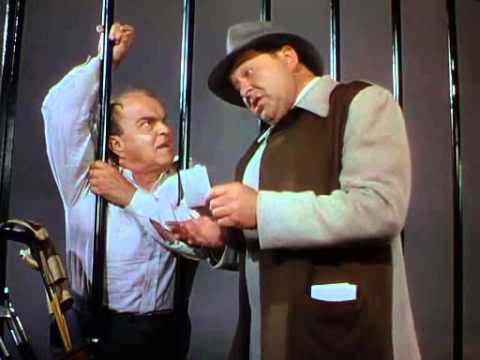
Here’s one I learned today: instead of cutting a family member out of your will, if you leave them $1 they can’t contest it.
That’s not necessarily terrible advice. Some courts will assume if you left someone out it could be inadvertent. (not my area, so I’m fuzzy on the details). On the other hand, you don’t have to leave them a dollar, you could just as easily say, “I have not forgotten I have a third son named Rudolf, but I do not wish to leave him any of my assets.”
Ok. Although the old guy in the Volkswagen ad said it better.
Yeah. This article
While you may want to be careful with your wording to avoid life-long hurt, it is important to specifically state any disinheritance of adult children. Simply omitting the name of a biological child is not enough to ensure he or she doesn’t receive part of your estate. Often, a court will assume a lack of name in estate documents as unintentional and award an equal share to the adult child not named. If you truly want to disinherit an adult child, you must include this direct information in your Will, making it clearly understood that the omission is intentional and not an oversight.
and
You can reduce the likelihood of someone contesting a Will by leaving them a small gift. This may dissuade them from further action once they realize how costly the process is and how unlikely it is they’d win. Another option is including language that specifies anyone not included in your Will is intentional, or language that states if anyone contests, they will lose any inheritance you originally left them (may be useful if you go the leave-a-small-gift route).
That’s what my mom did. She specified in her will that she was leaving nothing to her stepchildren and this was by design, not oversight. They did get a lawyer, but the lawyer looked at her will and told them “too bad.”
My mom didn’t have a lot, just her condo. But she’d loaned her stepkids all kinds of money over the years and they never paid her back, so she decided they were getting nothing else from her.
My mom and stepdad wrote their wills to exclude his daughter with the whole $1 thing but then they doubled-down with the “poison-pill” codicil. If she fights it in court she receives nothing. So at most she loses a dollar. 
That may be bad advice in civilian life, but in my military training, that was taught as the only proper and safe thing to do. “Don’t take prisoners! If you do, one night he will escape and kill you! He’s down now, so put him out of his misery and stomp his head in!!”
After my father died, us siblings had a meeting with his lawyer. Who told us straight faced that “wills are just a suggestion, you can do whatever you want with the estate.” He also told my brother in law that if he took some paperwork into my sisters bedroom and got her signature that would be great. My sister was dying of brain cancer and nearly comatose at the time…
That is pretty dumb, especially as everyone knows that the DOI can’t be amended because doing so would mess up the map on the back.
I have an acquaintance that is in a cop family. I don’t know the exact details, but at least 3 fairly close relatives are cops in the area. And she gets away with pretty much anything. They see her speeding down Main Street, and just wave her on.
Being family to cops is probably a much bigger deal to a cop than being family to some politician or other bigwig.
I’m sure that the story gets back to the parents. Personally, I was more concerned about my parents finding out about some of my activities than I was about the actual legal consequences of them.
Well, plus legal fees and court costs.
And time, of course.
As for bad advice I have heard, well, my brother is a Sov Cit, so the bad advice I’ve heard from him would fill textbooks. I suppose the worst specific advice that he gave me was to take some document that he wrote up down to Fort Knox, and they would pay me in gold the money that he owed me. I told him, “If you want to pay me back in gold, I can deal with that, but you go down to Fort Knox and get your gold and bring it back to me.” For some reason, though, it doesn’t work like that. 
I remember my dad told me “If you have any job with a 30/60/90 day probation period, call in sick on the very last day. Because if they’re going to fire you they’ll do it to your face right then and there, but if you don’t show up that day you’ll automatically pass the probation”
Who gave you your military training?
As a lawyer, this is my experience. If you want to exclude someone who would normally get an inheritance, you say so, and give a reason in your will: “To my son John, I leave nothing. He lived off me for thirty years, did not work while I supported him, and I consider that he has already received his inheritance.” That phrasing will–and has–passed muster in a number of courts.
US Army, Fort Leonard Wood, Missouri. I graphically remember the hand-to-hand combat classes (worthless, IMHO) with a small, wiry black instructor who, in spite of his short stature, you would never want to meet in a dark alley. His words are still wringing in my ears, "He’s down. Kill 'im! Turn about is fair play, right? He’d do the same to you! Don’t give him the chance! No prisoners!
I thought just excluding them was sufficient. I doubt the courts want to evaluate your reasons. “I leave my third son nothing, because I’m in that kind of mood today.”
I’m certain the courts don’t want to. But if the disinherited person challenges the will, they’ll have to. It can be a double-edged sword to list reasons, because you might close off certain challenges while opening the door to others. I think it’s probably wise in some cases, not wise in others.