Playground song parodies of the Popeye theme have become part of children’s street culture around the world, usually interpolating “frying pan” or “garbage can” into the lyrics as Popeye’s dwelling place and ascribing to the character various unsavory actions or habits that transform the character into an “Anti-Popeye”, and changing his exemplary spinach-based diet into an inedible morass of worms, onions, flies, tortillas and snot.
The Great Schism of the western church ended with the Council of Constance, which sat from 1414 to 1417.
There were three claimants to the papacy, one in Avignon, one in Rome and one in Pisa. The Pisan Pope, John XXIII, convened the Council but is now considered to have been an anti-pope.
He and the Roman pope, Gregory XII, agreed to resign to clear the way for a new election.
The Avignon claimant, Benedict XIII, refused to resign and was promptly excommunicated by the Council. He too is considered to have been an anti-pope.
The Council then elected Pope Martin V, who had near-unanimous support from across Europe, although some countries, such as Aragon, continued to support Benedict for a while.
How many of them?
In play:
British actor Jude Law will be starring in an HBO miniseries, The Young Pope, to air beginning in January. He will play the former Archbishop of New York; American actress Diane Keaton will play the nun who helped raise him from childhood.
Leaving England on Aoril 1, 1293, Robert Winchelsey intended to be consecrated as Archbishop by the Pope in Rome—but on arrival learned there was no Pope.
Should have said “April” instead of “Aoril.”
April Stevens and her brother, Nino Tempo, reached the top of the Hit Parade in 1963 with their pop version of the old standard “Deep Purple”. It won the Grammy as the song of the year.
Sir Sanford Fleming missed a train in Ireland in 1876 because of a misprint in the train schedule. That got him thinking about trains and time, eventually leading him to propose the concept of 24 standard time zones around the world.
That was on 18 November 1883, almost exactly to the day ofvNorthern Piper’s post. The following year, Sir Sanford Fleming helped convene the International Meridian Conference in 1884, where the international standard time system was adopted.
Chitty-Chitty Bang Bang and James Bond author Ian Fleming was married to Ann Charteris, who was divorced from the second Viscount Rothermere owing to her affair with the author. Fleming and Charteris had a son, Caspar. Fleming was a heavy smoker and drinker for most of his life and succumbed to heart disease in 1964 at the age of 56
Ian Fleming got the name for his spy hero James Bond from another author. It was the name of the author of a book entitled Birds of the West Indies. Fleming was a very active birdwatcher and favored the works of ornithologist James Bond.
“Barrels Out of Bond” is the chapter in The Hobbit which shows Bilbo organizing the escape of the dwarves from the elves by hiding in barrels which the elves float down the river to Laketown.
World class figure skater Peggy Fleming was mentioned very prominently in the Peanuts comic strip during the late 1960’s and early 1970’s, with Snoopy clearly having a crush on her.
ETA: Fleming and her husband also owned and operated Fleming Jenkins Vineyards & Winery in California, which used a lot of barrels.
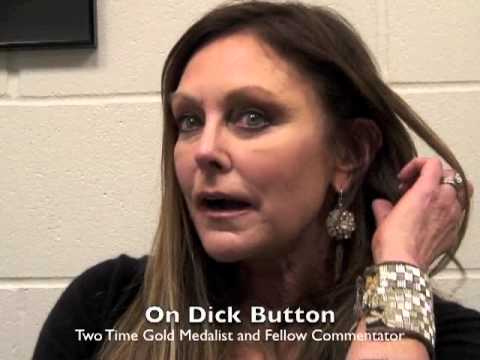
World class figure skater and 1968 Olympic Gold Medalist Peggy Fleming is the daughter of a US Marine.
Baby doctor Benjamin Spock, whose book Baby and Child Care was considered the major go-to guide to child raising in the 1950s, won an gold medal in the 1924 Olympics in rowing.
On June 11, 1776, the Second Continental Congress appointed Thomas Jefferson, John Adams, Benjamin Franklin, Roger Sherman, and Robert R. Livingston to the Committee of Five to draft a declaration of independence for the thirteen colonies in America.
Despite rumors and stories and published accounts, some even by historians, the Liberty Bell did not ring when the Second Continental Congress voted for independence on 04 July 1776. The Liberty Bell has a bible verse inscribe in large letters, “Proclaim Liberty thro’ all the Land to all the Inhabitants thereof.-Levit. XXV. 10.” The verse comes from Leviticus 25:10.
Cast at London’s Whitechapel Bell Foundry, the bell arrived in Philadelphia in August 1752. Because the metal was too brittle, it cracked during a test strike and had to be recast twice. The final version—made of 70 percent copper, 25 percent tin and small amounts of lead, zinc, arsenic, gold and silver—weighed around 2,080 pounds and measured 12 feet in circumference around the lip and 3 feet from lip to crown.
The bell fell into disuse and obscurity after the War of Independence. It wasn’t until the 1830s that the bell was adopted as a symbol by abolitionist societies, who dubbed it the “Liberty Bell.”
On 1961-07-21, Gus Grissom became the second astronaut in space when he launched in Liberty Bell 7.
The Bell 7 (in the YFM-1 series) was a development aircraft powered by two 1,150 hp V-1710-23 engines and fitted with 37 mm cannons in wing nacelles, eight built, two later converted to YFM-1B.
The Great Bell of Dhammazedi (1484) may have been the largest bell ever made. It was lost in a river in Burma after being removed from a temple by the Portuguese in 1608. It is reported to have weighed about 300 tonnes (330 tons).