Thank you WAM for the links.
I speak Maya Yucateca well. In order to understand Takin, excrement of the sun, I always envisioned it as being energy of the sun. To make corn grow.
I accept your sites. Thank you.
But, I liked mine better.
Thank you WAM for the links.
I speak Maya Yucateca well. In order to understand Takin, excrement of the sun, I always envisioned it as being energy of the sun. To make corn grow.
I accept your sites. Thank you.
But, I liked mine better.
Not a Sikh myself, but here is website describing the Sun and the solar system per Sikhism : http://www.sikhiwiki.org/index.php/Guru_Granth_Sahib_on_the_Universe
That the greatest thing a human can attain is but a turd of the sun-god has its own poeticism.
Not meant snarkily, I’m genuinely curious… Cite?
Or Latin. But there’s probably people who believe it exists in the KJV.
The notion that the greatest thing a human can attain is gold would be from the Mammonites, not the Maya.
On my phone right now and links are a PITA, but just google Samson solar myth or Jonah solar myth and there are some good sites in the top links.
And he stops it from circling around the Earth, or makes it move backward in the sky, whenever the whim strikes him.
In the pre-modern era, that it was an utterly pure and perfect source of light created by God. The existence of sunspots was denied for some time, because that meant the Sun wasn’t perfect. The idea of the sun as unchanging and perfect actually dates back to the ancient Greeks; not having the same cultural baggage the Chinese discovered sunspots before Christianity was created.
Also, in the pre-Newton era astronomical objects weren’t generally considered to be made of the same matter as Earth or to follow the same laws. In Christianity specifically Earth was considered different; evil and “fallen” because of the Eden myth.
But the idea of *universal *laws didn’t exist back then.
And Star Trek:TOS, but that is practically the same thing.
Regards,
Shodan
Wait, doesn’t the Bible prohibit the worship of any gods before the Biblical one? That’s not the same as prohibiting the worship of those lesser gods.
In the Ten Commandments, yes (sorta- it was likely in reference to the Golden Calf, so there could be debate over that and the English doesn’t do the Hebrew justice, but I digress.) In most of the Old Testament though, worship of other gods is clearly prohibited. An example might be Daniel refusing to bow before the god of Nebuchadnezzar. Most of the sins in Kings and Chronicles were a failure to prohibit the worship of other gods in ‘The High Places’ or following the gods of their foreign wives. Exodus 34:14 and its accompanying verses make it fairly clear that worship of anyone besides Yahweh is verboten.
As senoy mentions, it pretty much is. “You shall have no other gods before Me” is also translated “You shall have no other gods besides Me”. Yahweh was supposed to be not only the first but the only one the Israelites worshipped. See Deut. 17:3, 1 Kings 9:9, 2 Chronicles 7:22, and Jeremiah.
There are multiple examples where they broke it, but such is the law.
Regards,
Shodan
Re: the Golden Calf: Earlier today in relation to this thread I was trying to google up some old raw speculation I had read about the Ark of the Covenant being used to store disease-infested materials that the Hebrews used for biological warfare and came across this even more insane site. Deep in that crazy, I ran across something that I had never noticed before–just before the Exodus from Egypt, the Jews were instructed to borrow gold and silver jewelry from their Egyptian neighbors, which they were then to abscond with. I was actually kind of surprised that I had never heard that emphasized before, and found it kind of a dick move. Some more googling about that turned up something even more ridiculous–some Egyptians wanted to sue “all the Jews of the world” to be paid back for that stolen jewelry.
In Christianity, the Sun is simply the star nearest to the Earth.
Of course, even a prohibition against worshiping other gods at all is still consistent with the possibility of those other gods existing, and just being inferior to the God of the Israelites. And there are a number of accounts in the Bible of others performing miraculous deeds, and of Israelites saying, basically, “Ha ha! Your gods suck!” (but not “Your gods don’t exist!”).
One supposes it’s possible to come up with that reading (although I think the encounter between Elijah and Baal seems to lean against that particular exegesis), but since none of the Abrahamics except the Mormons endorse that reading, you’d be in a minority. I guess you and the Mormons can hang out though and discuss it.
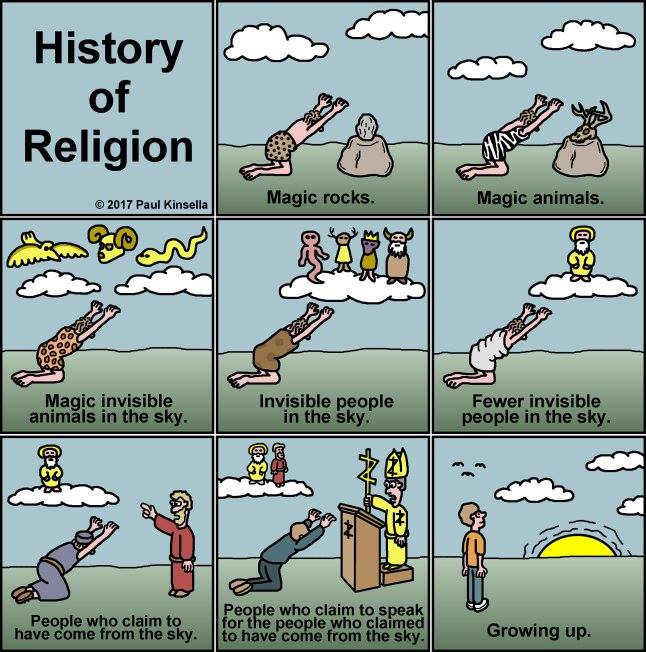
Well, the ideas surely evolved with time. I imagine that the progression went something like “There are many gods” - “One god is better than all of the others” - “One god is so much better than the others that the others aren’t even worth worshiping” - “Other supernatural beings exist, but the others aren’t even worth being called gods, even if they can do a few minor magic tricks” - “Other supernatural beings might exist, but they have no powers beyond what God directly grants to them” - “No other supernatural beings exist”. The various books of the Bible were probably written at different stages of that progression, and a lot of folks even today who call themselves monotheistic still believe in the existence of other supernatural beings, who might even have their own powers.
Or something like this.
Wouldn’t the existence of Satan disqualify Christianity from monotheism?
In traditional Christian theology, Satan is a creation. A spirit creation rather than physical, but a creation nonetheless.