There’s an anecdote that when they first did an exact surveying measurement of Mount Everest, they found that its height, measured to the nearest foot, was 29,000 feet.
The surveyors were supposedly upset with this measurement. Because if they reported that Mount Everest was 29,000 feet high, people would assume they meant “Mount Everest is somewhere between 28,501 feet and 29,499 feet tall” rather than “Mount Everest is somewhere between 28,999 feet and 29,001 feet tall.”
So they supposedly reported that Mount Everest was 29,002 feet tall so people would appreciate the precision of the measurement. Even though the reported figure was less accurate than the one they had actually produced.
Is there a term for a measurement like 29,000 as used in this example, which looks like it has fewer significant figures than it actually does?
I don’t know any terminology for it, but I’ll mention a notation that I learned in high school to deal with such cases: an overline is placed over the last significant figure. So 29,00\overline{0} has five significant digits, while 29,\overline{0}00 has only three. However I don’t know how widely used this is; I personally haven’t seen it much. I think in technical works, scientific notation is generally used to avoid the ambiguity: 2.9000 \times 10^4 vs. 2.90 \times 10^4. An explicit uncertainty range is even better.
It’s a variation on “garbage in/garbage out”. The houses were not precisely 20 miles apart, so entering “20 miles” into the equation will give you an incorrect result.
IIRC the precision was ±10-ft. Pretty good for 1852.
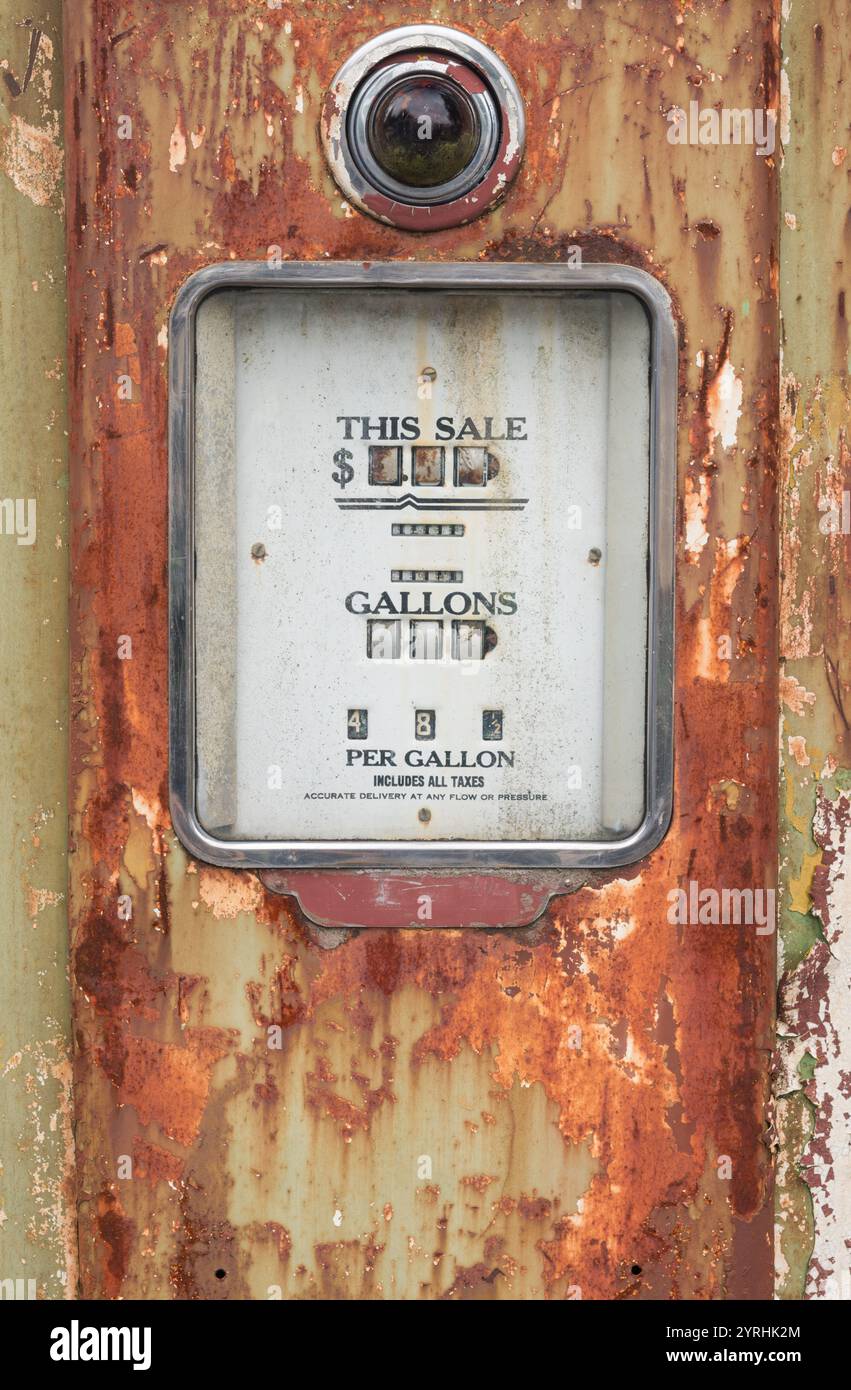
What got me when I was growing up were the people who’d calculate their gas mileage to four decimals. This was back in the mechanical pump days when to the nearest tenth gallon was all you were going to get.
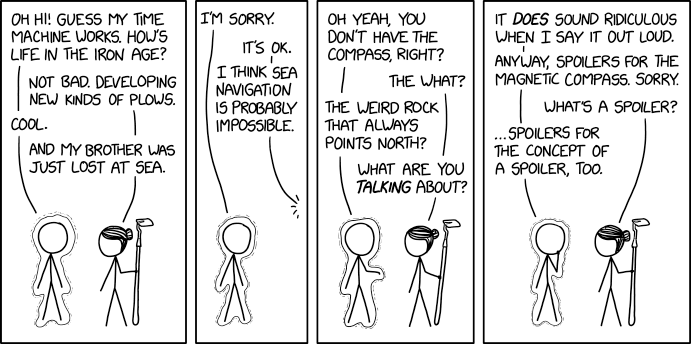
I’ve often thought about having a convo with an educated somebody from, say, the 1700s.
Handwaving aside basic word usage barriers, a big problem would be that probably 90% of the nouns I use in a week’s modern conversation are naming things the 1700s person would have no idea what the noun refers to. Nor upon seeing a [whatever], have any idea what it was, how it was used, how it works, or how it was built.