Dolly Parton and Tim Curry died on the same day and were born exactly three months apart.
I love this, and it’s quite appropriate to this thread.
Like many others here, I wasn’t very familiar with her music. I didn’t realize that she had written “I Will Always Love You” until a few years ago; I had only heard the Whitney Houston cover.
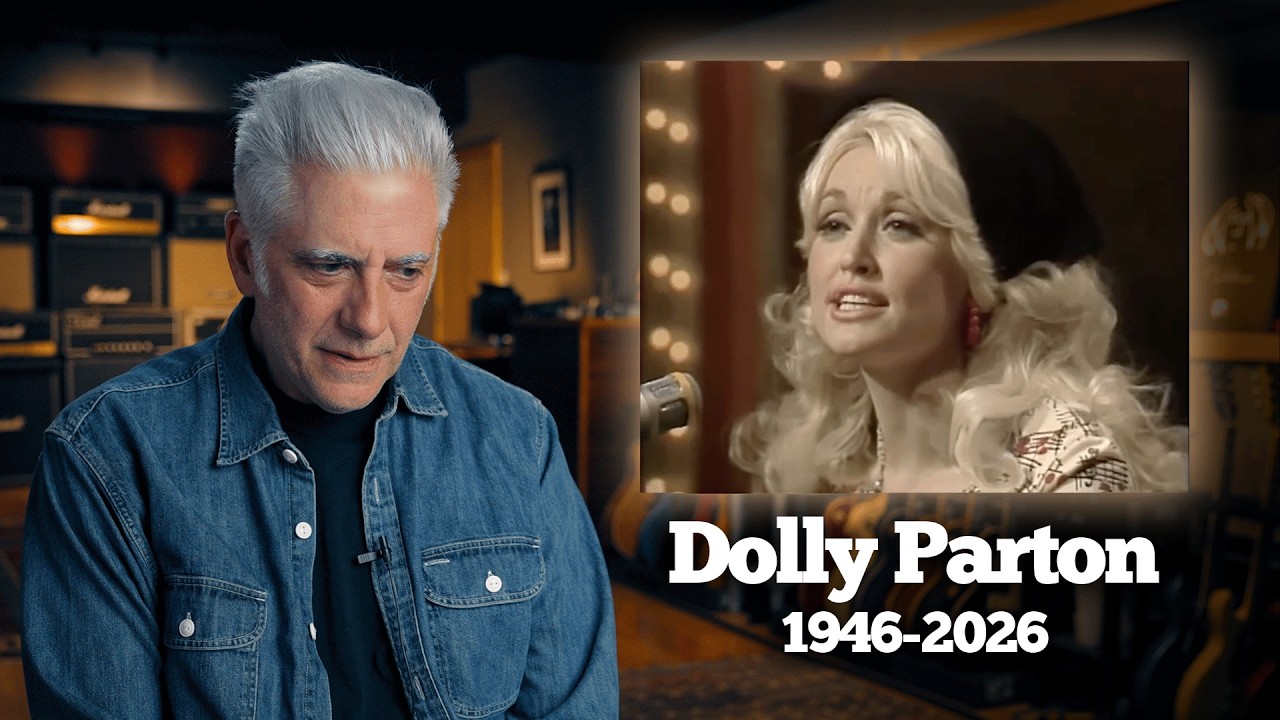
But she was held in pretty high regard as a songwriter and musician by a lot of other musicians. Here’s a tribute from one of my favorite music YouTubers that highlights her musical talents.
About that song… I read somewhere that she wrote I will always love you as a tribute to Porter Wagoner after she left his show to move on to bigger things.
Absolutely true. She had worked professionally with Wagoner, who was her business partner and mentor, for seven years, and she was in the process of becoming a solo artist.
Also, Parton wrote one of her other biggest hits, “Jolene,” at about the same time as “I Will Always Love You.” At one point, she had stated that she had written the two songs on the same day, but she later clarified that while the two songs were, indeed, part of the same flurry of songwriting, they may or may not have been written precisely on the same day.
Dolly’s life and career were full of superlatives, but the most impressive figure I learned from her obituaries is that she wrote 3000 songs. That’s an ass-load for one life, and I can’t come up with another songwriter that prolific. And songwriting was just one aspect of her career, she did so many other things, too. I know that Bob Dylan wrote about 800-1000 songs, and Neil Young even a few hundred more, but that’s nothing compared to her.
I know a local dude who at least comes close; he has a wall of binders full of material he’s written. He’s not famous, though, probably for good reason – dude’s an asshole.
Not that many were hits, but Steve Allen claimed he wrote over 8,000 songs in his lifetime.
When I check on Google, it says that the most prolific songwriter ever is someone named Matt Farley, who has written over 24,000 songs. He’s only 48 years old, so he could write more. He releases them under his label Motern Media.
Reminds me of Buckethead, another extremely prolific writer. Looks like he is over 3,000. He has over 800 albums.
I’ve listened to some here and there. They sound sometimes more like excellent jam sessions.
The interesting thing about the 3,000 songs number is that it’s Parton’s estimated lifetime output, starting from childhood. It also includes songs, isolated lyrics, and song fragments that she has archived privately. Her published and recorded output is on par with Dylan, Neil Young, Lennon & McCartney (incl their solo material), Prince, etc.
The story of her privately archived catalog is interesting in and of itself. Apparently, some number of posthumous releases are planned. Google Gemini is responsible for the text below, but I’ve also included primary-source citations.
The primary sources verifying her extensive private catalog include:
1. The Dolly Parton’s America Podcast (2019)
The most direct citation regarding her massive collection of unrecorded material comes from her extensive interviews with Jad Abumrad on the critically acclaimed NPR / WNYC podcast Dolly Parton’s America.
- The Quote: Dolly explicitly stated: “I am a lucky person because I’ve got hundreds, hundreds, even thousands of songs and a big part of them have never even been recorded.”
- The Practice: In the podcast, she detailed how she routinely talked into tape recorders or left rough vocal-and-guitar memos whenever inspiration struck, intentionally building a lifetime vault.
2. Strategic Posthumous Organization Interviews (2020–2024)
In later career interviews, Dolly openly discussed how she structurally managed her unreleased archives. She revealed that she was deliberately organizing and pre-recording vocal tracks so that future music producers could build full instrumentation around her voice long after she was gone. Unlike other classic artists whose vaults are chaotic or caught in legal limbo, Dolly explicitly confirmed that she cataloged her private tape vault specifically to ensure a smooth posthumous release strategy.
3. Her Autobiography and The Kelly Clarkson Show (2021–2022)
When promoting her book and appearing on national television, Dolly shed light on the physical reality of her locked-away music.
- On The Kelly Clarkson Show and in her memoirs, she famously detailed a physical manifestation of her vault: a top-secret song she recorded in 2015 called “My Place in History.”
- She explained that the track was sealed inside a literal chestnut wood “Dream Box” time capsule at her Dollywood DreamMore Resort. It serves as tangible, public proof of her habit of archiving music meant for future generations (this specific track is legally ordered to remain sealed until January 2046).
4. Her Final Media Profiles
Following her passing, major retrospectives heavily cited her estate’s acknowledgments that her 3,000+ song count spans everything from childhood poems put to music to rough cassette tapes kept in her home archives. Music historians like Annie Zaleski, author of Dolly Parton: The Stories Behind the Songs, have documented that Dolly’s writing process relied heavily on a steady stream of private, unreleased dictations and notebooks.
Citations
“She’s Alive!” Dolly Parton’s America, hosted by Jad Abumrad and produced by Shima Oliaee, episode 9, WNYC Studios / OSM Audio, 27 Nov. 2019. WNYC Studios, She's Alive! | Dolly Parton's America | WNYC Studios.
The Kelly Clarkson Show. NBCUniversal Syndication Studios, December 1, 2022.
Parton, Dolly. Dolly Parton, Songteller: My Life in Lyrics. Chronicle Books, 2020. (Click “Read Sample” at left for dozens of free-to-read excerpts)
I just found out that my nephew’s step MIL, a minor celebrity/tv presenter in
the UK interviewed Dolly in 2003 ! The BBC video shows them discussing God,
music and sex, and why she hadn’t gone to church in 40 years !
Dolly’s knack for staying relevant and win over new audiences is so impressive.
She dominated music in the 70’s and 80’s.
Her hits dried up afterwards. Radio focuses on young talent and the most current styles of music.
But Dolly’s tv specials and touring continued to draw large audiences.
Dolly’s cancelled Las Vegas residency would have sold out every night.
I predict her broadway show will be a massive success.
That was written by a college classmate and friend of mine, Martha Ackmann (we called her Marty). It’s a great read.
Ask your library for it, it will bolster her stats.
There’s a wait list for it at the 5 library systems I checked, both books and audiobooks.
All this talk of her 1000s of songs brings to mind good ol’ Irving Cohen. He also wrote a lot of songs. Gimmie a C, a bouncy C. Dolly was a great one, she did a lot of t’ings. She gave out a lot of money and wore a lot of rings. Da-da-da-da-dee, da-da-da-da-dah, ah, whatever da hell else ya wanna put in da t’ing!
Upon hearing that the first cloned sheep was named “Dolly” after her, because it was cloned from a mammary cell, she said she was flattered. “There’s no such thing as bad publicity.”
Also, "I was sorry when she died, though I don’t want be cloned myself. I want to get on out of here when I can. We already get a lot of Dolly lookalikes, a lot of Dolly drag queens. I can just send them down to the store instead of me."
I once got into an argument with someone who “knew” that Whitney Houston had written “I Will Always Love You” and refused to believe me when I said it had been written by Dolly Parton.
Me too! I finally cited the movie “Best Little Whorehouse in Texas”, and found someone to back me on it.
What I read was, she pronounced ‘bad’ as ‘baaaad’, like a sheep bleating.