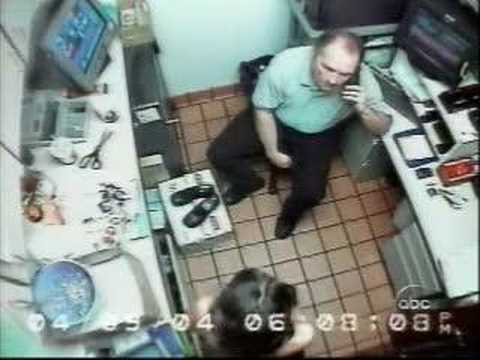
[QUOTE=treis]
What would McDonald’s have to do in order to avoid liability in your opinion?
[/QUOTE]
They should have done what their corporate attorneys, at least, tried to get the ball rolling on. They should have made sure that each and every store manager, at a minimum, knew about the hoax, knew that it was accellerating in occurrence, and knew both what to expect from the hoaxer and precisely what steps to take.
Go into a McDonald’s restaurant office (it’s usually a small cubbyhole). Look around. I guarantee that that office has posted on its walls any number of corporate directives regarding things McDonald’s finds important at that moment. As the plaintiff’s attorney noted, they manage to inform everyone about a McRib special. So all McDonald’s had to do was make certain that, posted right next to the office phone, was a specific warning about this hoax and a list of steps to take to contact proper authorities if someone called attempting it. But they weren’t even successful in alerting the local AREA manager, OR the local management TRAINER. In short, they dropped the ball.
Now, had they managed to properly get the word out, the liability here would be much less likely. With a proper warning out, the duty to the employee then becomes not to have an act like this done by someone who is an employee. Given the circumstances, with proper warnings given, it would likely be the case that a judge would make a determination that no reasonable jury could establish breach of a duty proximately causing damage, for exactly the reasons that you and Una Persson among others have been stating: the intervening illegal acts of the assistant manager in contravention of company rules. Of course, the main point is that, had they issued the proper warnings, seen to it that local management knew about the hoax and that it was serious and that they should post the warnings or take other reasonable steps to avoid it happening, the assistant manager in this case might well never have asked the employee to do anything at all, because she would have recognized the hoax for what it was.
Which is why the proximate cause chain gets harder to break in the face of a failed duty to warn: failure to warn means some management people will do what happened here, as evidenced by over 60 cases of similar nature across the nation.
In short: McDonald’s knew it should issue a warning, as evidenced by the fact that someone at high level attempted to do so, and as evidenced by the claimed attempt at voice-mail warnings. It failed to do a competent job of issuing such a warning. As a result, two assistant managers on duty at the time the call came in failed to recognize the hoax for what it was, and proceeded to do what I think most of us would agree were really dumb things. McDonald’s KNEW it was in trouble once they understood what had happened; that’s why they first attempted to keep it a workers’ comp. claim by falsely claiming the employee was on the clock at the time of the incident, then attempted to pin false statements about what had happened on the store maintenance man, THEN proceded to do their damndest to avoid having to reveal 17 boxes of information about the prior incidents, finally producing them on the eve of the trial on the order of a special master judge.
You connect the dots… :dubious: