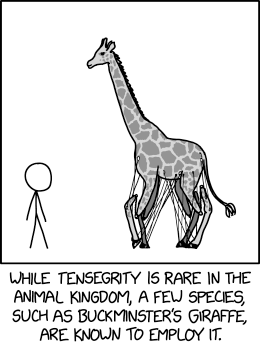
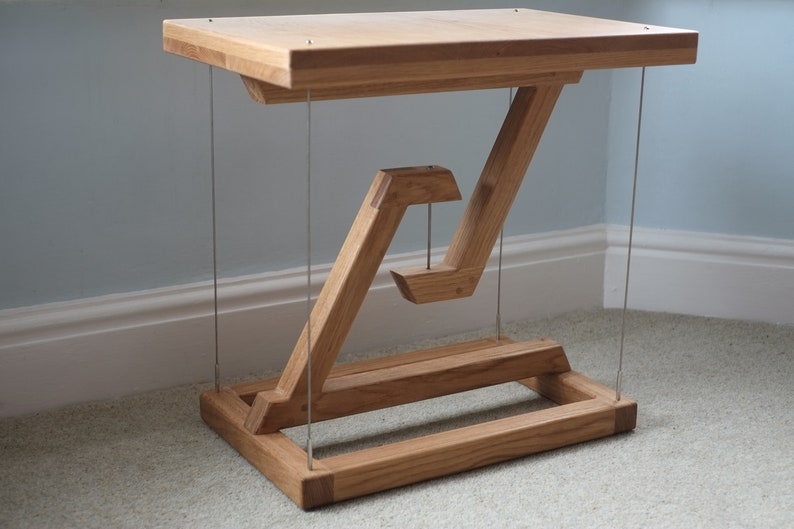
“Some people argue that the tension and compression in the human skeleton is technically tensegrity, but it’s missing the defining characteristic: making people say ‘wtf, how is that thing floating?’ when they see it.”
It’s a little-appreciated fact that tensegrity is almost completely what supports our spines; the vertebrae do not simply load onto the ones below them in compression like a stack of blocks. Rather, the muscles, tendons and ligaments attached to the processes of the vertebrae convert the vertical load into tension; the discs between the vertebrae primarily are cushioning. A highly stylized view of how it works is shown here:
That is remarkably more wholesome than where my mind was immediately drawn.
Not long ago I stumbled across a medieval torture device I’d never heard of before: the Scavenger’s Daughter. It’s essentially the opposite of the rack; instead of stretching you apart, it folds you into a ball until you squish.
Just glancing at that simplified graphic of the spine makes me wince, involuntarily thinking of both of those devices.
As far as I understand, a lot of those (e.g. the Iron Maiden) were never used and what we see today are historic reproductions (sorry no quote, might have been debated on the SDMB)
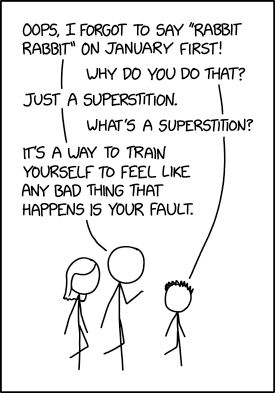
“It’s important to teach yourself to feel responsible for random events, because with great responsibility comes great power. That’s what my wise Uncle Ben told me right before he died; he might still be alive today if only I’d said rabbit rabbit that year!”