I used to have a housemate who would regularly declare “I’m gorgeous” and go on about how nice she was.
She was not. She was an arrogant, deeply unpleasant nutjob.
Unless there is some glaring reason to suspect otherwise, I tend to automatically assume that such claims are incorrect. I’m not really sure they’re actually something you should even decide for yourself- gorgeous compared to what?
It’s pointless to say you’re a nice guy, that’s for other people to judge. So, at best, all you’re doing is demonstrating something mildly negative about yourself (poor social understanding).
“I’m not at all racist” is worse, but for reasons already enumerated.
I’m British too, but the Swedes may even have us beat.
I once got told I talked myself up a little much, and that in Sweden people tend to be more modest. This was in a job interview (I still got the job though)
Yeah: again, there’s a big difference between “I’m intelligent” and “I’ve taught over 200 animal control officers to use a complex database, and designed reports based on their needs that enable them to track stray animal trends in neighborhoods so they can determine where to concentrate their efforts” or whatever. If, in an interview, someone says, “I’m really smart and I get things done,” without immediately following up with specifics, I’m likely to conclude the lack of specifics means they don’t have any specifics.
Without snark, does that actually work? It’s not a situation I’ve been in, but I would’ve thought that a person clueless enough not to recognize credentials or demonstrated expertise also wouldn’t be persuaded by a declaration of intelligence. But I could be wrong.
For each of these I would need a different sort of evidence before I could accept them from somebody saying these things about themselves. For “intelligent”, the real evidence should be their score on an I.Q. test. Since it’s unlikely they could show me that, perhaps they could tell me their SAT or ACT scores or what academic degrees they have. But why is that really relevant to any argument they want to make? They should just clearly state their evidence and the logical reasoning they want to make in their argument.
For “gorgeous”, presumably I can just look at them and tell if it’s true.
For “nice guy”, that’s so vague that it’s nearly useless.
For “not a racist”, they should make the claim that they want to make and then tell me their definition of being racist. I can then see what racism even means to this person. Then they can defend the statement they previously made that made me (or whoever else) suspect that they are racist. They have to show their evidence for it. I can then make a decision about both their definition of racism and whether it applies to what they have been doing or saying.
But all four of these four statements are not the sort of things I expect to hear in people’s explanations of who they are.
Sometimes. Saying “I am an intelligent person” is a little like a slap in the face. Most mansplainers are unaware, not malicious. But they are deeply unaware. So sometimes you need to give them a little shake. Its better to do this in a positive fashion - “I am intelligent”…rather than negative “I am not stupid.” “I am not stupid” simply invites the “I never said you are.” I am intelligent invites (you don’t always get it) a reflection “am I treating this person like they are stupid?”
I had a mild moment like that earlier in the week, where a new spreadsheet was distributed to teachers, and I was chatting with a new teacher about it and asked her, “Did you find your section?” because it had caused some difficulty for another staff member. She gave me a look and said, “I’m 24, I can figure it out.”
I’m not entirely sure what she meant here: did she think I was treating her like she was 10, or like she was 60? In any case, I’ll be extra-careful not to condescend to her going forward.
Scandinavians in particular have an anti-braggart culture. There is a humorous book which discusses a town in Denmark where it is thought excessive to give the stores non-utilitarian names - the bookstore is called Bookstore, the butcher is Butcher. One store has a name like Helda’s Fashions - and the author thinks she might need to be careful since that sort of egotistical display is looked down on.
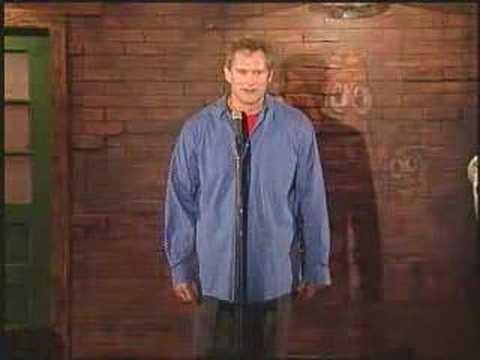
As for job interviews, here is a good approach from comedian Greg Hahn.
I knew a guy, training to be a pilot, who would literally interrupt every conversation after you mentioned a place to point out that he could fly his plane there. Very fond of hearing his own voice. Canadians are often somewhat reserved and they say the key to success is to exhibit the characteristics locals lack. I think they are mistaken. One longs for a touch of humility.
That’s pretty much it. Although I’ve been talking about mansplaining, its also the constant barrage of unsolicited…well everything…women get from men. Help on finding their section on a spreadsheet. Comments on our appearance. Insistence that we are apparently so fragile opening a door is beyond us (again, well intentioned - open a door if someone appears they need help…please don’t rush to help a woman just because she is a woman). Interrupting us to “help” clarify or insert their own ideas. Some truly well intentioned, other times claiming superiority or possession.
So sometimes you just need to state that you are capable. Because society doesn’t always just assume women are.
Yes, there is this culture of toxic positivity in America. Nowadays a lot of people are taught to embrace confidence without having achieved something - not recognizing that they’ve got the order wrong. Confidence typically comes from having achieved something, not before it. But now it’s morphed into a rah-rah-rah attitude.
I always roll my eyes when I hear someone describe themselves as a perfectionist. I have never in my life met someone who calls themselves a perfectionist who actually is one.
Actual perfectionists (rare) are usually called that by someone else making the observation.
For a while, coaching for job interviews including answering the silly ass question of what are your short-comings with things like “I’m a perfectionist” or “I’m a work-a-holic”. The 90s, dumb on both sides of the interview table.
Actual perfectionists are annoying as hell - even people who aren’t actual perfectionists, but just really really really Type A. Because they don’t take good enough and move on. And they don’t tend to accept good enough from other people, who may have other priorities or standards. There are some people I want to be perfectionists - like if I needed a neurosurgeon, but by all that is holy, I wouldn’t want to spend much time with them in real life.